


|


 loading...
|
|
Aotearoa - Maori Recorder 1861-1862: Volume 1, Number 1. 01 January 1861 |
 Abstract
  Commentary
|
|
1 1 |
▲back to top |
|
|
2 2 |
▲back to top |
|
|
3 3 |
▲back to top |
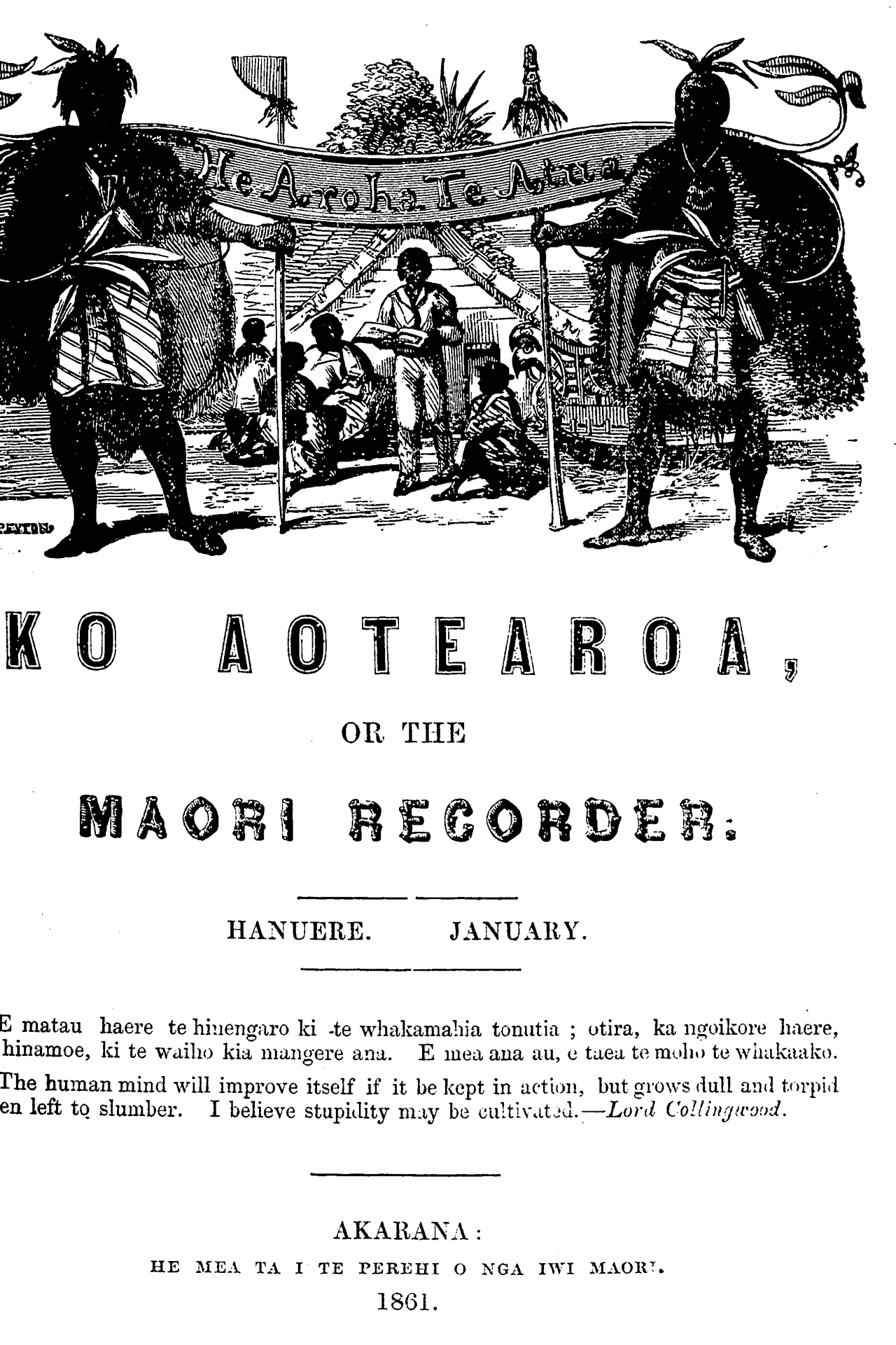
KO AOTEAROA
OR THE MAORI RECORDER.

HANUERE JANUARY


E matau  haere te hinengaro ki -te whakamahia tonutia ; otira, ka ngoikore haere,
hinamoe, ki te waiho kia mangere ana. E mea ana au, e taea te moho te whakaako.
The human  mind will improve itself if it be kept in action, but grows dull and torpid
en left to slumber. I believe stupidity may be cultivated.—Lord  Collingwood.

AKARANA

HE MEA TA I TE PEREHI O NGA IWI MAORI.

1861
|
|
4 4 |
▲back to top |
4                AOTEAROA-—MAORI    RECORDER.


  Me  he mea, ko te ohinga tenei o te tangata i karangatia

ai hei matua mo te Perehi, —me he mea e kahua ora ana

tona " whare whakawharau whenua, "—ka ai he tuara hei

whakairinga mo  nga, tikanga o tenei mahi taimaha ruki-

ruki; ko tenei., he whakahaere kau iho, kia ahua tikatika

ka tuku atu he ringa tangata ke.

  Heoi ano ta konei, ko te kumenga mai o tenei taonga i

tarawahi o te moana nui. Tau ana te kanohi ki runga ki

taua mea i manakohia nei e nga iwi; mihi ana te ngakau;

mea  ake ana, " ae ka oti; " a, kati ano he utu ki a ia, ki

te matua i whakaahurutia ai tenei taonga, ko te whakaora-

nga ngakau mo  te whakatutukitanga o tona hiahia, ta te

mea hoki, kua—

                         Toia mai,

                      Te Waka;

                          Ki te urunga,

                          Te  Waka,

                         Ki te moenga,

                       Te Waka;

                          Ki  te takotoranga e takoto ai—Te Waka.

                                      -0-

                       [TRANSLATED FROM THE MAORI. ]

    " GREAT was your exit, but small is your advent'' says the old Maori

 adage. Though  the advent be small, however, its smallness is based on that

 which  is great, —its smallness is based upon that which is right. ( i. e. the

 establishment of a Maori printing office, though small in its beginning, is

  nevertheless, a step in the right direction. ]

    In 1857 the cry was uttered " Let Aotearoa the Maori Printing Press

  be lifted up [ i. e. let the suggestion regarding a Printing establishment be

  practically carried into effect. J The tribes spiritedly responded to the call.

  First came the Ngatitipa. After them came the Ngatipaoa, the Ngaitamatera,

  the Whakatohea, —then  the people of Whaingaroa, Aotea, Kawhia, the whole

  of Waikato: Mokau, Taupo, Whanganui, Wellington, Wairarapa, Poverty

  Bay, Waiapu, Whangaruru, and  Kaipara. There  are other places [the

  people of which  have  assented ] but collections have not yet been made.

  The tribes and places not agreeing, are Ahuriri, Te Wairoa, Te Harawa, and

  some of the Ngapuhi.

     Should this project appear insignificant now, let no man despise it, for the

  child draws nourishment from its mother's breast for some time ere it crawls,

  and it crawls for some time, ere it is able to walk. In like manner, the Maori

  tribes will be some time searching out the matter, ere they become fully ac-

  quainted with the advantages derivable from the establishment of their own

  Printing Press.
|
|
5 5 |
▲back to top |
              AOTEAROA——MAORI   RECORDER. 5


  The  Native people have already possessed themselves of property for the

benefit of the body, —mills, ships, ploughs, carts, horses, horned cattle and

sheep; and now, in the year 1860 a Printing Press has been obtained for the

benefit of the mind.

   If stranger tribes should inquire, " Whose money procured this great thing

—this  revealer of right and wrong, of truth and  error ? "—the writers of

this paper now inform them, that the cash was raised by the Native people, —

by the child and by the aged, by women and men, by chiefs and slaves.

  It was arranged that the Maori Printing Office should be in Auckland, for

here is the fountain whence the streams in numerous branches flow on; more--

over, hither most of the Native tribes are wont to resort.

   If this happened to be the more youthful period of the life of him who

has been selected to take charge of the Printing Establishment of the Maori,

—if  the " earthly tabernacle " were indeed hale, —then there would be should-

ers upon which these most onerous duties might be placed [ with comparative

 ease. J The  arrangements proposed to he carried out, however, will be

 attended to, and in due time the trust will be resigned into other hands.

   Sufficient has been accomplished ( by the writer ] in drawing hither the

 machinery from lands beyond the great sea; his eye now gazes upon the

 object which all the tribes hoped to see, and his heart yearns within  hira

 while it says " Yes; it is done !" The heartfelt happiness which he, —who

 cherished the idea of beholding  the necessary material to carry  out the

 project—feels in the realization of his wishes, is an abundant compensation,

 and the only compensation he values, for now is [\_ according to the Maori

 song]—

         " Drawn hither,

          The  Canoe; [ that is, the Printing Press. ]

          To  the pillow, [i. e. resting place]

         The Canoe;

          To the couch, [ its second but more permanent place of rest ]

         The Canoe;

          To the landing where the Canoe shall lie. " [\_ i. e. its final and fixed place. ]


                                      •0-

        TE PEREHI TA PUKAPUKA.

   I mua ai, i nga ra o Huria Hiha, i te tau 54 B. c. a muri

 noa mai, i noho kuare o matou tupuna i Ingarangi; karakia

 ai ki te atua kikokiko; kakahu ai i te huru kararehe;

 pani ai te kiri ki te ngarahu. Kahore he Perehi o aua ra.

 Engari, no te tau 1440, i muri mai i a te Karaiti to tatou

 Ariki aroha, ka kitea te mahi ta pukapuka e Hoani Kute-

 nepeke, no Teamani, i nga ra o te Eparatanga o PERERIKA

 III., i te Kingitanga hoki o HENARE VI., o Ingarangi.
|
|
6 6 |
▲back to top |
6                AOTEAORA—-MAORI  RECORDER.


  I te tau 1450, tae noa ki 1455, ka oti te PAIPERA

TUATAHI    i te Perehi ta pukapuka; ko nga wharangi i

taia ai nga reta he kiri kuri. Marama haere ana i konei

nga iwi, ta te mea, i mahia tonutia te Perehi, whakarotohia

ana ki te ao, te kupu whakaora o te Atua; tauiratia ana

hoki nga whakaaro tohunga o nganui, hei whakamohio mo

nga iwi o te ao. I taua takiwa taeanoatia tenei wahi, piki

haere ana te matauranga i te mahinga o tenei taonga wha-

kamiharo te Perehi ta pukapuka.

  I te taone o Akarana i naianei, erima nga whare perehi

pukapuka a te Pakeha; ko "Niu  Tireni, " ko te "Ripeka

o te Tonga, " ko te " Tuhituhinga, " ko te " Whiriwhiringa, "

ko te " Tukotahitanga. " Putaputa ana i aua whare nga

korero hei whakamohio i te tangata.

   Na i tenei takiwa, piri ana ki te taha o enei whare erima

a "Aotearoa" hei whakaako, hei whakamarama 'mo nga

iwi Maori o Niu Tireni.

                        [ TRANSLATED FROM THE MAORI. ]


                THE PRINTING PRESS.

   IN olden time, in the year 54 B. c., and long after that period, our ances-

 tors in England lived in ignorance; they worshipped false gods; wore skins

 of beasts for clothing, and painted their bodies blue. There was no Print-

 ing Press in those days. But in the year 1440 after the birth of Christ our

 loving Saviour, the art of printing was discovered by John Guttenberg of Ger-

 many, in the reigns of the German monarch FREDERICK III., and of the En-

 glish monarch HENRY VI.

   Between  the years 1450, and  1455, the First Bible was printed; the

 characters were impressed on vellum. The enlightenment of the peoples now

 increased, for the Press continued to do its work; the saving Word of God

 was distributed amongst the nations; and the wise thoughts of great minds

 were  printed, in order that the tribes of the earth might receive instruction.

 From  that  period to the present time, knowledge has been increasing by

 means  of this wonderful machine—the Printing Press.

    There a re now in the town of Auckland, five Printing Offices belonging

 to the Europeans—the  "New   Zealander, " the "Southern Cross, " the "Re-

 gister, " the " Examiner, " and the "Independent" all of which are furnishing

 information for the people.

    And now, by the side of these five offices is placed " Aotearoa" the Maori

 Printing  Establishment, which will be a medium of communicating instruction,

 and will tend to enlighten the Native people of New Zealand.
|
|
7 7 |
▲back to top |
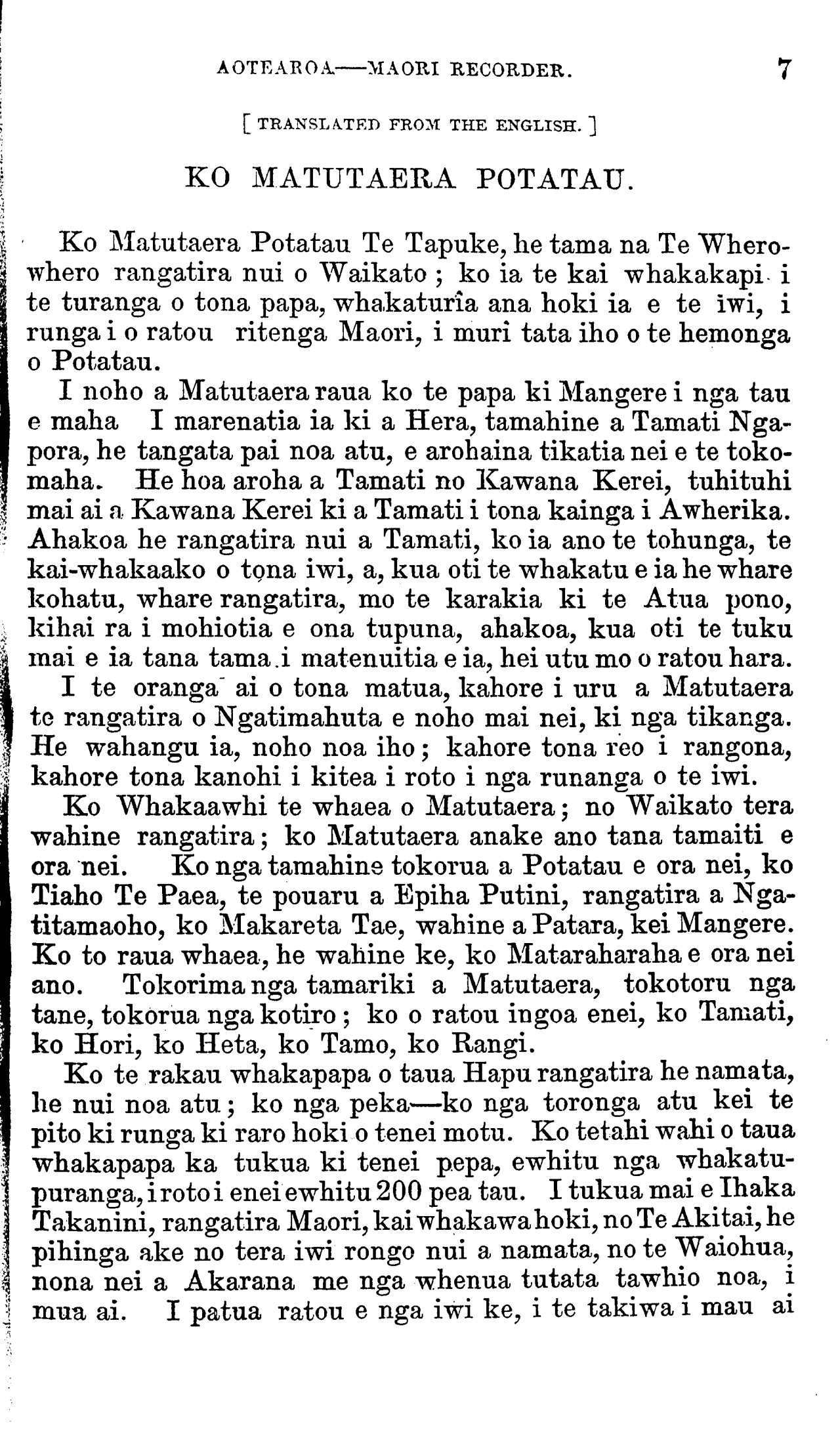
               AOTEAROA——MAORI   RECORDER. 7


                    [ TRANSLATED  FROM  THE ENGLISH. ]

        KO MATUTAERA   POTATAU.


  Ko  Matutaera Potatau Te Tapuke, he tama na Te Whero-

whero rangatira nui o Waikato; ko ia te kai whakakapi i

te turanga o tona papa, whakaturia ana hoki ia e te iwi, i

runga i o ratou ritenga Maori, i muri tata iho o te hemonga

o Potatau.

  I noho a Matutaera raua ko te papa ki Mangere i nga tau

e maha  I marenatia ia ki a Hera, tamahine a Tamati Nga-

pora, he tangata pai noa atu, e arohaina tikatia nei e te toko-

maha. He hoa aroha a Tamati no Kawana Kerei, tuhituhi

mai ai a Kawana Kerei ki a Tamati i tona kainga i Awherika.

Ahakoa  he rangatira nui a Tamati, ko ia ano te tohunga, te

kai-whakaako o tona iwi, a, kua oti te whakatu e ia he whare

kohatu, whare rangatira, mo te karakia ki te Atua pono,

kihai ra i mohiotia e ona tupuna, ahakoa, kua oti te tuku

mai e ia tana tama i matenuitia e ia, hei utu mo o ratou hara.

   I te oranga" ai o tona matua, kahore i uru a Matutaera

te rangatira o Ngatimahuta e noho mai nei, ki nga tikanga.

He  wahangu  ia, noho noa iho; kahore tona reo i rangona,

kahore tona kanohi i kitea i roto i nga runanga o te iwi.

  Ko  Whakaawhi  te whaea o Matutaera; no Waikato tera

wahine  rangatira; ko Matutaera anake ano tana tamaiti e

ora nei. Ko nga tamahine tokorua a Potatau e ora nei, ko

Tiaho Te Paea, te pouaru a Epiha Putini, rangatira a Nga-

titamaoho, ko Makareta Tae, wahine a Patara, kei Mangere.

Ko  to raua whaea, he wahine ke, ko Mataraharaha e ora nei

ano. Tokorima nga tamariki a Matutaera, tokotoru nga

tane, tokorua nga kotiro; ko o ratou ingoa enei, ko Tamati,

ko Hori, ko Heta, ko Tamo, ko Rangi.

  Ko  te rakau whakapapa o taua Hapu rangatira he namata,

he nui noa atu; ko nga peka—ko nga toronga atu kei te

pito ki runga ki raro hoki o tenei motu. Ko tetahi wahi o taua

whakapapa  ka tukua ki tenei pepa, ewhitu nga whakatu-

puranga, iroto i enei ewhitu 200 pea tau. I tukua mai e Ihaka

Takanini, rangatira Maori, kai whakawa hoki, no Te Akitai, he

pihinga ake no tera iwi rongo nui a namata, no te Waiohua,

nona nei a Akarana me nga whenua tutata tawhio noa, i

mua  ai. I patua ratou e nga iwi ke i te takiwa i mau ai
|
|
8 8 |
▲back to top |
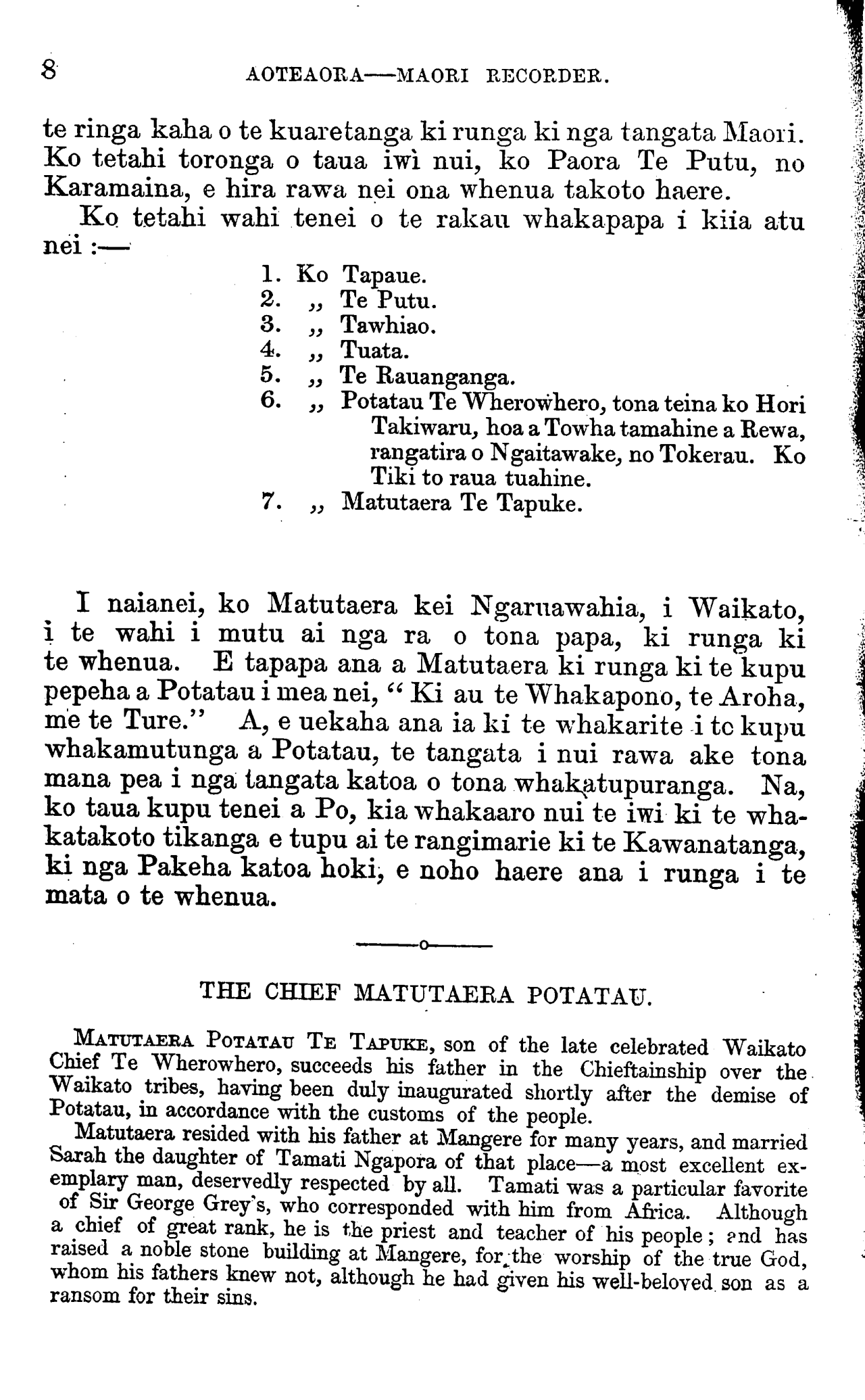
8              AOTEAORA——MAORI   RECORDER.


te ringa kaha o te kuaretanga ki runga ki nga tangata Maori.

Ko  tetahi toronga o taua iwi nui, ko Paora Te Putu, no

Karamaina, e hira rawa nei ona whenua takoto haere.

   Ko tetahi wahi tenei o te rakau whakapapa i kiia atu

nei: —

                 1. Ko Tapaue.

                 2. „  Te Putu.

                  3. „  Tawhiao.

                   4. Tuata.

                 5. Te Rauanganga.

                   6., Potatau Te Wherowhero, tona teina ko Hori

                          Takiwaru, hoa a Towha tamahine a Rewa,

                            rangatira o Ngaitawake, no Tokerau. Ko

                             Tiki to raua tuahine.

                   7. Matutaera Te Tapuke.

   I naianei, ko Matutaera  kei Ngaruawahia, i Waikato,

 i te wahi i mutu ai nga ra  o tona papa, ki runga ki

 te whenua. E  tapapa ana a Matutaera ki runga ki te kupu

 pepeha a Potatau i mea nei, " Ki au te Whakapono, te Aroha,

 me te Ture. " A, e uekaha ana ia ki te whakarite i te kupu

 whakamutunga a Potatau, te tangata i nui rawa ake tona

 mana pea i nga tangata katoa o tona whakatupuranga. Na,

 ko taua kupu tenei a Po, kia whakaaro nui te iwi ki te wha-

 katakoto tikanga e tupu ai te rangimarie ki te Kawanatanga,

 ki nga Pakeha katoa hoki, e noho haere ana i runga i te

 mata o te whenua.

          THE  CHIEF MATUTAERA POTATAU.


    MATUTAERA  POTATAU  TE  TAPUKE, son of the late celebrated Waikato

  Chief Te  Wherowhero, succeeds his father in the Chieftainship over the

  Waikato tribes, having been duly inaugurated shortly after the demise of

  Potatau, in accordance with the customs of the people.

    Matutaera resided with his father at Mangere for many years, and married

  Sarah the daughter of Tamati Ngapora of that place—a most excellent ex-

  emplary man, deservedly respected by all. Tamati was a particular favorite

   of Sir George Grey's, who corresponded with him from Africa. Although

  a  chief of great rank, he is the priest and teacher of his people; and has

  raised a noble stone building at Mangere, for the worship  of the true God,

  whom   bis fathers knew not, although he had given Ms well-beloved son as a

  ransom  for their sins.
|
|
9 9 |
▲back to top |
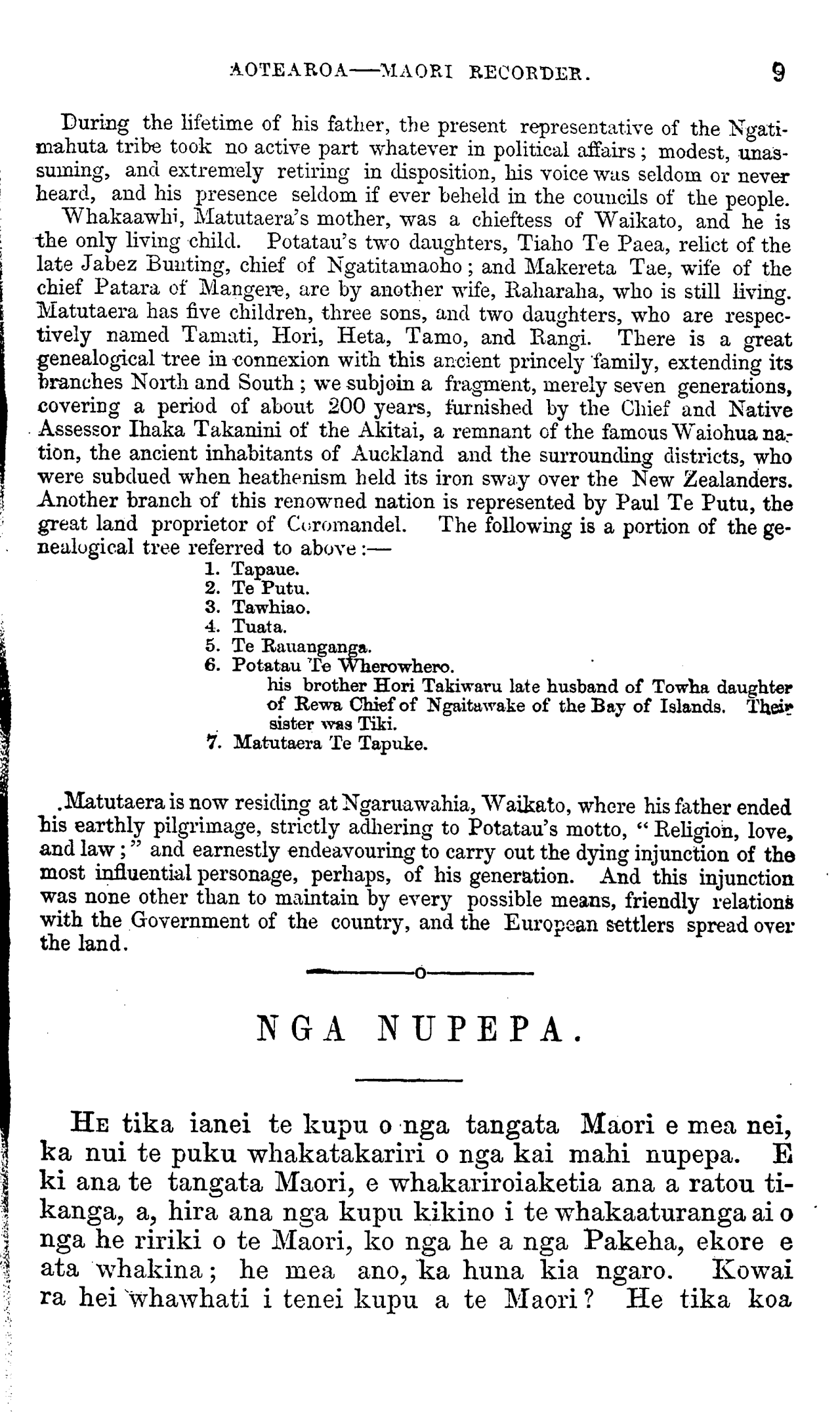
              AOTEAROA——MAORI   RECORDER. 9


  During   the lifetime of his father, the present representative of the Ngati-

mahuta  tribe took no active part whatever in political affairs; modest, unas-

suming, and extremely retiring in disposition, Ms voice was seldom or never

heard, and his presence seldom if ever beheld in the councils of the people.

   Whakaawhi, Matutaera's mother, was  a chieftess of Waikato, and he is

the only living child. Potatau's two daughters, Tiaho Te Paea, relict of the

late Jabez Bunting, chief of Ngatitamaoho; and Makereta Tae, wife of the

chief Patara of Mangere, are by another wife, Raharaha, who is still living.

Matutaera  has five children, three sons, and two daughters, who are respec-

tively named Tamati, Hori, Heta, Tamo, and Rangi. There is a great

genealogical tree in connexion with, this ancient princely family, extending its

branches North and South.; we subjoin a fragment, merely seven generations,

covering  a period of about 200 years, furnished by the Chief and Native

Assessor Ihaka Takanini of the Akitai, a remnant of the famous Waiohua na-

tion, the ancient inhabitants of Auckland and the surrounding districts, who

were subdued when  heathenism held its iron sway over the New Zealanders.

Another branch of this renowned nation is represented by Paul Te Putu, the

great land proprietor of Coromandel. The following is a portion of the ge-

nealogical tree referred to above: —

                 1. Tapaue.

                 2. Te Putu.

                 3. Tawhiao.

                  4. Tuata.

                 5. Te Rauanganga.

                 6. Potatau Te Wherowhero.

                        his brother Hori Takiwaru late husband of Towha daughter

                        of Rewa Chief of Ngaitawake of the Bay of Islands. Their

                             sister was Tiki.

                  7. Matutaera Te Tapuke.


 Matutaera is now residing at Ngaruawahia, Waikato, where his father ended

 his earthly pilgrimage, strictly adhering to Potatau's motto, " Religion, love,

 and law; " and earnestly endeavouring to carry out the dying injunction of the

 most influential personage, perhaps, of his generation. And this injunction

 was none  other than to maintain by every possible means, friendly relations

 with the Government of the country, and the European settlers spread over

 the land.

         NGA NUPEPA.

   HE  tika ianei te kupu o nga tangata Maori e mea nei,

 ka nui te puku whakatakariri o nga kai mahi nupepa. E

 ki ana te tangata Maori, e whakariroiaketia ana a ratou ti-

 kanga, a, hira ana nga kupu kikino i te whakaaturanga ai o

 nga he ririki o te Maori, ko nga he a nga Pakeha, ekore e

 ata whakina; he mea  ano, ta huna kia ngaro. Kowai

 ra hei whawhati i tenei kupu a te Maori ? He tika koa
|
|
10 10 |
▲back to top |
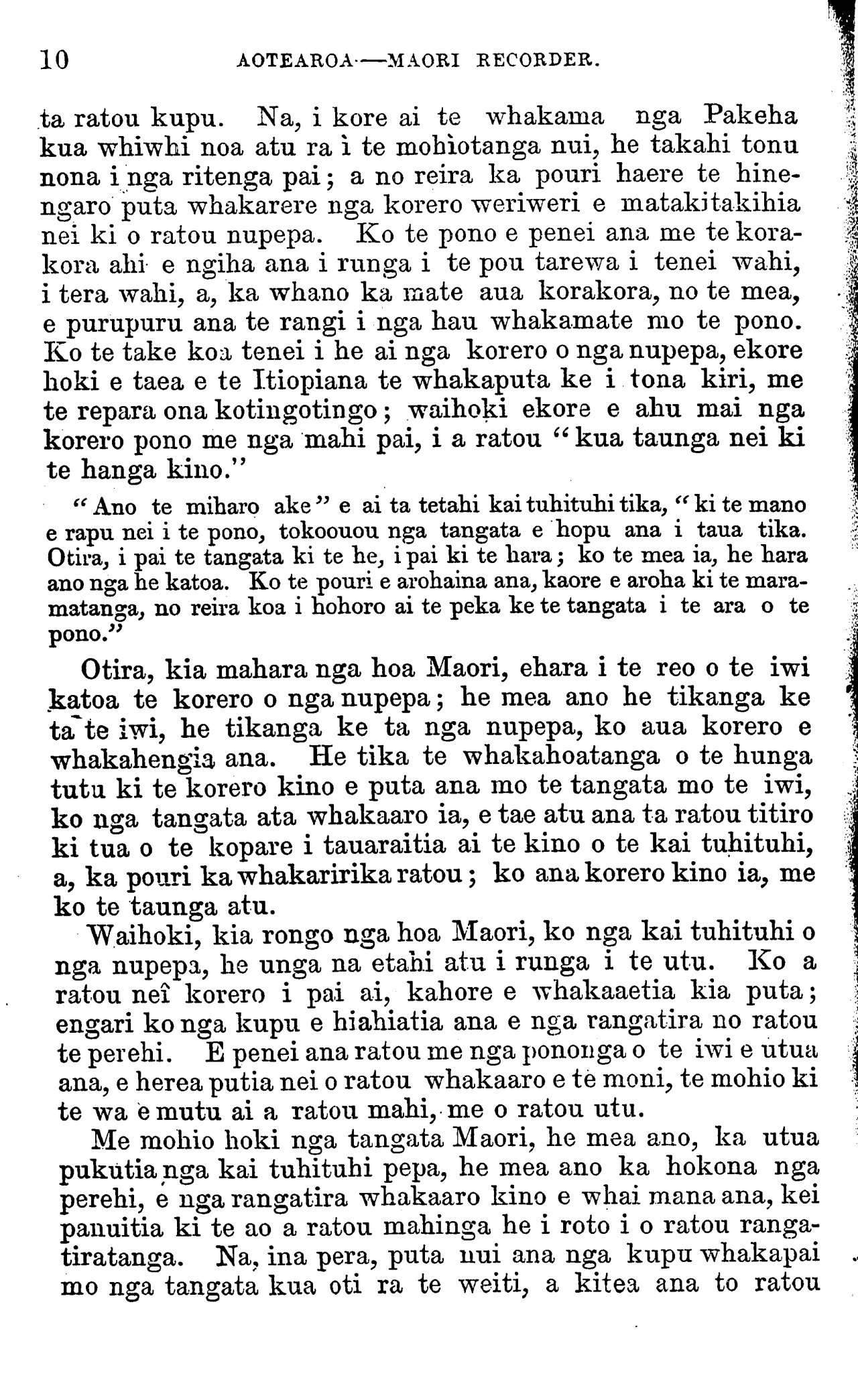
10             AOTEAROA-—MAORI    RECORDER.


ta ratou kupu. Na, i kore ai te whakama nga Pakeha

kua whiwhi noa atu ra i te mohiotanga nui, he takahi tonu

nona i nga ritenga pai; a no reira ka pouri haere te hine-

ngaro puta whakarere nga korero weriweri e matakitakihia

nei ki o ratou nupepa. Ko te pono e penei ana me te kora-

kora ahi e ngiha ana i runga i te pou tarewa i tenei wahi,

i tera wahi, a, ka whano ka mate aua korakora, no te mea,

e purupuru ana te rangi i nga hau whakamate mo te pono.

Ko te take koa tenei i he ai nga korero o nga nupepa, ekore

hoki e taea e te Itiopiana te whakaputa ke i tona kiri, me

te repara ona kotingotingo; waihoki ekore e ahu mai nga

korero pono me nga mahi pai, i a ratou " kua taunga nei ki

te hanga kino. "

   " Ano te miharo  ake " e ai ta tetahi kai tuhituhi tika, '' ki te mano

e rapu nei i te pono, tokoonoono nga tangata e hopu ana i taua tika.

 Otira, i pai te tangata ki te he, i pai ki te hara; ko te mea ia, he hara

 ano nga he katoa. Ko te pouri e arohaina ana, kaore e aroha ki te mara-

 matanga, no reira koa i hohoro ai te peka ke te tangata i te ara o te

 pono. "

   Otira, kia mahara nga hoa Maori, ehara i te reo o te iwi

katoa te korero o nga nupepa; he mea ano he tikanga ke

 ta te iwi, he tikanga ke ta nga nupepa, ko aua korero e

 whakahengia ana. He tika te whakahoatanga o te hunga

 tutu, ki te korero kino e puta ana mo te tangata mo te iwi,

 ko nga tangata ata whakaaro ia, e tae atu ana ta ratou titiro

 ki tua o te kopare i tauaraitia ai te kino o te kai tuhituhi,

 a, ka pouri ka whakaririka ratou; ko ana korero kino ia, me

 ko te taunga atu.

   Waihoki, kia rongo nga hoa Maori, ko nga kai tuhituhi o

 nga nupepa, he unga na etahi atu i runga i te utu. Ko a

 ratou nei korero i pai ai, kahore e whakaaetia kia puta;

 engari ko nga kupu e hiahiatia ana e nga rangatira no ratou

 te perehi. E penei ana ratou me nga pononga o te iwi e utua

 ana, e herea putia nei o ratou whakaaro e te moni, te mohio ki

 te wa e mutu ai a ratou mahi, me o ratou utu.

   Me  mohio hoki nga tangata Maori, he mea ano, ka utua

 pukutia nga kai tuhituhi pepa, he mea ano ka hokona nga

 perehi, e nga rangatira whakaaro kino e whai mana ana, kei

 panuitia ki te ao a ratou mahinga he i roto i o ratou ranga-

 tiratanga. Na, ina pera, puta nui ana nga kupu whakapai

 mo  nga tangata kua oti ra te weiti, a kitea ana to ratou
|
|
11 11 |
▲back to top |
               AOTEAORA——MAORI   RECORDER. 11


mamatanga. Mai raia, kua tau ki aua tangata te he, a, e

neneke noa ana ki runga ki tenei tahuna onepu, ki tera ta-

huna, e tau kau ana, hore he putake ake o nga tikanga.

Ko  tenei, kei titiro whakamataku nga iwi Maori ki nga ko-

rero i roto i nga nupepa, ano e hapainga ana te pono e aua

mea tito kau; engari, me whakamana ratou i te kupu nui,

kupu pai rawa kua oti te tuku mai, —" Whakamatautauria

nga mea katoa, kia u ki te pai. " Na, ki te mana tenei ku-

pu nui i a ratou, ko reira ata kitea ai, ko te nui o nga korero

o nga nupepa, he penei ano me te korero tara.

  Nui  atu nga korero whakaohooho e kitea ana ki roto ki

nga  nupepa whakarihariha o enei ra; a, ko aua korero e

kai rua ana ki a raua whakakorero. Ko tetahi upoko o aua

korero hei kai i tetahi upoko, a, pau ake ano i a ia, i te kai

tuhituhi te horo ana mea korero. Me whakatauira i konei

tetahi o aua korero kai rua, kia ata matau ai nga hoa ki

ta matou e ki atu nei. I roto i tetahi nupepa i Akarana, i

pai rawa ana tuhituhinga i mua atu nei, i puta nui te wha-

kapai  o te tini ki taua nupepa, i naianei kua huri, kua

huri koaro tona koti, a, kua ahua hauwarea noa iho, e ki

ana taua pononga whai utu i te 21 o Tihema 1860: —

   " Ina tae mai nga hoia apiti mo enei, e mea ana matou kia ngahau

tonu te mahi. Me patu te take o te kino; a, ahakoa mea nga tangata

 Maori kei Waitara  anake te kino, e mohio ana matou, tena atu ano.

 Ko nga mangangatanga  kei Waikato katoa. "

   Ko  te tangata kuare kino, nana nei i tuhituhi ki tana

pene tenei karanga whakatoatoa, e kowhiuwhiu aua i te ahi

o te whawhai kia mura nui; e tono ana hoki i nga kai wha-

katakoto  tikanga kia unga atu he hoia ki etahi atu wahi.

 Otira, kia ata wakaaro nga hoa ki enei korere ana no taua

 nupepa kotahi, —ki enei korero ngaurua ka taia nei: —

   " Ko ta matou i tino kino ai, he WHAWHAI; a, ko ta te mano e noho

 nei i pai ai, kia hohoro tonu te MUTU. "

   He tauira tenei, i tangohia mai i roto i nga mea e maha,

 kia kitea ai te mahi kai taha rua o tenei tu korero. Na, ko

 tenei, ka tukua atu ta matou kupu kia puta ki nga iwi

 Maori, i runga i te uekaha o te ngakau whakaaro, kia kaua

 ratou e inu i nga wai whakamate, e ngau kino nei i te ta-

 ngata, i roto i etahi o nga korero o nga kai whakairoiro nu-

 pepa.
|
|
12 12 |
▲back to top |
               AOTEAORA——MAORI RECORDER.


       THE   NEWSPAPERS.

   THE  Natives complain, and very justly too, of the abusive character of the

Press. They  assert that the Maori is misrepresented, and many words used

not always very euphonious, in condemnation of some trifling error, on their

part, while the glaring delinquencies of the Europeans are altogether shrouded,

or but partially laid bare. Who shall contravene this affirmation of the Maori ?

Doubtless they are right; and if the moral perceptions of the civilized Pakeha

had not been blunted by continuous sacrifice of principle, he would blush with

shame, in publishing to the world such sentiments as usually appear in newspa-

pers; but under existing circumstances, —the moral atmosphere being surcharged

with elements which threaten to destroy the spark of truth, kindled upon an

altar here and there, —  it were folly to expect other opinions than are daily

discernible in the public prints; for the Ethiopian may not change his skin,

nor the leopard his spots, much less may those speak truth or do good, " who

are accustomed  to do evil"

   " It seems, strange" says an eminent writer, "that among so many thou-

sands who  profess, to seek for truth, so; few should reach it. " But man's bias

is. on the side of error, just as it is on the side of sin; for all error is sin.

Darkness  is loved rather than light; hence it is so easy to. seduce men from,

the path, of truth. "

   Our Native Mends should bear in mind, however, that newspapers do not

 always represent the public mind; indeed, very frequently the verbiage con-

 tained therein, is diametrically opposed to public opinion, and taste. It is

 true, that the vicious may approve of a tirade of abuse levelled at individuals

 or nations, but the more thoughtful will see through the veil which. hides, the

 deformity of the writer, and will discard Ms false reasoning with contempt

 or pity.

   Our Mends  too, should know, that all, or nearly all, newspaper writers are

 hirelings, and not allowed to write what they feel, but what the newspaper

 proprietors wish In fact they are in the condition of certain public servants,.

 who  are spell bound by the consideration, that at any moment their services

 may  be discarded, and their wages cease,

    The Native people, should be told likewise that the Press is sometimes bribed,

 and sometimes the material is bought by time serving men in power, to pre-

 vent the exposure of mal-practices in high quarters. When  this, is the case,

 compliments are heaped upon men who have  been weighed in the balance

  and found wanting: —men who: are constantly shifting from shoal to shoal,

 upon the quicksands of. mere expediency. The native people therefore, must

 not look upon the newspaper articles with that reverence due to the expo-

 nents of truth. They  should attend to the incomparable advice given " Search:

  all things,, hold fast that which is good. " By this rule they will easily dis-

  cern,, that much of what is written is no better than fables.

    Many  audacious assertions find their way into the prints of the day; and

  singularly enough one paragraph, is often made to contradict another. We

  may explain our meaning by furnishing an example. In a certain Auckland

  paper, deservedly honored lately, but now a turncoat, and contemptible, a

  mercenary says on the 21st December 1860: —
|
|
13 13 |
▲back to top |
                AOTEAROA——MAORI RECORDER.


  " When  our reinforcements arrive, we hope that some active steps will be

taken. The root of the evil must be struck at; and though the. Natives may

pretend that it lies at Waitara only, we know better. Its ramifications ex-

tend through the whole of Waikato. "

   The miserable man who  penned this daring threat, evidently intends to fan

the. flame of war, and to urge the authorities to send troops into different

localities. But let our native friends mark well Ms hypocrytical cant in the

following sentence from the same article: —

    " War is our ABHORRENCE, and the sooner it is brought to a CLOSE, the

better will the community be satisfied. "

   This is one specimen, out of many, of the writer's inconsistency. And

here permit us to observe that we are bound by all that is solemn to waro

the native tribes against extracting that deadly poison which is infused through-

out many of the venomous productions of newspaper scribblers.

                      TE     MONI

   E ki ana te kupu kahore nei ona ke, " Ko te aroha ki te

moni  te putake o nga kino katoa. "  Na, i roto i ta. tatou,

hiahia ki te moni, me mahara tatou ki to tatou whakatai

 mahatanga ano, ina whiwhi ki te moni. Ehara ianei i te

 whakaaro hou tenei—ko to moni, he taranata tuku mai ki

 a tatou; a, ua whakaotia nga, mahi o tenei ao ko reira tu

 ai te whakawa ki a tatou, mo te whakahaerenga tika o nga

 moni i whakawhiwhia ki a tatou. Ko ratou i takai i nga

 moni, "ki roto ki te tauera" (Ruka, xix—20. ) e rite a ra-

 tou hara ki te hunga i hoatu i nga moni ki te utu i nga

 mea e kinongia ana e te ture, ki te hunga ranei, i ruke kau,

 i nga moni mo nga painga anake o o ratou tinana ake.

   Otiia, i enei ra, ko nga tangata e ki nei, he hunga wha-

 kapono  ratou, e koropiko ana ki tenei atua, ke. Nui. atu,

 te ngahau o to ratou karakia ki taua atua ke, ki te moni;

 te ata mohiotia ratou, ano ko nga tamariki o tetahi atu atua,

 nana nei i whakamatapo " te hunga whakapono kore, kei

 whitingia ratou e te maramatanga o te rongo pai o ta te Kara-

 iti kororia, ko ia nei te ahua o te Atua. " (II Koriniti, iv—-4. )

   Ko tetahi o nga hara nui o tenei takiwa, ko te hiakai to-

 rere ki te moni; ko te hiahia ki te " taonga kino " (I Pi-

 ta, v—2. ) e whakapurero ake ana i roto i o tatou mahinga
|
|
14 14 |
▲back to top |
14              AOTEAROA——MAORI  RECORDER.


katoa; a, ahakoa tanu tatou ki nga kupu patapate kau, mo

to tatou karakia ki te koura, ekore ano a tatou mahi e ngaro

i a Ia, e kite nui nei i nga koki o te ngakau.

   Ko tenei, kia mahara nga tangata Maori e korero ana i

tenei pukapuka, he tika te mahi mo " te kai memeha"

(Hoani, vi—27  ) otira, i roto i te mahi mo te tinana, me

ahu ano te titiro ki tera ao me te mahara hoki ki te kupu

kua  oti te tuhituhi—" Ka hari te tangata kua kitea nei e ia

te whakaaro nui, me te tangata ano kua whiwhi ki te ma-

tauranga. Pai atu hoki te hokohoko o tera i to te hiriwa

e hokohokona nei, ona hua i te koura para kore. " (Whaka-

tauki, III—13, 14. )

                        MONET.

   " THE love of money is the root of all evil" says the unerring word. In

 our anxiety to get money, it will be well to bear in mind the additional re-

 sponsibilities we incur by every additional sum we gain. There is nothing

 new in the idea that money is a talent committed to our trust, the right use

 of which we shall have to give an account, when the great drama of human

 affairs shall be wound up. Those who  have " hid it in a napkin " will be

 esteemed alike guilty with those who have squandered it away upon forbid-

 den objects, or used it for mere selfish ends,

   Men  now a days, —men  calling themselves Christians too, —worship this

 false god with such intensity of feeling, that one finds considerable difficulty

 in distinguishing them from the numerous followers of another god, who " hath

 blinded the minds  of them which  believe not, lest the light of the glorious

 gospel of Christ, who is the image of God, should shine unto them. "

    One of the great crimes of the present age, is the intense thirst after gold.

 The  desire for " filthy lucre " occupies a most prominent part in all our actings,

 and although we may  find many excuses for our idolatrous worship of gold,

 our motives are fully known to Him with whom we have to do.

    Let it be the study of our Maori readers, while they very properly work

 for " the bread which  perisheth, " to look beyond present gratifications, re-

 membering that it is written, —" Happy is the man that findeth wisdom, and

 the man  that getteth, understanding, for the merchandize of it is better than

 the merchandize  of silver, and the gain thereof than fine gold. "
|
|
15 15 |
▲back to top |
              AOTEAROA——MAORI   RECORDER. 15


          TE  WHAWHAI.

  HE  kino rawa tenei mea te whainga i te tirohanga atu i

ona ahua katoa. Ko te marama kehokeho e kiia nei kei i

a ratou te papa i roto i te whawhai, he ata kau; a; ko tona

tikanga, koia ano tenei, ko etahi kikokiko me nga toto ano,

i rere atu ki etahi kikokiko toto hoki, a topetopea iho etahi,

e etahi. Kahore matou  i kite i te maramatanga o tenei, i

te rangatiratanga hoki. He whakakarareretanga tenei no

tetahi ki tetahi, he pu ki te pu, he matia ki te matia.

  Ko  nga iwi kuare katoa e koa ana ki te whawhai, a, na

teaha ?  " E mau ana ratou i te reti o te rewera, e hopukia

oratia ana ratou e ia ki tona Mahia, " a, e mau tonu te mana

a tenei wheinga ki nga iwi o te ao, ina puta tonu o ratou

hiahia whawhai; e huna ana e ia te tikanga pono, "ekore

te tangata kohuru e whiwhi ki te rangatiratanga o te Atua. "

   E mea pea etahi, ko nga Hurai i tukua kia whawhai, a,

 i tonoa hoki. Ae ra; i te putanga o te he tuatahi, poke

 ana tenei ao i te hara, a, he nui nga mea o te Atua hei whiu

 mo nga iwi o te ao, mo te hunga e pake ana ki a ia. He

 mea ano he waipuke te patu e ngaro ai te tangata hara i te

 whenua. He  kapura, he whanariki i roto i tetahi takiwa,

 he whawhai te whiu e tukua mai ana, hei whakangaro i te

 mano, i te mano tini.

   Ehara i te tikanga kupu tenei e whiua mai nei, ara te to-

 nonga o nga  Hurai ki te whawhai i roto i te ture a Mohi.

 Engari ko te kupu tenei, —kua tonoa ranei tatou e te Atua

 ki te whawhai, kahore ranei ? kua puta ranei tana kupu

 whakamutu mo te whawhai i roto ano i tana ture marama,

 i tana ture kororia i te rongo pai, kia kaua te ringa kaha e

 hapainga ki runga ? Whakarongo ki nga kupu tapu o te

 pono: —

   " Whakahokia  tou hoari ki tona takotoranga. —Kaua e whakauaua

 ki te kino; engari ki te pakia tou papa tinga matau e tetahi, hurihia atu

 hoki tetahi ki a ia. Maku te rapu utu, maku te hoatu utu. e ai ta te

 Ariki. "

   Ehara i te tikanga tuturu ki te ao tenei mea te whawhai,

 ehara i te mea he kino tuku mai kia mau tonu, engari, he

 koropuputanga no nga kino o te ngakau maori  a, ekore
|
|
16 16 |
▲back to top |
16             AOTEAROA—MAORI  RECORDER.


ano e mutu te whawhai kia taea ra ano te pehi nga tini he

o te ngakau. He nui te mahi o te matauranga, he nui nga

pai e ahu mai ana i reira, me taea ra nei te tatau; otiia,

ekore  tera e haha ki te pehi i nga tai o te hara e rere tonu

mai ana i nga ngakau katoa o te maoritanga. Ma te wha-

kapono anake, ka mowairokiroki te moana i roto i te tangata;

&, ka tino whakapono nga iwi katoa, ko reira mutu rawa ai

te whawhai. Ko  te "hoari" i reira, ka patua hei " maripi

topetope; ekore e hapai hoari tetahi iwi ki tetahi iwi, a, ekore

e whakaako whawhai ake atu. " E oti tenei i te ra o te Ka-

raiti, i te Merenuma; no te mea " Ekore ratou e tukino,

ekore ano e whakamate puta noa i toku maunga tapu, "—oti-

ra e oti ano i tenei takiwa mei hiahiatia ana e te tangata.


              WAR.

         is an evil of no ordinary magnitude in whatever aspect it is viewed.

 The boasted glory which attends a signal victory, is worse than a shadow,

 and amounts simply to this, that a certain mass of matter, consisting of flesh

 and blood, succeeded in hewing to pieces so many bodies made of the same

 perishable material., We can discover neither honour or glory here; it is

 brute force against brute force, gun against gun, or spear against spear.

   All barbarous nations delight in war, and wherefore ? " They are led cap-

 tive by the devil at his will" and the arch enemy will ever maintain extra-

 ordinary influence over mankind while he can keep up the thirst for war, at

 the same time he artfully conceals from the contending parties the solemn

 fact, that " no murderer shall inherit the kingdom of God. "

   It may be urged that the Jews of old were not only permitted to go to war,

 but commanded. True; but ever since the fall, sin has polluted the atmos-

 phere of this world, and the Divine Being uses many means in order to pun-

 ish the impenitent and disobedient. Sometimes he causes a flood to overwhelm

 the guilty inhabitants of the earth. Fire and brimstone, pestilence, or famine,

 are the agents employed at other times, and not unfrequently a devastating

 war ia permitted, carrying off its thousands, and tens of thousands.

   Moreover, God's command  to the Jews under the Mosaic dispensation is no

 argument at all. The question is whether we have been commanded to go

 to war, or whether, under the brighter and more glorious dispensation of the

  Gospel, we have not been strictly forbidden to raise the strong arm ? Hear

  the words of Divine truth—" Put up thy sword into its sheath. —Resist not

  evil! whosoever shall smite thee on the right cheek turn to him the other

  also. —Vengeance  is mine, I will repay saith. the Lord, "
|
|
17 17 |
▲back to top |
                AOTEAROA——MAORI     RECORDER. 17


   War  is not a necessary evil as many assert, it is the outbreak of ungovern-

•able passion, and until men learn to conquer the evils of their nature, war

must  continue. Civilization has achieved much, nor may its advantages be

easily numbered; but it has no power to stem the torrent of iniquity which

is being poured forth from, every unregenerate heart. Christianity alone can

calm the tumultuous sea of human  strife; when nations, therefore, become

wholly Christian, the " sword" will be beat " into ploughshares, and the spear

into pruning hooks; nation shall not lift up sword against nation, neither shall

they learn war any more. "   This will be so in the Millennium, for "they

shall not hurt nor destroy in all my holy mountain "—but it might be so now.

       KO HORI POKAI TE RUINGA.

   KO HORI KINGI POKAI TE RUINGA   te tino rangatira, i te oranga

 ai, o Ngatipaoa ki Waiheke, ki Taupo, ki Wharekawa, ki Whitianga,

 me  era atu wahi. Ko  nga toronga o te kawei o Hori, i toro atu ki

 Waikato, ki a Ngatimaru hoki i Hauraki.

   Ko Mahora, he wahine rangatira no te hapu rongo nui ki a Te Whe-

 rowhero, hei tupuna  ki a Hori, i moe i tetahi rangatira o Ngatipaoa

 ko te Matua. Puta ake tokotoru nga mea tane; i haere nga ingoa o

 enei tangata tokotoru, kei roto kei nga korero o te iwi, kei roto kei

 nga waiata, a ratou maki. Ko aua tangata enei, ko Te Haupa, ko Te

 Waero, ko Pokai, te papa o to tatou hoa kua mate nei. Ko Patupatu

 te whaea o Hori, He rangatira taua wahine no Ngatimani. Na, ki te

 ritenga Maori, ka Rangatira a Hori Pokai ki a Waikato, ki a Ngati-

 maru, ki a Ngatipaoa  ko te nohoanga ia i roto i a Ngatipaoa.

   "Ko Waiheke, te motu ataahua i noho ai a Hori ratou ko tona iwi,

 na Ngatimaru i mua ai; he kupu na Ngatimani ki to ratou rangatira

 ki a Hori, no reira ka tangohia taua wahi e Ngatipaoa. He tika te-

 nei tangohanga  ki te ritenga Maori; he he ki te ture roia ki te ture

 tapu. Ka  kitea i konei te whai mana o Hori, no te mea, i kai toro-

 puku tonu te riri o Ngatimaru mo to ratou kainga pai mo Waiheke, i

 tata nei ki te taone. I te mea e hoko nei a Ngatipaoa i nga whenua

 o Waiheke  ki te Kawanatanga, kahore i wahia etahi mo Ngatimani;

 otira, kahore i pekea mai e Ngatimaru, i whakaaro nui hoki ratou ki

 to ratou Ariki ki a Hori Pokai. Ko te utu whakamutunga mo Wai-

 heke, £1, 100. He korero whakapatipati, he korero tinihanga na te-

 tahi pakeha ware, ko Paka  tona ingoa, ka hoatu e Ngatipaoa aua

 moni ki a ia; no te taenga atu ki tona ringa, ka mau, haere ana, ngaro

 tonu atu me nga moni.

   Erua te kau o nga tau kua pahure ake nei, a, i roto i aua tau, mo-

 hiotia ana e te tokomaha nga tikanga rangimarie a Hori Pokai. I

 "tahuri marire"  pea ia "ki te kupu kua oti te whakato e taea nei te

 whakaora te wairua" (Hemi, 1—21)  inahoki, ko tana tikanga tenei
|
|
18 18 |
▲back to top |
              AOTEAROA——MAORI  RECORDER.


i karanga ai ia, kia kaua te kino e utua ki te kino. Ehara tenei tika-

nga pai i te ritenga Maori, engari no te ture; he tikanga whawhati te-

nei i nga whakaaro kuare o nga tangata karakia, e ara nei o ratou

mata ki runga, e poke nei i te hara o ratou ngakau. Nawhai ano i pu-

ta ai he tikanga ke i tenei takiwa pouri o te ao, te tikanga utu i te ki-

no ki te kino—na  te mea " ko te ahua o te karakia kei a ratou; otiia,

e whakakahore ana ratou i tona kaha" (II Timoti, III—5. )

  He  nui nga korero mo te atawhai o Hori i te Pakeha, mo tona hia-

hia ki te whakahoa tonu ki a ratou; me nga korero hoki o tona kaha

ki te whakatupu i te pai ki roto ki ona hoa tangata Maori. Heoti

ano koa te toa tika, ko te tangata e whakatupu ana i te pai, i te rangi-

marie, e hapai whakamorunga ana i te kupu e ki nei " ko te kino kia

mate i te pai. " ( Roma xII—21. )  Otira, ekore e taea te kohikohi nga

tikanga pai o Hori i te iti o tenei nupepa; no konei, ka whakarerea

etahi korero, ka ahu atu te titiro ki nga korero o te hemonga, i te

marama  o Akuhata, i te tau 1860.

 '" Ka mohio a Hori kua tuatata te wa e whakarerea ai tona

whare  whakawharau whenua, e te wairua, —ka mohio ia,

meake  ka toene tona ra, ka ngaro atu nga hihi i te kanohi

maori; —ka  puta ki ona hoa, ki ona whanaunga ana kupu

poroporoaki. Mea  ake ana: —

   " I muri nei, kia pai ki te pakeha; kia atawhai, kia aroha

 tonu ki a ratou. Kei whakarerea to tatou matua. Kia kaha

 te mahi ki te Atua; ko te pou whakau tena mo tatou katoa.

   " Kahore aku Mahia kia noho i tenei ao, ta te mea, kua

 kite au i tona kino. E te whanau! ko Te Karaiti te oki-

 okinga mo tatou. "

   Ko te waihi o te Karaipiture i mea ai a Hori kia korero-

 tia ki a ia, ko Koriniti tuarua te vII o nga upoko; a, wha-

 kamaoritia ana e ia aua kupu.

   " Etoru nga ra " e ai ko tona tamaiti " i inoi ai ona whanau-

 nga mona, me ia ano e inoi ana, kia tika tonu ai tona wai-

 rua ki a Te Karaiti. " A, mea  ai koe e te kai korero o te-

 nei pukapuka, kihai ranei nga inoi o enei ngakau whano

 nei motu te tau i te mamae—mea ai koe e te kai korero o

 tenei pukapuka kahore i mana i te Atua o ratou inoi? Ko

 te whakahari ano tenei i ona whanaunga e tangi ana ki a ia,

 ko te kupu e ki nei, " Karanga mai ki au i te ra o te he;

 maku  koe e whakaora, a ka whakakororiatia ahau e koe"

 (Waiata, L—15. )

   I te wahi i tu rere ai te wairua o Hori i runga i te pare-

 pare o te awa i tauaraitia ai te rangi me te whenua, —ka ro-
|
|
19 19 |
▲back to top |
               AOTEAROA——MAORl   RECORDER. 19


pine ki te taha o to ratou ariki ka whano ka taka, ona ha-

anga, a, ka toto ake te aroha e  ngaua  kinotia ra e te

mamae, —karanga   tonu atu, " E pa ! taria e haere; me no-

honoho koe i a matou. "

  Eli nui ake ana taua tangata ngakau marie, ki ona wha-

naunga, ki te iwi, —" Tukua au kia haere. Kua  tae mai

nga kai tiki mai i ahau tokoruatahi. E haere ana au ki te

Ariki. "

  Ko  te mutunga tenei o nga ra o Hori Kingi Pokai. I

mate ia i te 16 o Akuhata 1860. Ko tona pouaru i waiho

i te ao, ko Mata Te Mahirahi; ko ana tama tokoruatahi, ko

Te Aperahama  Te  Hiwinui, ko  Hori  Rakena. Ko

tenei, me whakamana ana korero pai i te hemonga, e ona

whanaunga, e te iwi hoki; a, me whakamana e ratou te

ture waimarie i mana ra i a Hori, —" Kei mate koe i te kino

otira ko te kino kia mate i te pai, " (Roma, xII—21. )

      THE LATE CHIEF HORI POKAI.

   HORI  KINGI POKAI  TE RUINGA, was  the principal chief of the Ngati-

 paoa tribes of Waiheke, Taupo, Wharekawa, Mercury Bay, &c., and was

 allied by blood to the Waikato, and the Ngatimaru of the Thames.

   Mahora, a chieftainess of the famous Te Wherowhero family, was Hori

 Pokai's grandmother, she having married a Ngatipaoa  chief of celebrity,

 named  Te Mahia. They had three sons, whose deeds of greatness are re-

 rorded in song, and in the traditionary tales of the people. Their names

 were, Te   Haupa, Te Waero, and Pokai, the father of our late friend. The

 name of Hori Pokai's mother was Patupatu, a chieftess of the Ngatimaru;

 according to Native custom, therefore, Hori Pokai held the title of a chief

 of Waikato, of Ngatimaru, and of Ngatipaoa, amongst whom he lived.

    The beautiful island of Waiheke on which Hori Pokai resided for many

 years, originally belonged to the Ngatimaru, but was taken possession of by

 the tribe Ngatipaoa in consequence of offensive language used towards their

 chief, by the Ngatimaru. This circumstance—morally   and legally unjust,

  though in strict accordance with native custom—proclaims the extraordinary

 influence he possessed, for it must have been no small sacrifice of feeling, to

  submit quietly to the alienation of a valuable territory in the  immediate

  neighbourhood of Auckland; especially as the Ngatimaru, and sub-tribes re-

  ceived no share of the payments given for the Waiheke lands, ceded to the

  Crown from time to time. The last payment, £1, 100, a depraved white man

  named Parker, succeeded in obtaining from the Natives under false pretences,

  and decamped with. it.
|
|
20 20 |
▲back to top |
20          AOTEAROA——MAORI   RECORDER.


  For  the last twenty years Hori Pokai bore the character of a man of peace;.

It is to be hoped that he received " with meekness the ingrafted word which

is able to save the soul, " for we find him advocating a principle which is at

variance with native ideas, and human nature itself—that evil should not be

met by evil, a sentiment which openly confronts the false notions of many a

high-headed but low-hearted professor at the present dark era of the world—

an era in which is pre-eminently visible " the form of godliness " without the

power.

   Many  interesting incidents might be related, showing Hori Pokai's good

will and very kindly feeling towards the European settlers, and his earnest-

ness, in promulgating amongst his own countrymen that true bravery, which

imparts such exalted dignity to the character of man, —returning good  for

evil; but want of space compels us to pass on, we content ourselves, therefore,.

by  giving a brief account of his last illness and death, in August 1860.

   Conscious that his spirit was about to forsake its earthly home, —that the

 last rays of bis setting sun would soon be invisible to human  sight, —he

 addressed his relatives and friends who attended him thus; —" After my de-

 parture hence, be good to the white people; be ever kind, and loving to them

 and forsake not our father. Be workers [i. e. obedient servants for God

 who is the refuge for us all.

   " I have no desire to remain in this world, for I have discovered its ini-

 quity. O  my  children, Christ is the resting place for us. " He called for a

 New Testament and desired one of the attendants to read the 7th chap, of II —

 Cor., and he commented upon it.

   " Three days " says his son" were his relatives praying for him; and he

 also was engaged in prayer at the same time, so that his spirit might go

 direct to the Saviour. " And think you reader that prayers ascending from

 these bleeding hearts would not have " power with God, and prevail ? " How

 cheering, to the sorrowing friends would the promise be, " Call upon me in the

 day  of trouble, I will deliver thee, and thou shalt glorify me. "

   When  the soul was lingering on the bank of the dark river which sepa-

 rates earth from heaven, the weeping friends of the dying chieftain, in bitter

 grief imploringly exclaimed, " Father, stay with us a little longer !" " Let

 me  go; " said the man of peace with equal earnestness, " two messengers

 have come to fetch me; =—I am going to Christ. "

    Thus ended the earthly pilgrimage of the venerable Hori Kingi Pokai, on

 the 16th of August, 1860. He has left a widow, Mata Te Mahirahi, and

 two sons, Aperahama Te Hiwinui, and Hori Rakena,. His relatives and the

 tribe, we trust, will attend to the excellent sentiments he uttered in the hour

 of death, and we hope that they will under all circumstances follow the blessed

 adjunction which was the rule of his life—" Be not overcome of evil; but

 overcome  evil with good. "
|
|
21 21 |
▲back to top |
                 AOTEAROA—-MAORI   RECORDER. 21,


                    CORRESPONDENCE.

                                                         Hanuere  5, 1861.

  E hoa ma  e nga tangata katoa o te taone, —Kia mahara koutou ki te pakarutanga o

toku kaipuke. Kia penei ki a koutou ki te Pakeha, he whare herehere tona utu. Ko

tenei, kia mahara koutou ki te pakarutanga o toku kaipuke, i pakaru ki te wapu—

na, te wapu i aki. Ko tenei, ma koutou te whakaaro, ma nga rangatira o te taone, na,

whiriwhiria e koutou te tikanga i roto o aku korero  e kite koutou i te tika, me utu, ta

te mea, na koutou i arai te piti turanga kaipuke o mua.

                                         Heoi ano aku korero.

                                      (Signed)   NA HOROPETA.

         Ki nga Rangatira katoa o te taone tenei korero.


                                                       Tihema 17, 1860.

  E  hoa ma e nga rangatira Maori o tenei motu, o Niu Tireni, —Me noho tatou i runga

i te mohiotanga, no te mea, he kino tenei. Kei te upoko o te Ika a Maui, kei te hiku

tatou e noho ana, e whakarongo ana ki te korikoringa o te upoko o tenei ika.; ko Ta

Rangitake te upoko o tenei ika, ko tatou kei te whakarongo.

   E hoa ma  e nga Rangatira katoa, —Kua  kite au i te Perehi e rongo nei tatou, hari

 ana toku ngakau, me whakaaro tatou na tatou hoki tenei.

   E hoa e Te Makarini, e Pekamu, e nga Rangatira katoa o te taone nei, —Me whaka-.

 rongo koutou  ki taku kupu. Me  noho marire tatou, hei kai tiaki tatou i te, atawhai.

 Ko te atawhai anake te mea nui, te mea tika mo tatou e te iwi, no te mea kua kotahi

 tatou i naianei. He kupu whakarite tenei naku me noho tatou ki roto ki te kopu a

 te atawhai.

                                          Heoi ano taku korero

                            (Signed)   NA  TOMAIRANGI PAPAHIA.

       Ki a koutou katoa ki nga rangatira Pakeha, Ki a Pekamu. Ki a Te Makarini.


   Haere atu ra e taku kupu i runga i te komuri aroha ki oku hoa Maori e noho haere

 ana i. te tapatai i te tuawhenua, i nga wahi katoa.

   E hoa ma, tena ra ko koutou i tenei tauhou 1861. Tenei te ngakau te inoi nei kia tu-

 kua mai e te Atua tona atawhai ki runga ki a koutou, kia tika ai a koutou wae i te ara

 o te pai. Heoiano, e hoa ma, te korero ki a koutou kia u ki te Atua, ko ia te pou, toko-

 manawa mo  te ngakau i nga wa o te he. Mana e tuku mai tana aroha whakarangimarie

 ina tangi atu tatou ki a ia, na te mea,, kua ki mai ia, " Inoia, a, ka homai. "

   I mua ake nei i haere taku mihi ki a koutou i runga i te taonga tangata  i naianei, e

 haere atu ana i runga i to koutou taonga tupu, to koutou taonga ake, ia" Aotearoa. "

   Ka  ko tenei e oku hoa aroha kia kaha te inoi atu ki te Atua kia. tika ai a tatou mahi

 ki te ritenga o tana ture tapu ko reira matakitakihia ai a tatou hanga e te rau, a, ka

 whakakororiatia to tatou ma ua i te rangi.

   Akarana, Hanuere 1861. NA HARE  REWETI.

                               [TRANSLATION. ]


                                                          January 5th, 1861.

   O  friends the chiefs of the town, —Be thoughtful all of you specting the damage

 done to my  vessel. If I had injured a vessel belonging to you white people, the pa-

 son would have been my  place. And  now, do you all be thoughtful regarding the

 damage  done to my vessel [i. e. pay for the repairs. ] The damage was done at the

 wharf—the  wharf broke it (my vessel). And now the thought is left with you the

  chiefs of the town. Do you all examine the principle contained in this my speech, and

 if it be right let payment be given me, for all of you have put a banner on the beach

  where the craft used to lie (safely) in former times.

    Sufficient is my speech,

        To  the chiefs of Auckland.
|
|
22 22 |
▲back to top |
                AOTEAROA——MAORI  RECORDER.


                                        [TRANSLATION. ]

                                                   December 17th, 1860.

  O  friends, the Maori chiefs of New Zealand, —This is my speech. Let us live in know-

ledge [i. e. knowledge of passing events] for there is evil now at the head of Maui's

fish [that is, there is war in the centre of the country]. We are at the tail listening to

the wriggling of the head of this fish. Te Rangitake is the head of this fish; and we

are listeners [i. e. watching the movements. ] Sufficient are my words.

   O friends, the Native Chiefs, —I have seen the Printing Press about which we have

merely heard, and my heart rejoices. Let us bear in mind this matter, for this is our

own  [i. e. for our benefit solely].

  Friend Mr. M'cLean and Mr. Beckham, and all the gentlemen of the town, do you

hearken to my word. Let us all sit down quietly, and cultivate kindness. Kindness

or benevolence is the only great thing—the just thing for us, O people, because we are

now  one [i e. the Europeans and Maori. ]

   This is my parable to you—we should all live in the belly of kindness. Sufficient is

my speech to you all— to the European chiefs, Mr. Beckham, &c.

                              (signed)          TOMAIRANGI  PAPAHIA.

   [The writer is an intelligent influential young chieftain, and native Assessor, of the

Rarawa  nation; and resides at Hokianga. ]


   Go O my word on the soft airs of affection to my native friends living by the sea, and

in the interior of the country, even at all places.

   Salutations to you this new year 1861. The heart now prays that God may give you

 hia grace so that your feet may be led in the path of peace. All I have to say to you

 is, that God is the prop of the heart in time of trouble. He will bestow his peace-

 giving love if we call upon Him, for He has said " Ask and it shall be given you. " •

   In times gone by, I presented my greetings to you through other channels; but now

 I communicate directly with you through your own Printing Press " Aotearoa. "

   And now  my loving friends, be energetic in prayer to God that our works may be in

 accordance with his Holy Word, that the multitude may " see our good works and

 glorify our father who is in heaven. "

   Auckland, January 1861. C. O. DAVIS.

  HE TANGI NA NAMATA— KO TETAHI TENEI O NGA PANEPANE.


         NEI au ka noho kapakapa tu ana, te tau o taku manawa

          KI aku

          E tia, tenei au, e tama ma, ko te aitanga a Tane, e tuohu i uta ra.

          E piko nei, Me te mamaku, Ki aku. tamariki.

           Kei whea ra ? e, te tamaiti, i karangatia ai,

          *' Nau mai, e tama. "

           Ka  riro ra ia, i te taiheke nui.


          Ka noho, tenei au, e tama ma, i runga i te kahui papa,

          Papa mania; Papa tahia; Tahia rawatia;

            Kei ai he titiro i te ra, e tu iho nei;

          Te maunga, e tu mai ra;

          Ki te hau-kainga, i whakaarohatia mai e te konohi tonga.


           Tenei, me ruru ki te whare,

           Na Whiro-te-tupua;

          Kei te wareware, taku ngakau,

          Nga. hanga a te rau.;

           Mei kaia ranei, te marama ? i mate ai.

           Mei kaia ranei, te pari? i horo ai.

           Nga  huri nei ? i pirau ai,

            Mei taua mea, ka ruru nga atua, ki a tatou,

            Ka ngaro, i te ngaro, a te moa.
|
|
23 23 |
▲back to top |
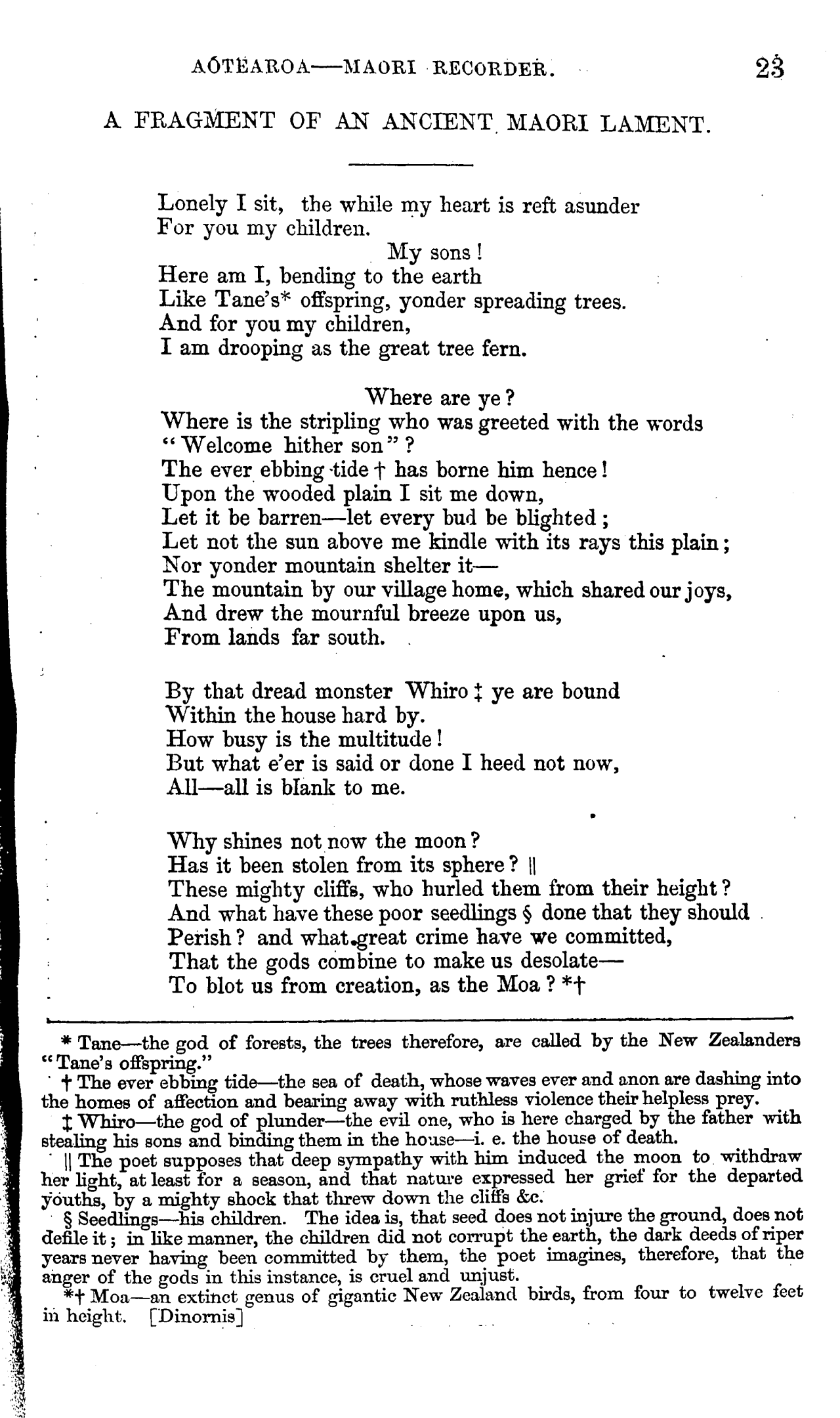
            AOTEAROA——MAORI   RECORDER.


    A FRAGMENT  OF AN ANCIENT MAORI LAMENT.

           Lonely  I sit, the while my heart is reft asunder

          For  you my children.

                                 My  sons !

           Here am I, bending to the earth

           Like  Tane's offspring, yonder spreading trees.

           And for you my children,

            I am drooping as the great tree fern.


                                Where  are ye ?

            Where  is the stripling who was greeted with the words

           "Welcome   hither son" ?

           The  ever ebbing -tide  has borne him hence!

           Upon the wooded plain I sit me down,

           Let  it be barren—let every bud be blighted;

            Let not the sun above me kindle with its rays this plain;

           Nor  yonder mountain shelter it—

           The mountain by our village home, which shared our joys,

           And  drew the mournful breeze upon us,

           From  lands far south.


           By  that dread monster Whiro J ye are bound

           Within the house hard by.

           How  busy is the multitude!

           But what  e'er is said or done I heed not now,

            All—all  is blank to me.


           Why  shines not now the moon ?

            Has  it been stolen from its sphere ?

            These mighty cliffs, who hurled them from their height ?

            And what have these poor seedlings § done that they should

            Perish ? and what great crime have we committed,

           That  the gods combine to make us desolate—

            To blot us from creation, as the Moa ?


  * Tane—the   god of forests, the trees therefore, are called by the New Zealanders

"Tane's offspring. "

 '  The ever ebbing tide—the sea of death, whose waves ever and anon are dashing into

the homes of affection and bearing away with ruthless violence their helpless prey.

   Whiro—the   god of plunder—the  evil one, who is here charged by the father with

stealing his sons and binding them in the house—i. e. the house of death.

   The poet supposes that deep sympathy with him induced the moon to withdraw

her light, at least for a season, and that nature expressed her grief for the departed

youths, by a mighty shock that threw down the cliffs &c.

  § Seedlings—his children. The  idea is, that seed does not injure the ground, does not

defile it; in like manner, the children did not corrupt the earth, the dark deeds of riper

years never having been committed by them, the poet imagines, therefore, that the

anger of the gods in this instance, is cruel and unjust.

   Moa—an    extinct genus of gigantic New Zealand birds, from four to twelve feet

in height. [Dinornis]
|
|
24 24 |
▲back to top |
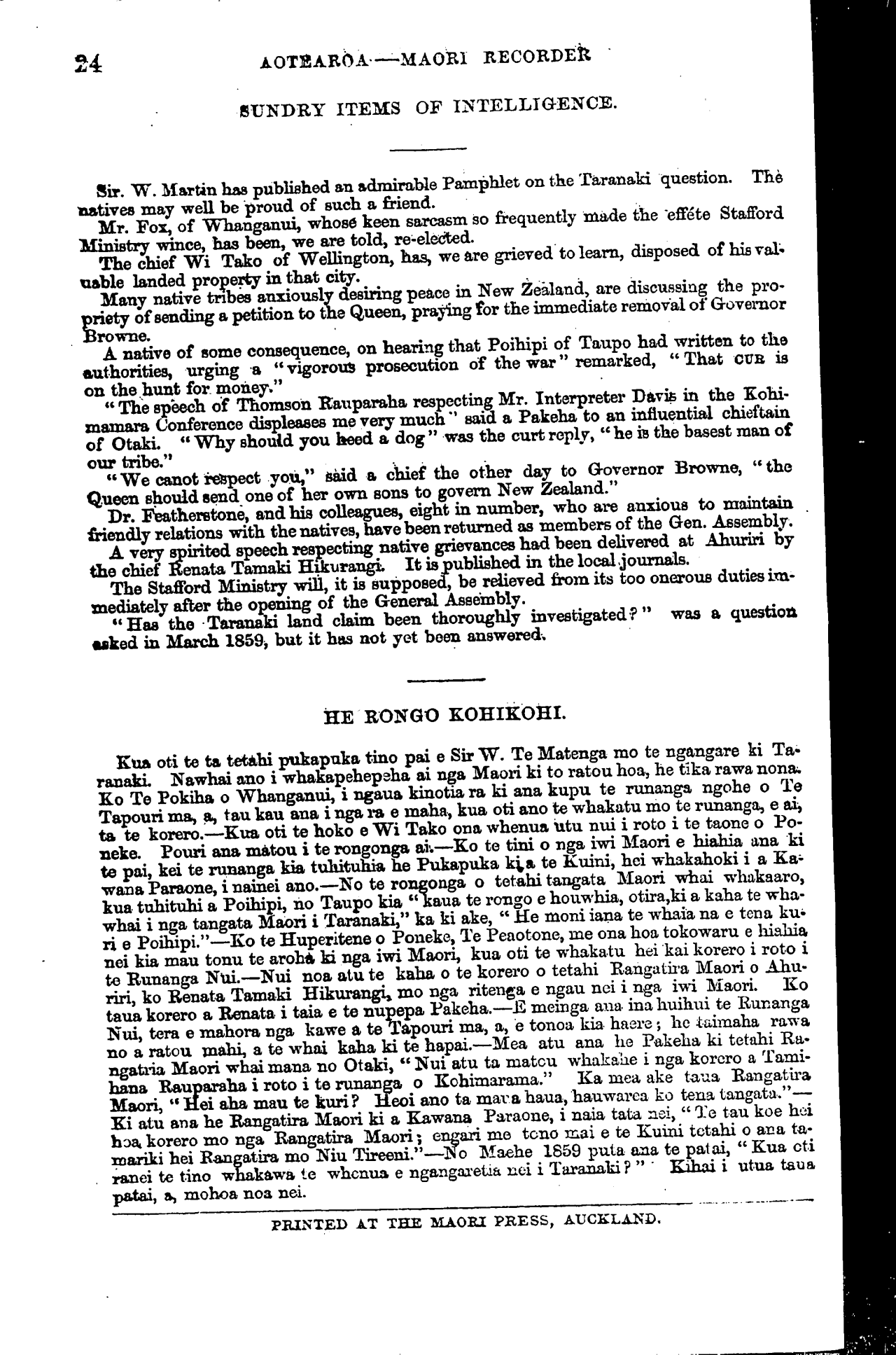
24              AOTEAROA-—MAORl   RECORDER


              SUNDRY  ITEMS  OF INTELLIGENCE.

  Sir. W. Martin has published an admirable Pamphlet on the Taranaki question. The

natives may well be proud of such a friend.

  Mr. Fox, of Whanganui, whose" keen sarcasm so frequently made the "effete Stafford

Ministry wince, has been, we  are told, re-elected.

  The  chief Wi  Tako  of Wellington, has, we are grieved to learn, disposed of his val-

uable landed property in that city.

  Many   native tribes anxiously desiring peace in New Zealand., are discussing the pro-

priety of sending a petition to the Queen, praying for the immediate removal of Governor

Browne.

  A  native of some consequence, on hearing that Poihipi of Taupo had written to the

authorities, urging a " vigorous prosecution of the war" remarked, " That CUR  is

on the hunt for money. "

   " The speech of Thomson Rauparaha respecting Mr. Interpreter Davis in the Kohi-

marama Conference displeases me very much " said a Pakeha to an influential chieftain

of Otaki. " Why  should you heed a dog " was the curt reply, " he is the basest man of

 our tribe. "

   " We cannot respect you, " said a chief the other day to Governor Browne, " the

Queen  should send one of her own sons to govern New Zealand. "

   Dr. Featherstone, and his colleagues, eight in number, who are anxious to maintain

friendly relations with the natives, have been returned as members of the Gen. Assembly.

   A very spirited speech respecting native grievances had been delivered at Ahuriri by

 die chief Kenata Tamaki Hikurangi. It is published in the local journals.

   The Stafford Ministry will, it is supposed, be relieved from its too onerous duties im-

 mediately after the opening of the General Assembly.

   "Has  the Taranaki land claim been thoroughly investigated?" was a question

 asked in March 1859, but it has not yet been answered.

                   HE  RONGO  KOHIKOHI.


   Kua oti te ta tetahi pukapuka tino pai e Sir W. Te Matenga mo te ngangare ki Ta-

 ranaki  Nawhai ano i whakapehepeha ai nga Maori ki to ratou hoa, he tika rawa nona.

 Ko Te Pokiha o Whanganui, i ngaua kinotia ra ki ana kupu te runanga ngohe o Te

 Tapouri ma, a, tau kau ana i nga ra e maha, kua oti ano te whakatu mo te runanga, e ai,

 ta te korero. —Kua oti te hoko e Wi Tako ona whenua utu nui i roto i te taone o Po-

 neke. Pouri ana matou i te rongonga ai. —Ko te tini o nga iwi Maori e hiahia ana ki

 te pai, kei te runanga kia tuhituhia he Pukapuka ki a te Kuini, hei whakahoki i a Ka-

 wana Paraone, i nainei ano. —No te rongonga o tetahi tangata Maori whai whakaaro,

 kua tuhituhi a Poihipi, no Taupo kia "kaua te rongo e houwhia, otira, ki a kaha te -wha-

 whai i nga tangata Maori i Taranaki, " ka ki ake, " He moni iana te whaia na e tena ku-

 ri e Poihipi. "—Ko te Huperitene o Poneke, Te Peaotone, me ona hoa tokowaru e hiahia

 nei kia mau tonu te aroha, ki nga iwi Maori, kua oti te whakatu hei kai korero i roto i

 te Runanga Niu. —Niu   noa atu te kaha o te korero o tetahi Rangatira Maori o Ahu-

 riri, ko Renata Tamaki Hikurangi mo nga ritenga e ngau nei i nga iwi Maori. Ko

 taua korero a Renata i taia e te nupepa Pakeha. —E meinga ana ina huihui te Runanga

 Nui, tera e mahora nga kawe a te Tapouri ma, a, e tonoa kia haere; he taimaha rawa

 no a ratou mahi, a te whai kaha ki te hapai. —Mea atu ana he Pakeha ki tetahi Ra-

 ngatia Maori whai mana no Otaki, " Nui atu ta matou whakaae i nga korero a Tami-

 hana  Rauparaha i roto i te runanga o Kohimarama. " Ka mea ake taua Rangatira

  Maori, " Hei aha mau te kuri? Heoi ano ta maua haua, hauwarea ko tena tangata. "—

  Ki atu ana he Rangatira Maori ki a Kawana Paraone, i naia tata nei, " Te tau koe hei

  hoa korero mo nga Rangatira Maori; engari me tono mai e te Kuini tetahi o ana ta-

  mariki hei Rangatira mo Niu Tireni. "—No Maehe  1859 puta ana te patai, " Kua oti

  ranei te tino whakawa le whenua e ngangaretia nei i Taranaki? " ' Kihai i utua taua

  patai, a, mohoa noa nei.


                   PRINTED  AT  THE MAORI  PRESS, AUCKLAND.
|
|
25 25 |
▲back to top |
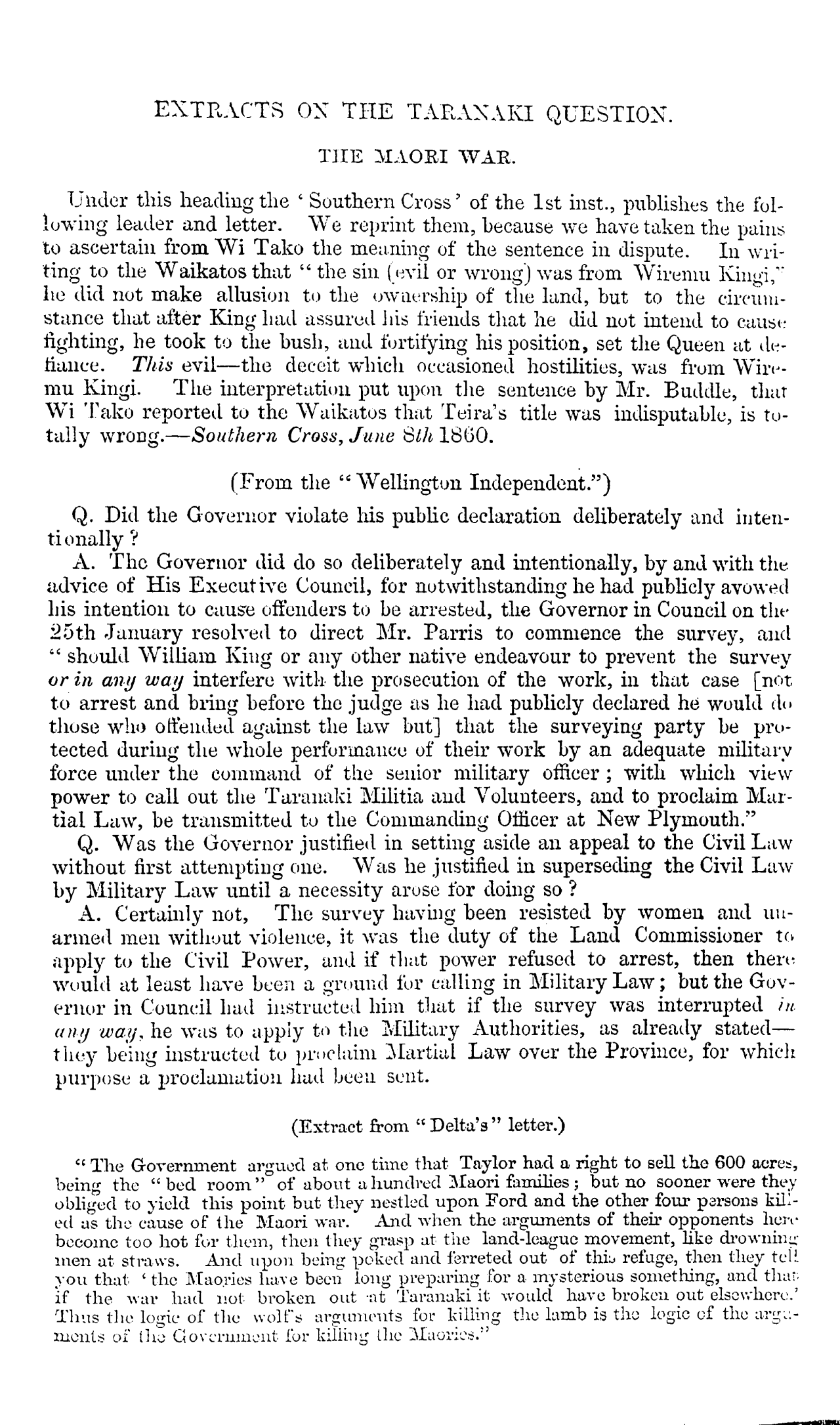
        EXTRACTS ON THE  TARANAKI  QUESTION.


                         THE  MAORI   AVAR.

  Under  this heading the ' Southern Cross' of the 1st inst., publishes the fol-

lowing leader and letter. We reprint them, because we have taken the pains,

to ascertain from. Wi Tako the meaning of the sentence in dispute. In wri-

ting to the Waikatos that " the sin (evil or wrong) was from Wiremu Kingi, "

he did not make  allusion to the ownership of the land, but to the circum-

stance that after King had assured his friends that he did nut intend to cause

lighting, he took to the bush, and fortifying his position, set the Queen at de-

tiance. This evil—the   deceit which occasioned hostilities, was from Wiri-

mu  Kingi. The interpretation put upon the sentence by Mr. Buddle, that

Wi  Tako  reported to the Waikatos  that Teira's title was indisputable, is to-

tally wrong. —Southern   Cross, June 8th 1800.


                  (From  the " Wellington Independent. ")

   Q. Did  the Governor violate his public declaration deliberately and inten-

tionally ?

   A. The  Governor  did do so deliberately and intentionally, by and with the

advice of His Executive Council, for notwithstanding he had publicly avowed

his intention to cause offenders to be arrested, the Governor in Council on the

 25th January resolved to direct Mr. Parris to commence the survey, and

 " should William King or any other native endeavour to prevent the survey

or in any way  interfere with the prosecution of the work, in that case [not

 to arrest and bring before the judge as he had publicly declared he would do

 those who offended against the law but] that the surveying party be pro-

 tected during the whole performance of their work by an adequate military

 force under the command of the senior military officer; with which view

 power to call out the Taranaki Militia and Volunteers, and to proclaim Mar-

 tial Law, be transmitted tu the Commanding Officer at New Plymouth. "

   Q. Was  the Governor justified in setting aside an appeal to the Civil Law

 without first attempting one. Was he justified in superseding the Civil Law

 by Military Law  until a necessity arose for doing so ?

   A. Certainly not, The survey having been resisted by women and un-

 armed men  without violence, it was the duty of the Land Commissioner to

 apply to the Civil Power, and if that power refused to arrest, then there

 would at least have been a ground fur calling in Military Law; but the Gov-

 ernor in Council hud instructed him that if the survey was interrupted in

 any way he was to apply to the Military Authorities, as already stated—

 they being instructed to proclaim Martial Law over the Province, for which

 purpose  a proclamation had been sent.


                            (Extract from " Delta's " letter. )

   " The Government  argued at one time that Taylor had a right to sell the 600 acres,

 being the "bed  room"  of about a hundred Maori families; but no sooner were they

 obliged to yield this point but they nestled upon Ford and the other four parsons kill-

 ed as the cause of the Maori war And when the arguments of their opponents here

 become  too hot for them, then they grasp at the land-league movement, like drowning

 men  at straws. And  upon  being poked and ferreted out of this refuge, then they tell

 A ou that ' the Maories have been long preparing for a mysterious something, and that

 if  the war had  not broken  out at Taranaki it would have broken out elsewhere. '

 Thus  the logic of the wolf's arguments for killing the lamb is the logic of the argu-

 ments  of the Government for killing the Maoris"