


|


 loading...
|
|
Te Wananga 1874-1878: Volume 5, Number 18. 04 May 1878 |
 Abstract
  Commentary
|
|
1 197 |
▲back to top |

TE   WANANGA.

       HE PANUITANGA    TENA KIA  KITE KOUTOU.
             "TIHE     MAURI-ORA."
  NAMA 18.                NEPIA,  HATAREI,  MEI  4, 1878.               PUKAPUKA 5.
PANUITANGA.         PANUITANGA.


  KIA  KITE!   KIA KITE!
I  A.  RENETI        MA
KUA    HOKI MAI A RENETI RI WAIPAWA
        NEI, KEI TAWAHI  AKE  O


TE HOTERA   A  PANIHAMA,
                   Ta  ratou toa.
 E KOKE E NUI MA WIKI,


O ta ratou mahi hoko i reira. A he tini noa atu aana
Koti, Tarautete, Wekete,
   Potae,  Kiapa,

    Kaone,  Paraikete,  Raka,
     Me nga tini mea katoa e paingia e te Maori.


       HAERE   MAI  KIA  KITE
              I te whare Hoko o
RENETI               MA.
                                         «2
Panuitanga ki  nga iwi katoa! katoa!

 Katoa! o Aotearoa, o Wairarapa, Tara-
   naki, Ahuriri, Taupo, me Turanga

                 katoa.
HE     mea ata tenei kia rongo koutou, kaua te mea
      kotahi e koutou e tuhituhi i ft koutou ingoa,
ki te pakapaka hoko whenna ranei, kite Rihi whenua
ranei, ki te mokete whenua ranei, ki etahi tikanga
ranei e pa ana ki te whenua.  Maatua  haere mai
koutou ki au, a kia mohio koutou, hei muri te matau.
e puta ai mo aua mahi. Naku na.
                      TE RIIHI,
  58                           Roia i Nepia.

              PANUITANGA.
  RARAKA RAUA KO PARAHI,

           KAI HOKO  RINO,
         (Na Pairani i Mua).


KUA TAE MAI I INGARANGI—
      39 Pu tupara
     3O Hakimana
      14 Tupara puru, puru atu i te kake
       3 Hakimana puru atu i U kake
      20 Pouaka paura pupuhi manu
       2 Tana Hota.
|
|
2 198 |
▲back to top |
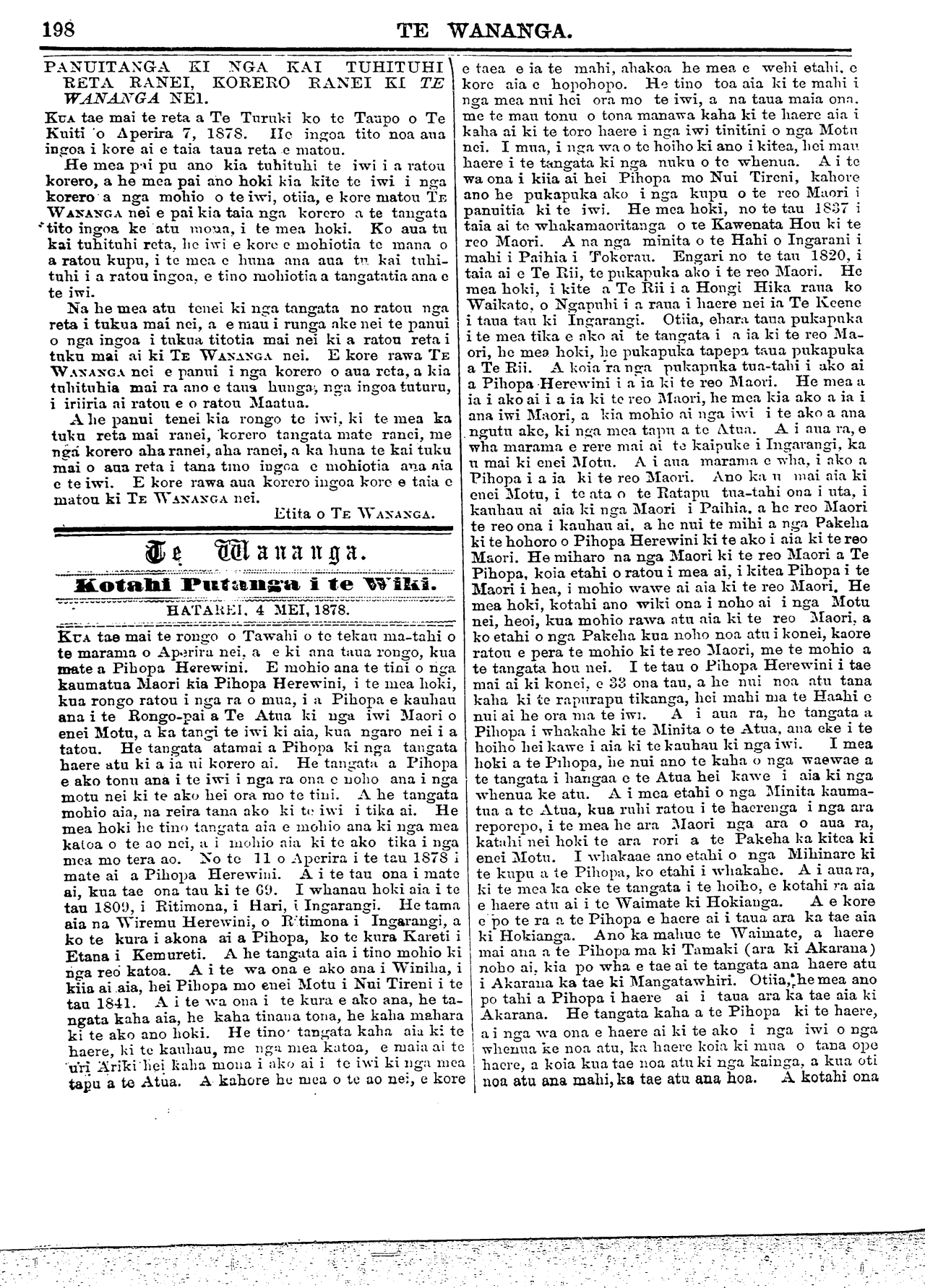
                                  TE  WANANGA.
 PANUITANGA   KI  NGA  KAI   TUHITUHI
  RETA   RANEI,  KORERO   RANEI  KI  TE
   WANANGA     NEI.
 KUA tae mai te reta a Te Turuki ko te Taupo o Te
 Kuiti o Aperira  7, 1S7S.   He  ingoa  tito noa ana
 ingoa i kore ai e taia taua reta e matou.
   He  mea pai pu  ano kia tuhituhi te iwi i a ratou
 korero, a he mea pai aho hoki kia kite te iwi i nga
 korero a nga  mohio o te iwi, otiia, e kore matou TE
 WANANGA  nei e pai kia taia nga korero a te tangata
tito ingoa ke atu  mona, i te mea hoki. Ko  aua tu
 kai tuhituhi reta, he iwi e kore e mohiotia te inana o
 a ratou kupu, i te mea e huna ana aua tu kai tuhi-
 tuhi i a ratou ingoa, e tino mohiotia a tangatatia ana e
 te iwi.
   Na  he mea atu tenei ki nga tangata no ratou nga
 reta i tukua mai nei, a e mau i runga ake nei te panui
 o  nga ingoa i tukua titotia mai nei ki a ratou reta i
 tuku mai ai ki TE WANANGA  nei. E kore rawa TE
 WANANGA   nei e panui i nga korero o aua reta, a kia
  tuhituhia mai ra ano e taua hunga, nga ingoa tuturu,
 i iriiria ai ratou e o ratou Maatua.
    A he panui tenei kia rongo te iwi, ki te mea ka
 tuku  reta mai ranei, korero tangata mate ranei, me
 nga  korero aha ranei, aha ranei, a ka huna te kai tuku
  mai o aua reta i tana tino ingoa e mohiotia  ana aia
  e te iwi. E kore rawa aua korero ingoa kore e taia e
  matou ki TE WANANGA nei.
                           Etita o TE WANANGA.
         Te Wananga.

   Kotahi Putanga i te Wiki
  HATAREI 4 MEI, 1878

  KUA  tae mai te rongo o Tawahi o te tekau ma-tahi o
  te marama  o Aperira nei. a e ki ana taua rongo, kua
  mate a Pihopa Herewini.  E mohio ana te tini o nga
  kaumatua  Maori kia Pihopa Herewini, i te mea hoki,
  kua rongo ratou i nga ra o mua, i a Pihopa e kauhau
  ana i te Rongo-pai a Te Atua ki nga iwi Maori o
  enei Motu, a ka tangi te iwi ki aia, kua ngaro nei i a
  tatou.  He tangata atamai a Pihopa ki nga  tangata
  haere atu ki a ia ui korero ai. He tangata a Pihopa
  e ako tonu ana i te iwi i nga ra ona e noho ana i nga
  motu  nei ki te ako hei ora mo te tini. A he tangata
   mohio aia, na reira tana ako ki te iwi i tika ai. He
   mea hoki he tino tangata aia e inoino ana ki nga mea
   katoa o te ao nei, a i mohio aia ki te ako tika i nga
   mea mo  tera ao. No  te 31 o Aperira i te tau 1878 i
   mate ai a Pihopa  Herewini.  A  i te tau ona i mate
   ai, kua tae ona tau ki te GO. I whanau hoki aia i te
   tan 1809, i Ritimona, i Hari, i Ingarangi. He tama
   aia na Wiremu Herewini, o Ritimona i  Ingarangi, a
   ko te kura i akona ai a Pihopa, ko te kura Kareti i
   Etana i Kemureti.   A he tangata aia i tino mohio ki
   nga reo" katoa. A i te wa ona e ako ana i Winiha, i
   kiia ai aia, hei Pihopa mo enei Motu i Nui Tireni i te
   tau 1841.  A i te wa ona i te kura e ako ana, he ta-
   ngata kaha aia, he kaha tinana tona, he kaha mahara
   ki te ako ano hoki. He  tino tangata kaha aia ki te
   haere, ki te kauhau, me nga mea katoa, e maia ai te
   "uri Ariki hei kaha mona i ako ai i te iwi ki nga mea
   tapu a te Atua. A kahore he mea o te ao nei, e kore
3 taea e ia te mahi, ahakoa he mea  e wehi  etahi, e
kore aia e hopohopo.   He  tino toa aia ki te mahi i
nga mea nui hei ora mo  te iwi, a na taua maia ona.
me te mau tonu o tona manawa kaha ki te haere aia i
kaha ai ki te toro haere i nga iwi tinitini o nga Motu
nei. I mua, i nga wa o te hoiho ki ano i kitea, Lei mau
haere i te tangata ki nga nuku o te whenua. A i te
wa ona i kiia ai hei Pihopa mo Nui  Tireni, kahore
ano he pukapuka ako i nga kupu o te reo Maori i
panuitia ki te iwi. He  mea hoki, no te tau 1837 i
taia ai to whakamaoritanga o te Kawenata Hou ki te
reo Maori.  A  na nga minita o te Hahi o Ingarani i
mahi i Paihia i Tokerau. Engari no te tau 1820, i
taia ai e Te Rii, te pukapuka ako i te reo Maori. He
mea hoki, i kite a Te Rii i a Hongi Hika rana ko
Waikato, o Ngapuhi  i a rana i haere nei ia Te Keene
i tatia tau ki Ingarangi. Otiia, ehara tana pukapuka
i te mea tika e ako ai te tangata i a ia ki te reo Ma-
ori, he mea hoki, Le pukapuka tapepa taua pukapuka
a Te Rii. A  koia ra nga pukapuka tua-tahi i ako ai
a Pihopa Herewini i a ia ki te reo Maori. He mea a
ia i ako ai i a ia ki te reo Maori, he mea kia ako a ia i
ana iwi Maori, a kia mohio ai nga iwi i te ako a ana
ngutu  ake, ki nga mea tapu a te Atua. A i aua ra, e
wha  marama  e rere mai ai to kaipuke i Ingarangi, ka
n mai ki enei Motu.  A i aua marama e wha, i ako n
Pihopa  i a ia ki te reo Maori. Ano  ka u mai aia ki
enei Motu,  i te ata o te Ratapu tua-tahi ona i uta, i
kauhau ai aia ki nga Maori  i Paihia, a he reo Maori
te reo ona i kauhau ai, a he nui te mihi a nga Pakeha
ki te hohoro o Pihopa Herewini ki te ako i aia ki te reo
Maori.  He miharo  na nga Maori ki te reo Maori a Te
 Pihopa, koia etahi o ratou i mea ai, i kitea Pihopa i te
 Maori i hea, i mohio wawe ai aia ki te reo Maori. He
 mea hoki, kotahi ano wiki ona i noho ai i nga Motu
 nei, heoi, kua mohio rawa atu aia ki te reo Maori, a
 ko etahi o nga Pakeha kua noho noa atu i konei, kaore
 ratou e pera te mohio ki te reo Maori, me te mohio a
 te tangata hou nei. I te tau o Pihopa Herewini i tae
 mai ai ki konei, o 33 ona tau, a he nui noa atu tana
 kaha ki te rapurapu tikanga, hei mahi ma te Haahi e
 nui ai he ora ma te iwi. A i aua ra, ho tangata a
 Pihopa i whakahe ki te Minita o te Atua, ana eke i te
 hoiho hei kawe i aia ki te kauhau ki nga iwi. I mea
 hoki a te Pihopa, he nui ano te kaha o nga waewae a
 te tangata i hangaa e te Atua hei kawe i aia ki nga
 whenua ke atu.  A i mea etahi o nga Minita kauma-
 tua a te Atua, kua ruhi ratou i te haerenga i nga ara
 reporepo, i te mea he ara Maori nga  ara  o aua  ra,
 katahi nei hoki te ara rori a te Pakeha ka kitea ki
 enei Motu.  I whakaae ano etahi o nga Mihinare ki
 te kupu a te Pihopa, ko etahi i whakahe. A i aua ra,
 ki te mea ka eke te tangata i te hoiho, e kotahi ra aia
 e haere atu ai i te Waimate ki Hokianga.  A e kore
 e po te ra a te Pihopa e haere ai i taua ara ka tae aia
 ki Hokianga.  Ano  ka mahue te Waimate,   a haere
 mai ana a te Pihopa ma ki Tamaki (ara ki Akarana)
 noho ai. kia po wha e tae ai te tangata ana haere atu
 i Akarana ka tae ki Mangatawhiri. Otiia, he mea ano
 po tahi a Pihopa i haere ai i taua  ara ka tae aia ki
 Akarana.   He  tangata kaha a te Pihopa ki te haere,
 a i nga wa ona e haere ai ki te ako i nga iwi o nga
 whenua ke noa atu, ka haere koia ki mua o tana ope
 haere, a koia kua tae noa atu ki nga kainga, a kua oti
  noa atu ana mahi, ka tae atu ana hoa. A kotahi ona
|
|
3 199 |
▲back to top |

                       TE WANANGA.
haerenga atu i Whaingaroa ki Waikato, a koia anake, a
no te ata tu, ka tae aia ki te kainga o te Kaora i Waipa.
He  mea ki ano taua kaumatua i oho i te moe, haere
tonu a Te Pihopa ki te kainga Maori. He nui te koa
a te iwi Maori o aua ra ki nga Minita, a na te iwi aia
i kai ai i te kai, he mea hoki kei muri noa ata ana hoa
e haere mai ana, me ana kai Pakeha, ara, te  tii, te
huka, te Taro Pihikete. He nui ano hoki te mahi a
Te Pihopa ki nga iwi i nga  Motu  o Hawaiki  nei.
kotahi Maori o  te Motu o Pate i kitea ki Hokianga.
He  mea  hoki i haere mai taua Maori i taua kainga ki
te rapu i nga tangata kauhau i te kupu a te Atua.
He  mea runanga  marire e taua iwi o taua Motu, kia
haere taua tangata o ratou ki te toro i taua iwi kau-
hau i te Rongo-pai a te Atua. A i eke mai taua Ma-
ori hei heramana ki te kaipuke i rore mai ki Hokianga
ano ka u tana kaipuke ki reira, ka kite taua Maori i
te Apiha a te Kawanatanga, a na taua Apiha i tono
taua Maori kia Te Pihopa, a na Te Pihopa taua Maori
i kawe ano ki taua kainga i Pate. A  tahuri katoa
taua iwi o tana Motu ki te karakia ki te Atua pono.
A  na tana tangata i whakahokia nei e Pihopa i tino
kite ai nga Maori o aua Motu i te pai, me te kaha a
te Pihopa  ki te mahi i nga mahi ma te Atua.


      Te Wananga


  Published every Saturday
     \_\_\_\_\_\_\_  SATURDAY,    MAY  4. 1878.

         THE   LATE   BISHOP     SELWYN
 THE news from England informs us of the death of
 Bishop Selwyn.  To most of our readers, especially to
 those old chiefs who have seen and heard the late Bishop
 preach the Word of God  to  the Maori people, this
 news of his death  will bring sorrow, as  they at all
 times could seek and obtain the advice and assistance
 of him, of all others (from his superior knowledge,
 and wide  views of  all that concerns not only the
 future world, but also those tilings that pertain to this
 world), was the most  capable to give them, counsel.
 The late Bishop died on the 11th. of April, 187S ; he
 was then in his 69th year.  He  was born  in Rich-
 mond, in Surrey, in 1809, and. was the son of the late
 William  Selwyn,  Esq., of Richmond.  He  was edu-
 cated in Eton and  St. John's College, Cambridge,
 where  he  was  distinguished as a  classical scholar,
 having   been  in the  first class iu classics.  While
 i ding as tutor and curate at Windsor iu 1841 Le was
 consecrated. Bishop of New   Zealand.  His  college
 life was distinguished by a robust power of body and
 mind he was one  of the most  untiring walkers,
 wrestlers, and swimmers ut the college.  In  deter-
 mination, of purpose not  any  obstacle which  the
 intellect or bodily  exercise could  overcome   could
 deter  him  from accomplishing.   These  powers  of
 endurance  gave him a superior position as the future
 and the first Bishop of New Zealand. At the time
 Le  was appointed to that position in New Zealand
 widen he so ably and fervently filled, there had been
 little or no amount of information given to the world in
 respect to the Maori  language, as it was not till 1837
 that  a translation into the Maori language of  the
 New Testament had been published, which was accom-
 plislied by the ministers of the Church of England
 at Paihia, iu  the Bay   of Islands.  There had, of
 course, been published in 1820 a book  which, was
 drawn  up  by  Professor Lee. from information and
 observations obtained by him from Hongi  and Wai-
 kato, the Maori chiefs who visited England  in that
 year, purporting to be a grammar of the Maori lan-
 guage, hut. the use of that volume by anyone learning
 the Maori language would be sure to confound, them
 iu their first attempt to obtain any information what-
 ever as to the construction or the rules By. which the
 Maori language  is guided.  With  these two books
 the late Bishop began, his study of the.language of
 the people over whom he was to  exercise the. duties
 of a Christian teacher and Bishop, anxi to whom, in
 their own language, he was to unfold the truths of
 the everlasting God. The voyage iu those clays occu-
 pied four months in passing from England to these
 shores, and in  that time, and with such help as the
 indomitable Bishop had in the two books we have.
 named, he had so far mastered the Maori language
 that ou the morning of the first Sabbath which, he
 spent in New  Zealand he occupied the pulpit in the
 church at Paihia and preached to a Maori congrega-
 tion in their own tongue. Those  of the European
 public who were in the congregation on that occasion.
who, from a long residence in New Zealand, were
 perfectly competent to judge on the subject, spoke in
 the most  glowing terms of the  very able and clear.
 manner,  and the perfect command of the  Maori, lan-
 guage which, the late Bishop exhibited on that occa-.
 sion.  Some of the old chiefs asked where the new.
 teacher of God had seen the Maori people, and how
 he had learnt their language so  soon—he had not .
 been one week in New Zealand, and he could speak
 better than some Europeans who had been with, the
 Maori  people for many years.  When  the late Bishop
 first landed on these shores he was in his 33rd year—
 young, active, and full of hope, and concocting plans
 of action for the future good of the Church. One of
 the  first reforms he desired to accomplish  was to
  declaim against all and every use by man, especially
  the ministers of the Gospel, of the horse as a means
  of conveyance  for man  from  place to place. The   .
  Bishop argued that man, with the locomotive power
  given to him by his Maker, was sufficient for any and
  every emergency   iu travelling, Such doctrine in
  regard to the horse was looked on with dismay by
  some  of the  old  Missionaries, who had  for years
  plodded through  swamps  and mud in the  Maori
  tracks (there were not  any roads  then ) to visit the
  various tribes to whom they preached. Those old and
  good men   (before horses had been introduced into
  New  Zealand) had spent the strength and fire of their
youth on such tracks through forest, over swamps
and across creeks and rivers and
|
|
4 200 |
▲back to top |

                       TE WANANGA.
the journey from Te Waimate to Hokianga occupied
a whole day on horseback, but to a traveller on foot
it would necessitate a few hours of the night ere he
could gain his journey's end, The  late Bishop has
often walked it in less time than any other pedestrian
could  perform it in.   And  when the  head-quar-
ters of the  Church. Mission  was  removed  from
Te  Waimate to  Auckland, at  that time  it took
the  good  people  of  those times  four days  to
go  from  Auckland  to Point  Russell (then called
Mangatawhiri),  but it has  been  known   for the
late Bishop to pass over that distance iu one summer's
day, taking the time from daybreak to sunset. The
Bishop  was  a great traveller, and on  all occasions
when  he bad a journey which would occupy ordinary
travellers a few days he invariably pushed on, and left
his Native attendants to follow. He always  carried
ia  his own hand  an air bed made  of indiarubber,
which,  as he came to the  rivers and creeks in his
journey, he inflated, patting his clothes on the bed,
and swimming, he pushed the bed before him. Thus
 he has been known  to go in one day the distance
 which his Maori companions took three days to travel,
 so that at the time his followers came into the pas
 which they had  gone to  visit, the late Bishop had
 not  only  preached  many  times  to the  people
 of the pas,  but  bad  transacted all the  business
 for the  Church,  which  bad  occasioned his  visit.
 On one occasion, ho had travelled from Raglan (then
 known   as Whaingaroa)  across the mountains to
 the Waipa, a distance which occupied ordinary travel-
 Iers a whole day; but the Bishop, with his bed, had not
 only crossed the mountain track all alone, but he had
 swam  across the Waipa river, with the aid of his air
 bed, to the house of a Mr. Cowell, who was one of
 the oldest European  settlers in that district. It was
 early morning (about 8 o'clock), and as the Bishop
 had to pass close to Cowell's he called, tapping at the
 door, and asked if the old settler had had his morning
 meal.  The  question so astonished Cowell, awaking
 from his sleep, that he answered  in  the negative.
 The  Bishop bid him  good  morning, after informing
 Cowell from whence he came, in answer to a question
 put by Cowell to that effect. The Bishop passed ou
 to the Maori pa, where he  was received with, every
 mark  of pleasure by the  Maori  people, where he
 broke Ms fast on that which, in those days could be
  supplied by the Natives, viz.,potatoes and eels. Tea and
 bread were things unknown in those days in a Maori pa,
 unless the European traveller had them in his own havre-
  sack, which, in most instances in regard to the Bishop
 were  miles behind him  on the back of his Native
  guide.  The marked   interposition of Providdnce in
  opening the way for the Bishop to preach and teach.
  the Natives of the islands of these seas was strikingly
  shown in one instance. A Government officer was in
  the Hokianga  district ou a mission from the old Land
  Claims Commissioner,and while there his influence was
  asked to interpose between the sailors of a vessel then
  iu Hokianga and  a Native of one  of the islands of
  the South. Sea. This  officer, by permission of the
  captain of the vessel, obtained an interview with the
  Native.  As this Native spoke some words of his own
  language similar to the Maori, the Government officer
  after * little time could converse with him, and from
the account given by this Native it was learnt that he
was  a native of an island called Fate, that his people i
had heard from some white men that there was only \\
one God, and as the Native (or Maori) priests of the
people of Fate had for some time become of their own.
accord  dissatisfied with their own  superstitions and
incantations, he (this Native) had been sent away, by
order of a council of all his people, in a whaler from
their own island in search of the people who could
tell them of this one God of  all the world. This
Native had been in Sydney, but us he was not allowed
to go on shore he had not found what he was in quest
of; he had  been to many  parts iu various lands, in
fact it was seven years since he had  left his home.
The  Government officer obtained his discharge from
the vessel, and sent him in charge of the mail-man to
 Te Waimate,  with a letter explaining all the circum-
 stances given above to the late Rev. R. Davies, who
 forwarded him on to Auckland to the late Bishop Sel
 wyn. The Bishop, who by this time had learnt many of
 the languages spoken on the various islands of the
 South Sea, learnt from this Native the whole history
 of his travels, and when the Church Mission schooner.
 Southern Cross, went on her next voyage the Bishop
 took the Native to his home. The return of the long
 absent one in company with the man of God was
 hailed by all the people of the island of Fate with the
 joy that words can not express. We have spoken to
 the late Bishop on the subject, and learnt from his
 own lips that this Native was the means of opening
 taore doors to the Church through which the word of
 God could be proclaimed to the savage population of
 the South. Seas than any other means.
   Our space compels us to hold over very many anec-
 dotes of the late Bishop, which we hope to give in
 some future issue.

    NGA    RONGO    KORERO.

                 NGA   TAKE.
   E kiia ana, kua mea te Take kia oho te iwi Take. A ko
 taua iwi Take e noho ana i nga iwi o Romenia, kua oho
 ki te riri ma ratou ki te Ruhia.  He  mea hoki na
 taua iwi e tino he ana ratou i te iwi Ruhia, he whaka.
 taurekareka na te Ruhia i a ratou.

          TE WAIROA   (I NEPIA).
   Aperira te 26, 1878. E kiia ana ko Tohana, raua
 ko Te Waru, i whawhai i waenganui po i te kainga
 i Karaita. A he mea i mate a Te Waru i a Tohana te
 mahi whawhai mamau, koia a Te Waru i peke ai ki te
 awa,  a kau atu  ana aia ki tetahi taha o te awa.
 A  kihai a Te Waru i whiti ki tawahi o te awa ka
 totohu aia, a mate ana  aia ki te wai.  Kei le rapu
  nga Maori i te tupapaku. He nui te tangi a te iwi.

           TE KUPU  A RUHIA.
    E ki ana a Ruhia, ko ana ope hoia e noho nei i te
  taha o te Pa nui a Take i Kotatinopera.  Ko  ana
 hoia, me  ana Apiha, me haere ki roto ki te Pa nui i
  Kotatinopera i nga Ratapu, ki reira karakia ai. He
 tito ano hoki taua kupu a Ruhia, he whakawai kia
 tukua te Ruhia ki te Pa, ka oho ai te Ruhia, ka tango
 i te Pa ma ratou.
|
|
5 201 |
▲back to top |

                              TE  WANANGA.
                 RUHIA.
   I mea atu te Kawanatanga a Ingarangi ki te Kawa-
 natanga a Ruhia.  E hiahia ana a Ingarangi kia mau
 te rongo, a kia whakawakia e te Runanga Kingi nga
 take e mangai te rongo a Ruhia kia Take. Ka mea
atu  a Ruhia  kia Ingarangi, ko nga moa  kua oti i a
raua ko Take nga mea e pai ana kia Ruhiu, a kahore
kau he take e rapurapu ai nga Kingi i etahi atu take
 e mau ai te rongo a Ruhia kia Take. He mea  hoki
na  Ruhia kei heke tana tupu, me tana mana,  ana
whakahengia a Ruhia e taua Runanga Kingi.

           NGA  HOIA I INIA.
   E kiia ana kua mea a te Kuini kia haere atu te ope
hoia nama S o Inia, ki te Pa nui i te wahapu o te
 moana  i te Metitereniana, he mea hoki kia tata ai aua
 hoia ki te wa o te riri, ana he a Ruhia ki Ingarangi.

              ROMENIANA.
   Kua mea atu te Kingi o Ruhia ki to iwi o Rome-
 niana, ka tu i a Ruhia te ope hoia a Ruhia, a kotahi
rau e rua te kau mano o taua ope Ruhia ka whakano-
hoia e Kuhia ki te whenna i Romenia hei tiaki i taua
whenua  raa te Ruhia.

                              TE       REREWE I NEPIA
   No te  marama  o Mei nei i oko ai te 5391, (e rima
mano  e toru rau e iwa tekau-ma-tahi) tangata i te re-
rewe o Nepia. A  ko nga tana taonga i utaina ano ki
taua rerewe  i te marama o Mei. i tae ki te 2023, (e
rua mano  e rua tekau ma-toru taua). A ko nga hipi,
me  nga kau, me nga hoiho i utaina ano ki taua rerewe
i taua marama   ano, i tae ki te 2080, (e rua mano, e
waru tekau.

               TE RUHIA.
   E ki ana te iwi o Ataria, ko te mahi whakanoho a
te Ruhia i ana hoia ki te whenua a te Romeniana, he
takitaki taua mahi i te whawhai ma Ruhia ki nga iwi
o Ataria, a kua mea a Ataria, me mutu  te tuku ope
hoia  a Kuhia  ki te whenua   a te hoa a, Ataria i
Romenia.

      TE PAREMATA    O NUI  TIRENI.
   E kiia ana, e kore e tu te Paremata o Nui Tireni i
  neke, a kia tae ra ano ki te rua o nga wiki o Hurae
   ano.

                  TE  TAKE.
  E  kiia ana, kahore kau he kupu a te Kawanatanga
a Take, mo nga take a te Ruhia rawa ko Ingarangi e
tautohe nei, mo te Runanga mahi i nga take rongo
mau  a Kuhia raua ko Take. He noho hangu noa iho
ta taua Paremata  a Take,  e waiho ana e ratou, ma.
Kuhia raua ko Ingarangi e mahi aua korero,

        TE  KINGI O NGA  TAKE.
  E  ki ana tetahi Nupepa o te tino Pa nui a Tako.
Kua  mea etahi o te iwi o nga Take kia whakamutua
te mahi Kingi  o ta ratou Kingi, a, kia tu he Kingi
hou ma ratou. A e kiia ona na etahi o te Kawana-
tanga o te Kingi  taua tikanga. A  kua  moa taua
Kingi kia haere aia ki te Pa i Punaha, kei kohurutia
aia, a kei hopukia ranei aia e nga Ruhiana.
         TE OPE  TAUA  A KUHIA.
   E hono tonu ana te tae o nga ope hoia a te Ruhia
 ki te takiwa o te Pa nui a Take. He mea hoki na
 awa ope, he whenua marae  taua whenua, he wahi
 pai mo ratou e tutu ope ai i nga ra o ratou e akoako
 ai ki nga mahi hoia. He teka taua kupu, he huaki te
 whakaaro a aua hoia i te Pa o Take kia riro i a ratou.

             TE  IWI  I RUHIA.
   He nui noa atu te amuamu a nga iwi o Ruhia ki ta
 ratou Kingi, a he tini nga tangata o taua iwi e mahi
 he ana ki ta ratou Kingi. Kua mea hoki etahi o te iwi
 kia mahia he mahi, e kore ai e tino mahi he ta ratou
 Kingi.

   NGA  ROMENIA RATOU KO TE RUHIA.
   Kua  timata te whawhai a Ruhia raua ko Romenia,
 a kua hinga te parekura, kua mate a tetahi, a tetahi.
 He iwi hoki te Romenia, i tautoko i te Ruhia i nga ra
 timatanga o te whawhai  a  Ruhia kia Take, a  ko
 tenei, kua tahuri taua iwi kua patu i a Ruhia.

          TE HUI I HIKURANGI.
   E kiia ana. e kore te iwi tuhituhi korero mo nga
 nupepa, e tukua kia haere ki te hui i Hikurangi. He
 tito pea ia taua kupu nei, he mea pea. na te teka o
 aua kai-tuhi korero ki nga nupepa Pakeha, i kiia ai
 taua iwi kia kaua e mahi tonu i te korero wawata
 a ratou ma te iwi.

               TE RUHIA.
   E kiia ana, kua  mea  etahi o te iwi o Ruhia, kia
 kohikohi moni te iwi hei hoko kaipuke tino tere, a
 kia he rawa ake te he a Ruhia ki Ingarangi, ma aua
 kaipuke e tiki, e mahi he nga kaipuke uta taonga a
 nga iwi a Ingarangi, kia wawe ai te he o te Iwi Inga-
 rangi i te kore taonga rao ratou. He tikanga mahi
 tahae taua whakaaro  a  nga iwi o Ruhia, no  te
 mea, e kore te iwi ngaki kai a te Ingarangi e tae ki
 te whawhai, a e kore e tika kia rahua nga kaipuke
 uta taonga a te iwi Ingarangi e Ruhia.

               WAIKATO.
   Aperira te 26, 1878. He tini nga nui kua hoea ki
 Waikato, a  he Parao, he Huka  nga utanga  o aua
 waka, hoi kai ma te hui i Hikurangi, a he nui noa atu
 nga Maori kua noho i te taha o te Wairere i Waikato
 i roto atu i Areka. Apopo  te tae mai  ai nga  iwi
 Maori o to wahapu o Waikato, a e wha waka taua e
 eke mai ai ratou. E kiia ana, e kore pea a Rewi e tae
 ki taua Hui, i te mea e ki ana a Te Whatanui, e kore
aia e tae ki taua Hui.  A  e kiia ana, ki  te mea  ka
hui te Hui a Kawana Kerei kia Tawhiao, hei muri o
taua Hui te kite ai a Rewi i a Kawana Kerei, i te mea,
he Hui  ke ano te Hui a  Maniapoto  e korero  ai kia
Kawana  Kerei.  E kiia ana, ko a te Mane a Kawana
Kerei te tae ai ki Waikato.  He  Hui   nui rawa  te
Hui  ka tu nei ki Hikurangi.

          TE  IWI I ROMENIA.
  Kua  tu nga iwi o Romenia hei hoia, a kei te tutu
ngarahu taua iwi kia mohio ai ratou ki te mahi wha-
whai ki te Kuhia.
|
|
6 202 |
▲back to top |

                     TE WANANGA.
NGA  IKA  PAKEHA  I TE  ROTO  I WAITO-
    TARA  E  KIIA NEI KO  WAIKATO.
  Kua  nui te maha o te ika Pakeha i tukua ki te roto
e Waikato i Waitotara, he mea hoki, he tini nga ika
nui kua kitea e tere ana i roto i taua wai.

     NGA  HOIA U  HOU MAI  O INIA.
   He nui noa atu te koa o te iwi i Mata, i te ra i u
ai nga hoia o Inia ki taua wahi.

                HOKIANGA.
   No  te taenga a te Kawana   ki Hokianga, i tino
 powhiritia ai aia e Ngapuhi.   He  iwi  manaaki  a
 Ngapuhi i te Kawanatanga o te Kuini, a ko te mahi a
 Ngapuhi i tautoko ai i te mahi pai a Kuini i nga ra o
 te Kawana  Hopihana  i u mataati mai ai ki enei motu,
 e mau tonu nei i Ngapuhi. 1 tu te Hakari kai i nga
 tino Pakeha  o Hokianga  ma te Kawana,  a ko nga
 kaipuke Wiwi e tu ana i Hokianga, i pupuhi i a ratou
 purepo mo te Kawana, a i tae aua purepo i puhia ra
 ki te 21 (e rua te kau ma tahi). Ko te maha hoki
 era o te purepo e puhipuhi ai te iwi mo te Kuini. He
 nui te huri a aua iwi mo te Kawana i Hokianga.
          TENEI MEA   TE MERENI.
   E  kiia ana. kua mahi te Amerikana i te mereni hei
 Huka,   e kinakia nei ki te Tii. A he hinu utu nui e
 mahia  anu i te kakano o te mereni, a he waipiro o te
 peha  ano o te mereni.

            TE KUPU  A  RUHIA.
    Kua ki nga ope hoia a Ruhia e noho aua i te taha o
  te Pa i Kotatinopera, kia kaua  ratou e haere ki te
  karakia i roto i taua Pa. He mea pea, i kitea te take
  o ta ratou whakaaro, koia ratou i mea ai, rae rautu ta
  ratou mahi nukarau.

 TE  KUPA  A INGARANGI,  MO  TE  TIKANGA
   A  RUHIA   1 MEA  NEI, KI TE KAIPUKE
   TERE  HEI  MAHI  HE  I NGA  KAIPUKE
    UTA  TAONGA    A INGARANGI.
    E kiia ana kua mea te kupu a te Kawanatanga o
  Ingarangi.  Kia mahia e te iwi o Ingarangi, nga kai-
  puke tino tere ma ratou, a kia 100 (kotahi rau) o aua
  kaipuke, hei whawhai, a hei hopu i nga kaipuke a
  Ruhia, ana puta te mahi a Kuhia, mo nga kaipuke ata
  taonga a Ingarangi.

     TE KUPU   O TE IWI O INGARANGI.
    E  ki ana te kupu a te iwi nui o Ingarangi. Ki te
  mea  ka mahia e Kuhia he kaipuke hei rahu i a ratou
  kaipuke uta taonga, a ki te mea ka mau etahi o nga
  kaipuke a Ruhia i a Ingarangi. Ka mahia nga Ruhia
  o aua kaipuke ki te tikanga o te Ture e mahia ai te
  tangata kohuru. Ana  he mate rawa ata ki te po te
   ar» e mahia aia nga tangata o ana kaipuke Ruhia e
  Ingarangi.

        RUHIA RAUA  KO INGARANGI,
     Aperira 3O, 1878. Kahore  ano i ahua pai te tika-
   nga a Ruhia ki te kupu tono a Ingarangi, kia houhia
   te rongo a Ruhia kia Take. Otiia e mau tonu ana te
   korero a Ingarangi kia Ruhia, kia pai ai a Ruhia ki te
  hohou  i ta raua rongo.
        NGA   HOIA  O INGARANGI.
  Kua mahi nui le iwi o Ingarangi i etahi o ratou hei
hoia, a kua tu taua hapu hoia o ratou.  E kiia ana,
ahakoa i kiia aua hoia hei tiaki i te marae o Ingarangi
ki te mea ka kino te he a Ruhia kia Ingarangi, ka
haere ana  hoia hei tino tangata ki te whawhai kia
Kuhia, hei tautoko i te ope nui mo te whawhai.

    NGA  HOIA  O TE IWI I INGARANGI.
   Kua tu te ope hoia a te lwi, a kua tae aua hoia ki
te 8,000 (e waru mano).   Na te iwi te hiahia ki aua
hoia nei, a na te Kuini i whakaae to  hiahia a te iwi.
Ka  pai ano kia tu te iwi hei mahi i nga mea hei ora
mo  ratou, he mea hoki, ko te mana o to iwi e tupu
nui ai, a e ora ai te iti me te rahi.
NGA  KUPU  ATE KAI TUHI  KORERO   O TE
            NUPEPA     TE HERARA.
   Akarana  Mei 1.  E ki ana te kai  tuhituhi korero
 mo Te  Nupepa  Te Herara, kua korero aia ki a Rewi
 Maniapoto, mo te hui meake nei tu ki Hikurangi, a e
 mea ana taua kai tuhituhi, i ki atu a Rewi ki aia, e
 kore a Rewi o tae ki te hui i Hikurangi. Ma te tono
 a Kawana   Kerei  ranei, a Te. Hiana te Minita  Maori
 ranei kia tae ki aia ki a Rewi, he tono na raua kia
 haere a Rewi ki taua hui, ka haere ai a Rewi ki te
 hui.  A  e ki aua ano taua kai tuhituhi korero ki te
 Nupepa   te  Herara i mea atu  a Rewi ki aia. Na
 Tawhiao ratou ko Waikato i karanga tana hui i Hiku
 rangi kia tu, a kahore kau he take a Rewi mo taua
 hui, e hara i aia tana hui i karanga, a e mea ana a
 Rewi,  kia waiho a Waikato, kia Waikato   ana  mahi.
 A  e ki ana ano taua kai tuhituhi i mea atu a Rewi ki
 aia. Kahore  kau ana a Rewi mohio ki nga  mahi e
 mahia nei e Waikato, hemea hoki na Rewi e kore &
 hoki nga whenua a Waikato kia Waikato.  A  e mea
 ana taua kai tuhituhi korero, i mea a Rewi ki aia, e
 mea ana pea a Waikato, ka whakahokia ano nga whe-
 nua  a Waikato  kia ratou kia Waikato ano, otiia kahore
 kau ana a Rewi mohio pera, ara, e hoki nga whenua a
  Waikato kia Waikato  tangata. A e mea ana ano taua
  kai tuhituhi, i mea a Rewi ki aia, ki te mea ka haere
  aia a Rewi ki tana hui, ana tonoa aia e Kawana Kerei
  ranei, e Te Hiana ranei, he mea nana na Rewi, e kore
  e kiia nana te tikanga o taua hui, i te mea e ki ana
  aia a Rewi kia korero aia anake, mo ana mahara mo-
  te whenua i Otautehanga. He mea hoki, he kupu ta
  Rewi mo taua whenua. A e mea  ana ano taua kai
  tuhituhi, i mea a Rewi, e kore aia a Rewi e pai kia
  kiia e nga Minita o te Kawanatanga, he haere ta Rewi
  ki taua hui i Hikurangi ki te korero i ana ku mo te
  whenua i Otautehanga. Koia ra te take ona o Rewi i
  kore ai e pai kia haere ki taua hui i Hikurangi, a ma
  te tono a Kawana Kerei ranei, a Te Hiana ranei, kia
  haere ai ki taua hui, ka haere ai aia a Rewi ki taua
  hui.   A i mea taua kai tuhituhi, i penei nga kupu ft
  Rewi ki aia ki taua kai tuhituhi. I whakahe tonu a
  Rewi i te mahi whakatu Kingi Maori, a he mea tohe
  tonu aia e te tangata, koia aia i ahua whakaae ai kia
  tu te Kingi Maori, a i ahua mahi ai ano hoki aia mo
  taua Kingi kia tu.
     E ki ana ano taua kai tuhi korero, e mea ana te
  rongo korero, ko a Te Paraire te tae ake ai a Kawana
   Kerei ki Hikurangi. A  e kiia ana tetahi take korero
  e korero ai nga Maori i taua hui, ke mea kia mutu te
|
|
7 203 |
▲back to top |

                            TE WANANGA.
hoko whenua, i tua o te rohe o te whenua o te uru o I
te patu.
  Areka  Mei 1 1878.  E ki ana ano taua kai tuhituhi.
No    napo  i tino hui mai  ai te  nui o te Maori
ki  konei ki  Areka  nei, a he  moa  tono e  nga
Maori    kia  riro   i a   ratou  i   te  Maori  tetahi
whare  nui i Areka.    He  whare  na te Pakeha,
e 40 (e wha  tekau Maori) i tae ki tana whare.  He
mea  utu e ana Maori. kia riro taua  whare  i n ratou
mo  te po kotahi, a utua ana e ratou taua whare mo
 tana po kotahi. Ano ka po, ka tu tu kanikani Pakeha
 a aua Maeri.   He tika te tu a aua Maori i taua kani-
 kani Pakeho, he mea hoki kua  mohio  te Maori ki
 taua tu mahi a te Pakeha. Ko te utu e tapoko ni to
 Maori ki tana kanikani he rua hereni (2) mo te Maori
 kotahi.  Na te Maori ano i karanga taua utu.   He
 pai te tikanga i maina ai tana kanikani. Kahore he
kupu  amuamu, a kahore he whawhai. Kahore he aha
 a ana Maori, i tana mahi takaro a ratou.
   No  te ra nei no te 1 o Mei, i hapainga ai te ope
 Maori  ki  Hikurangi a kahoro  he Maori  i noho i
 konei. A e hoki mai a Meiha Te Wheoro ki te toro i a
 Kawana   Kerei, a ma Meiha  Te Wheoro   e arahi a
 Kawana  Kerei ki Hikurangi.

  WHAT   THE  HERALD  REPORTER    STATES.
   A  telegram from Auckland,  dated May   1. says:—
 The Herald reporter has telegraphed respecting an
 interview which he has had with Rewi on the subject
 of the Native meeting,  which, he said he would not
 attend, unless he were asked by Sir George Grey or
 Mr. Sheehan.   The  meeting he said was called by
 Tawhiao  and the Waikatos, not by him, and he had
 nothing  to do with it. He  desired, to leave the Wai-
 katos alone. He  knew  nothing of what was being
 done.   He did  not believe that the land of Waikato
 would  be restored to the Natives. Perhaps the Wai-
 katos had some idea that it might be restored, but he
 tad  none.  The  reason why he  would go, in the
 event  of being asked by the Primier or the Native
 Minister  was that iu  such case he  would  not be
 identified with the meeting, which would understand
 that Ministers wished to arrange with him grievances
 in reference to Otauhenanga.  Rewi  had  a special
 grievance about that land. He would not give Minis-
 ters the opportunity of saying that they wished to
 meet him  about that, and that he would not come.
 He  had always opposed the idea of setting up a Maori
 King, but, when persuaded, he had  taken an active
 part in the movement.
    It is expected that the Premier will leave here for
 Hikurangi on Friday.  One  subject which the Na-
  tives will propose at the forthcoming meeting will be
  an enactment next  session to stop all purchases of
 land outside the confiscated boundary.
    A telegram  from  Alexandra, dated May 1, states :
  Last  night the Natives assembled here engaged the
  public hall for a quadrille party. About 40 attended,
  the tickets being 2s. The ladies were well dressed,
  and all seemed to know the figures. The whole affair
  was conducted with decorum.
    The  whole of the lower Waikatos and Kingites in
  this locality left this morning for Hikurangi. Major
  Te Wheoro  will return so as to meet Sir G. Grey on
  his arrival here.—H. B  Herald.
HE   KUPU    AUE,   A  HE   KUPU    TONO   NA   NGA
  TAKE KI NGA  IWI O KUINI  WIKITORIA, KIA
  WHAKAORANGIA    RATOU   E  NGA  IWI  O TE
                  INGARANGI.
  Na tetahi Take, kei te Pa o Kuini i Ingarangi nga kupu
nei, he tono nana ki nga iwi o te Kuini kia mahia he naahi
e nga iwi o Ingarangi, kia ora ai nga Take i nga tini mate
e taami nei ki nga Take.  A koia nei nga kupu a taua
Take.  " E kii ana nga kupu rongo korero o taku iwi, kua
tao mai nei ki au i to matou Pa i Katatinopera, he tino
nui, he mate kino te mato u pa nei ki nga iwi i oma atu ki
taua Pa, kia ora ai ratou i te patu a Ruhia. E ono tekau
nga Takiwa  whenua  kua mate  rawa i te Ruhia te patu.
A kahore kau he kai, kahore he whare e kai ai, a e noho
ai aua iwi i whati atu i aua Takiwa ki te Pa nui. A he
kore whare e noho ai nga wahine, nga tamariki, nga tino
kau-matua,  koia, ana whati i to wehi a te patu, i moe
whare kore ai i te koraha. A he nui te kopeke o aua iwi
i te ngaunga n te huka, a te matao o te Hotoke. A e ki
ana nga kupu a te pukapuka a aua iwi, kua tae te maha o
ratou ki te toru tekau mano  wahine, tamariki, me nga
koroheke e noho aua i te taha o te ara o te rerewe atu ano
i te Pa nui a te Take i Kotatinopera, a tae noa ai te Pai
Atiranopera. A kahore he kai, kahore he kakahu, kahore
he wahi e noho  ai aua  morehu n te patu. Heoi ano te
mahi  a taua mano  tini he aue, i te hiakai, i te ngaunga a
te makariri, a, kahore kau he mea o ora ai aua mano tini
i te Take, i te mea kua mate tu iwi i te Kuhia. E ki ana
te korero a etahi o aua tangata, i te wa i whati mai ai
etahi o ratou i o ratou kaainga. E waru tekau hapu no
ratou, he hapu tino tangata no to Take, i kore he wahi
e  eke ai  ratou ki te rerewe,  e rore ai ratou i te patu
a te Ruhia, a  he  kawenga  na te wehi i a Ruhia
koia aua tini tangata, te wahine, te tamariki te koroheke,
i  whakamomori   ni, a takoto wharoro  ai ratou i runga
 tonu o te ara o te rerewe, kia mute  ai  ratou i te rerewe,
 kia motu  rere ai o ratou kaki i te rerewe, kia wawe ai
 ratou te mate, kei ngau roa te hiakai, me te kopeke i a
 ratou. A na  etahi ano o ratou o te iwi Take, i too haere
 aua tangata e  whakamomori   ra kia kore ni e mate. He
 mate te mate o te iwi  Tako i te hiakai. He  mea hoki,
 kihai te Ruhia i titiro ki te aha. ki te aha. He mea tahu
 katoa nga kai, nga whare  katoa o te iwi Take e te
 Kuhia.   He   iwi Ariki  te Ingarihi he iwi  oha  ki
 nga  iwi mate  o  te ao,  he iwi e  tautoko  ana  i
 te hunga   i  te mate,   koia ahau te  Take e  noho
 nei i a koutou i te iwi o Kuini  i Ingarangi i tono ai
 kia puta ta koutou nui, ta koutou aroha ki taku iwi e tangi
 auere nei kia koutou.  Ue iwi oha te iwi o Kuini ki te
 hunga e patua ana e te hoa riri. Koia ahau i mea ai, ma
 taku tono ka puta ai he mahi ma koutou mo taku iwi e
 ora ai i te kai, a i te kakahu. He iwi tino atawhai te iwi
 o Kuini,  a e kore a te Kuini e titiro ki te mate o nga iwi
 ke, ka noho puku ai a te Kuini, e puta ana ano te aroha o
 te Kuini rae ana iwi 1d ona hoa whawhai, koia ahau i
 mea  ai. E hoa  ma e te iwi o te Kuini o Ingarangi, kia
 aroha koutou ki taku iwi ki nga Take, tukua e koutou he
 kai, me te kakahu ma aku iwi e patua mai nei e te mate
 kai, e te makariri. He nui te mate o aku iwi, ehara i te
 mea  he tangata anake e mate mai nei, he wahine, he ta-
 mariki, he koroheke, ko te hunga e kore nei e kaha ki
 te mahi kai ma ratou ake. A ma te Atua koutou te iwi o
 Kuini e atawhai mo  ta koutou aroha ki taku iwi, e kore
 hoki e mutu te inoi o te ngakau mo koutou ko te Kuini o
 Ingarangi ana puta he kai ma koutou ki taku iwi. E
 mea  ana ahau, he iwi toa koutou teiwi o Kuini, be iwi
 maia ki te mahi, he iwi nui to koutou aroha ki te pani, fa
 te pouaru. Koia ahau  i mea ai, ka mana i a koutou taku
 tono e tono nei ki to kai, ki te kakahu mo taku iwi mo te
 Take.  A ki te mea ka mana i a koutou taku tono, e kore
 e mutumutu   te aroha o taku iwi nui katoa kia koutou ki
 te iwi o te Kuini o Ingarangi. He mea hoki, e mohio ana
 matou  ko taku iwi, ko nga iwi o te Kuini o Ingarangi te
J tino iwi manawanui ki te mahi i nga mahi nui o te ao nei,
|
|
8 204 |
▲back to top |

                              TE  WANANGA.
a he iwi mau tonu i a koutou te mahi aroha ki te ao katoa,
ko te Kuini ratou ko ana iwi te tino matua o te pai ki nga
iwi katoa e noho i te ao nei.

AN APPEAL  FROM  THE TURKS  TO THE ENGLISH
              NATION   FOR HELP.
  Midhat Pasha, who is now  in London, has made the
following appeal to the English nation :—" According to
the latest news which has come from  Constantinople, it
appears that the state of the fugitives and emigres is of
the  most distressing, and most  pitiful character.  Terri-
fied by former  massacres, more than  sixty districts have
been  deserted by the Mussulman families on the approach
 of the enemy.  These  crowds of fugitives arc huddled
 together in the capital and in other towns, but the later
 arrivals cannot by any  means  obtain shelter for their
 weary heads, so they are scattered over the open country
 in the midst of the frost and snow. A  despatch brings
 the intelligence that from 25,000 to 30,000 souls—women,
 children, and aged folk—are scattered along the railway
 between Adrianople and Constantinople without resources.
 without shelter, weeping, groaning:, striving painfully in
 the midst of the most terrible sufferings ; and as an evi-
 dence of their desperate condition, I venture to give the
 following instance :—Among   the fugitives from  Nisch
 and Pirot, who reached  Bazardjik after terrible suffering,
 to take the train, there were eighty families of persons of
 condition who could not obtain room in the carriages then
 about to leave. Overcome by  despair, the old men, the
 women, and the  children lay down  ou the vails of the
 line, preferring to be crushed by the engine wheels to the
 endurance of further suffering. Force bad to be used to
 take them  from the jaws of certain death. This single
 fact should be sufficient to prove to what an extremity
 their sufferings had reduced them. The English nation,
 which is the admiration of the  world, and especially of
 the  Turkish  people, who will for ever  feel grateful to
 them,  has, from the beginning  of the war, lavished its
 beneficient charity upon our wounded and suffering ; but
 I ara certain that, in the face of a state of things so de-
 plorable. and of events so  unexampled   in history, the
 heart will be stirred to humanitarian feeling, not of noble
 England  alone, but of the whole  world—yes,  even the
 heart of the enemy  himself.  When   we reflect that the
 greater  number  of  the fugitives are women,  children,
 aged men,  and invalids, who are exposed to the vigors of
 this severe season, deprived of everything and abandoned
 to misery, our hearts are overcome.  There  can certainly
 be  no  charity  more  meritorious  or more  truly to  be
  looked upon as a humane act than the alleviation of the
  sufferings of these poor creatures. Submitting to the
  noble  English  nation  this deplorable, disastrous, and
  heartrending state of tilings, I am firmly convinced that
  they will make  fresh efforts to assist and to alleviate tut
  sufferings of those who will bless them and be grateful
  to their benefactors."\_\_\_\_\_\_\_\_\_\_\_\_\_\_
   He kupu mo te Ture hou, mo te Kooti
        Whakawa  Whenua Maori.

  KI te Etita o te WANANGA :—E hoa, mahau  e tuku atu
  tenei panui ki te WANANGA, mana e hari atu ki nga marae
  e haere ai ia, hei matakitaki iho ma te kanohi o te tangata,
  hei whiriwhiri ma te ngakau o te tangata. E hoa ma, he
  whakaatu tena naku i aku mahara mo nga  Ture Kooti
  Whakawa    Whenna  Maori.  E kiia nei kia hangaia he
  Ture hou mo nga toenga o tatou whenua, heoi, mehemea
  he pono ka hangaia ano he Ture hou mo tatou. Na, ko
  aku  mahara tonu tenei ka whakaatutia atu nei e au kia
  kite iho koutou nga iwi o te motu nei, ma koutou hoki e |
  -titiro iho nga mea tika, nga mea he, ma koutou e whakahe
  mai   A, ki te mea   e whakatikaia ana  e koutou, me
   whakaatu tonu mai nga mea  e tika ana, kia marama  ai i
   au nga mea  e whakatikaia ana koutou.  Kia Pitihanatia
 ai ki to tatou Minita, me to tatou Kawanatanga hou, heoi,
 ki te mea kei te ngaro atu etahi atu mea tika hei apiti mo
 enei ka  tuhia iho nei, ma  koutou  e panui  mai ki te
 WANANGA,   kia kite ai nga  iwi o te motu nei, kaati te
 waiho ma te Pakeha anake e hanga nga Ture, engari, me
 whakaatu  ano e tatou a tatou whakaaro i pai ai tatou, me
 to ahua o nga Ture e pai ai tatou, ahakoa kaore e mana
 mai, i te mea hoki ka  puta atu  ki waho  o tatou hiahia,
 whakaatu  ai ki te Kawanatanga, ma ratou e maka atu, e
 pai ana, koia tenei aua wawata aku, ka tuhia ki raro iho
 nei :—
    1. Me tangata Maori nga tangata mo te Kooti Whaka-
 wa Whenua  Maori o Aotearoa katoa.
I   2. Me waiho nga   tangata Maori e whakaturia ana rao
 taua Kooti  Whakawa   Whenua   Maori, ma  te tangata
1 Maori ano e ata pooti i a ratou tangata e pai ai mo taua
: Kooti.
1  3. Ko  nga tangata e tika  ana mo  ia Takiwa, mo ia
• Takiwa o Aotearoa hei noho  mo  taua Kooti Whenua
  Maori, kia kaua e neke atu i te toko-ono, engari, hei nga
 tangata mohio o roto o nga iwi o ia Takiwa, o ia Takiwa
  o Aotearoa.
   4. Me whai-mana  ano nga tangata Maori e tuku kereme
 ana ki aua Kooti, kia whakawatia   o ratou take, ki te
  whiriwhiri i aua tangata hei whakawa i aua whenua o
  ratou.
    5. Me whai kai-whakamaori hei Karaka  mo taua Kooti
  Whakawa Whenua  Maori.
    G. Kia toko-rua Timuaki mo te Kooti Whenua Maori,
  kia kotahi Pakeha, kia kotahi tangata Maori.
J   7. Ko te Tiati Pakeha, me  noho ano i roto i te Kooti,
 ina tu to whakawa, ko te whakamana anake i te whaka-
 taunga a nga kai-whakawa, te mahi ma taua Tiati.
   8. Ko nga korero katoa a nga tangata Maori, i korerotia
  ki te aroaro o te Kooti Whenua Maori, e whai take ana ki
I o ratou whenua,  me  tuhituhi katoa ki nga tuhituhi reo
 - Maori ana korero katoa, kua huaina ake nei, engari ko te
  reo Pakeha, me ki hei kape.
    0. Ki te tono kai-ruuri te tangata, nga tangata ranei, hei
  ruuri i o ratou whenua, me tuku nga tono penei ki nga
  Timuaki o te Kooti Whenua  Maori,  ma aua Timuaki e
  whakahau  te kai-ruuri mo aua whenua.
    10. Ki te tae nga  tono penei, me te rarangi tua-iwa,
  kua kiia ake nei ki nga Timuaki, me panui e aua Timuaki
  ki te Kahiti reo  Maori, Pakeha   hoki, kia rua marama  e
  whakaatu ana te panui, i te ingoa o taua whenua, me te
  wahi i takoto ai taua whenua, me nga rohe hei ruuritanga
  ma  te kai-ruuri, kia marama rawa  te panuitanga i nga
  rohe, me te Takiwa i takoto ai taua whenua, me te ingoa
  nui o taua whenua.
     11. Ki te whakahe te tangata, nga tangata ranei, i te
   tono a te tangata, a nga tangata ranei, kia ruuritia taua
   whenua, me tuku te panui whakaatu a nga kai-whakahe i
   tana tono kua kiia ake nei ki nga Timuaki o te Kooti, i
   mua mai o te pahemotanga o te rua marama kua kia ake
   nei i te nama 10, me whakaatu marama rawa nga take o
   ta ratou whakahe ki nga Timuaki.
     12. Ma nga Timuaki  o te Kooti Whenua Maori e titiro
   te mea tika, ko te tuku ranei kia ruuritia, ko te kore ranei
   o te ruuri mo taua whenua, ma nga Timuaki e tuku ki te
   panui reo Maori, i ta raua tino whakaaro mo taua tono,
   me taua panui whakahe.
     13. Kia ono  marama e panuitia ana nga  tono Kooti
   Whakawa  Whenua  Maori a nga tangata, kia ono putanga
   o aua panui, kia kotahi putanga i te marama o te panui,
   me tino whakaatu marama rawa nga rohe, me nga ingoa
   nui o taua whenua, me te wahi i takoto ai taua whenua.
     14. Ki te puta nga panui whakaatu penei, me te nama
    13, kua kiia ake nei, me tae rawa nga tangata e whai-take
    ana ki aua whenua ki te aroaro o te Kooti whakaatu ai i
    o ratou lake ki te taua whenua, ki aua whenua ranei.
      15. Kia pau katoa i nga kai-whakawa o te Kooti te ata
    rapurapu nga take katoa o te tangata, o nga tangata ranei
   ki taua* whenua, me nga inana o ratou tipuna, tae noa ki o
|
|
9 205 |
▲back to top |

                    TE WANANGA.
ratou matua, me nga roherohe a to ratou tipuna, a o ratou
tipuna ranei, a tae noa iho ki o ratou matua,  kia pau
katoa te ata rapu, me te whakaatu katoa ano hoki nga
tangata katoa e tika ana ki taua whenua.
  16. Kia ono marama   o takoto aua te whakawa  o te
whenua, ki te kore e puta he tono tua-rua i to whakawa
mo taua whenua i roto i taua ono marama, me mana taua
whakataunga, ki te puta te tono whakawa tua-rua mo te
whenua, i mua mai o to pahuretanga o te ono marama kua
kiia ake nei, me ata rapurapu nga take o taua tono .1 nga
Timuaki, ma raua e whakaatu ta raua  tino mahara, mo
aua tono whakawa tua-rua.
  17.  E ahei ana ano nga tangata nana te kereme, me
nga tangata tawari o taua Kooti ki to tono Runanga huri '
mo  te tuunga o tetahi whakawa. Engari ma nga taha e
rua o ata whiriwhiri aua tangata mo  tatia huri.


Aotearoa
Waipounamu
|
|
10 206 |
▲back to top |

                     TE WANANGA.
hapu ranei, i tona iwi ranei te ritenga ona whenua katoa.
  34. Me  mana te tangata Maori ki te reti, ki te koko, ki
te mokete, me era atu tu ritenga e pa ana ki o ratou whe-
nua, me o ratou taonga, kia ratou ake whaka-maori ano, i
runga ano i nga ritenga o te Ture whakahaere mo nga
whenua  Maori, o Aotearoa, e hangaia e te Paremata.
  35. Ki te mate kore Wira tetahi tangata Maori o Aote-
aroa, ko aua uri tonu e inatua whakamana e te Ture ki ona
ake taonga, whenua ranei, ki te kore nua ake uri, me tan,
taua whenna, aua whenua ranei, ona taonga ranei ki ona
matua  tuturu nana ake in. ki te kore ona matua i te ova,
me  tau ki ona taina, tuahine, tuakana ranei, ki te kore ona
taina,tuakana, tuahine ranei i te ora, me tau taua whenua,
aua whenna, taonga ranei ki nga uri a ona taina, tuakana,
tuahine  ranei, ki te kore tetahi uri, e kitea e ora ana, me
tau ki te whanaunga tata rawa i runga i nga tahu tipuna,
i korerotia ai aua whenua i roto i nga Kooti Whenna Maori
ki te kore e kitea he whanaunga tata i runga i aua take ti-
 puna i korerotia i te aroaro o te Kooti, me taua whe-
 nua, aua whenua ranei, ki nga hapu tata rawa ki nga
 take tipuna i korerotia n; nua whenua i to Kooti.
   36. Me  tangata Maori ano  hei hoa, mo te Komihana
 whakamana   i nga hoko, i nga reti, i nga mokete, me era
 atu tu pukapuka, e pa ana ki nga whenua Maori katoa i
 Aotearoa, me pera ki nga takiwa katoa o te Motu nei, kia
 rite tonu te mana o te Komihana Maori, ki te Komihana
 Pakeha i whakaritea.
   37. Ki te pakeke te tautohe a nga tangata rao tetahi
 whenua,  i roto i te Kooti Whenua  Maori, a ki te ahua
 kore e marama  te Kooti ki te whakatau i taua whenua,
 he mea tika ano. kia whakatakina nga  take i korerotia i
 roto i te Kooti e nga tangata nana te kereme, ratou ko te
 hunga tawari i runga i te whenua, e nga kai-Whakawa
 ratou tahi ko nga tangata nana taua whakawa, kia kitea
 aua tohu, me aua mahinga. Pa ranei, tuunga whare ranei,
 mahinga  kai ranei.
   38. Me inana ano nga kai-whakawa, mo te Tiati, ki te
 rapu, ki te whakatu  ranei i etahi tangata i whakaatutia
 mai kia ratou, etahi tangata kia ata rapurapua a mariretia
 nga tika o te mea tika ki te whenua, ina whakawakia ki
 te aroaro o te Kooti, kia pau nga ara rapurapu katoa o te
 tika te rapu.
   39. Kaua  nei inana te whakatu roia i roto i nga Kooti
 Whakawa   Whenua   Maori, katoa atu o Aotearoa, ina wha-
  kahe tetahi tangata. nga kai-whakawa  ranei, te Tiati
  ranei, ki te puta he kupu pera, me kore taua roia.
   40. Kana  tetahi, etahi ranei o nga kai-whakawa o te
  Kooti hei haurangi, ina tu te Kooti Whakawa Whenua
  Maori, ki te kitea tetahi, etahi ranei o aua kai-whakawa
  e haurangi  ana, me mutu tana noho i roto i tana Kooti
  whakawa  ai, i nga take whenua, ahakoa Huuri,  Tiati
  ranei, me mutu tana noho.
    41. Ki te hoko, ki te mokete, ki te retia, ki te hangaia
  ranei tetahi ritenga, o whai mana ana  ki runga ki tana
  whenua, ki aua whenua  ranei, otaota ranei o runga o te
  whenua,  o raro ranei o te whenua, o roto ranei i nga wai,
  i nga moana ranei, i nga ngahere ranei, ma te whakaae o
  nga  tangata katoa o taua Karaati, i nga ritenga katoa e
  hiahiatia ana kia whakamahia ki runga ki taua whenua e
  tika ai, ki te whakakahore tetahi tangata o taua Karauna
  Karaati, a kahore i tuhi i tona ingoa ki te pukapuka o
  nga whakaritenga pera, me kore rawa taua pukapuka, me
  aua ritenga i tuhia ki roto e mana, a me kore hoki nga
  Komihana whakamana  i nga tu pukapuka pera, e tuhi i o
  ratou  ingoa ki aua Tiiti pera, kia tuhi katoa ra ano nga
  tangata o taua Karaati, a ki te puta he reta whakahe a te
  tangata, he tangata tonu ranei, ki nga Komihana whaka-
  mana  pera, me ata rapu marire aua tu kupu pera, ahakoa
  i tuhi katoa nga tangata o taua Karaati ki nga Tiiti, e pa
   ana ki taua whenua.
    42. Kia toru marama  e haere ana nga panui whakaatu
   i te tuunga o te Kooti, me whakaatu ano te wahi e tu ai
  taua  Kooti, me te takiwa e tu ai ia, me puta aua panui
  whakaatu pera, i ia marama, i ia marama.
  43. Ma  nga tangata i whakataua ai taua whenua i te
Kooti e utu te whakawa o taua whenua, me te Karauna
Karaati o taua whenua.
  •14. Ki te whakataua te whenua o te Kooti, te whenua
ki nga tangata nana i tawari te whakawa, a hinga katoa
aua te hunga nana i tono te ruuritanga, me te tono kia
whakawakia  taua whenua,  i te mea kaore nei nga tino
tangata nona  taua whenua  i whakaae kia ruuritia, kia
Kootitia, a i puta aua kupu arai i taua ruuri, me taua tono
Kooti ki te Timuaki i mua atu o to Kootitanga, me utu e
aua tangata katoa nana te tono Kooti, te hawhe o nga utu
o te ruuritanga o taua whenua.
  45. Me  kore te mana o nga  tangata, a, tetahi ranei o
nga tangata o te Karauna Karaati e whai maua ki runga
ki te whenua, e noho huihui ana ratou, kahore nei ano i
wehewehea  e te Kooti Whenua Maori, ki ia tangata tona
hea, tona hea, kia oti ra ano te wehewehe, ka mana ai te
Ture ki te tono nama ki runga ki te whenua o te tangata,
 ki te mea ka whakaae taua tangata nona taua whenua,
 taua Karaati ranei, kia riro tona whenua hei whakaea i
 tona nama.
   46. Kaua hei whai-mana te Kawanatanga ki te arai i
 te ruuri a te tangata Maori, ina ruuritia tetahi whenua e
 takoto tautohe ana i waenganui i te tangata Maori ratou
 ko te Kawanatanga, me tuku aua whenua pera kia ruuritia,
 kia tukua ki te aroaro o te Kooti whakaoti ai i taua tau-
 tohe pera, kia wawe ai te mutu nga tautohe pera.
   47. Kaua hoki hei whai inana te Kawanatanga ki te
 arai i tetahi whenua, e whakawakia ana e te Kooti, ina
 tonoa kia whakawakia e tetahi tangata, me tuku nga whe-
 nua pera kia whakawakia, kia wawe te mutu te raruraru
 pera, o aua tu whenua pera.
   48. Mate  Kooti  Whakawae    tono te kai ruuri, kite
 ruuri i tetahi whenua, ina kitea e ia nga tino tangata
 nona  taua whenua, mehemea ia kaore ano i ruuritia taua
 whenua.
   49. Me mana  nga reti whenua papatipu, e retia ana ki
 nga Pakeha, ki nga tangata Maori ranei, ki nga ahawheka-
 ihe tangata Maori nei etahi o ratou matua no Aotearoa, i
 nga tau e 5 ka mutu te mana, engari ko te reti e mana ai
 tenei whakaritenga, ko te reti i te whenua hei nohoanga
 hipi, kau, hoiho, me era atu kararehe, ko te reti whenua
 hei mahinga pamu  tipuranga kai, tuunga whare ranei,
 engari kaore e mana  tenei Ture ki nga whenua  penei.
 mehemea  ka tipu he tautohe i runga i te retinga whenua
  papatipu.
   50. Kaua rawa hei mana te hoko, te mokete i nga whenua
  papatipu, engari, me ruuri, me Kooti rawa, kia puta rawa
  te Karauna Karaati ka tika ai te hoko, te mokete, ina wha-
  kaae te katoa o nga tangata o te Karaati o taua whenua.
    51. Ki te utua nga moni reti whenua, me kawe rawa
  ano nga moni e te tangata ia i a te whenua e reti ana ki nga
  tangata nona te whenua, ki ta ratou tangata ranei i wha-
  karitea ai hei tango i aua moni, utu reti, i runga ano i teta-
  hi pukapuka i tuhituhia maramatia e tetahi tangata, a ma
  te tuhituhinga a nga tangata katoa nona taua Karauna
  Karaati i o ratou ingoa ki taua pukapuka pera, e raana ai.
  Heoi  ano.
    52. Kaua hei whakamanaia te tono a te tangata whaka-
  uru i ona whanaunga, i taua wahine ranei ki roto ki tetahi
  Karauna  Karaati i whakataua nei te tika ki a ia, me etahi
  atu i roto i te Kooti  Whenua   Maori, e  hara nei  aua
  whanaunga,  me   taua wahine ana i to tangata e tika ana
  ki taua whenua, ko nga tangata hei uru ki taua whenua e
   whakawakia ana, ko nga tangata anake i kitea e te Kooti
   o tino whai-take ana i runga ano i nga take tipuna i
   korerotia, i te Kooti mo taua whenua.
     53. Ki te tono te tangata, nga tangata ranei o roto o
   tutahi Karauna Karaati kia wehewehea tutahi whenua, ma
  te katoa o nga tangata o taua Karaati e whakaae te tono
   wehewehe i nga hoa o roto o taua  Karaati kia ratou,
   engari, me wehewehe ano i runga i nga take Maori o ia
   tangata, o ia tangata, i nga take ano i korerotia ki te
|
|
11 207 |
▲back to top |

                             TE  WANANGA.
aroaro o te Kooti, i te wa i puta ai te Karauna Karaati kia
ratou.
              NA TE KAI-WHAKAMAHARA TENEI RETA.
  [Kua  tae mai te tino ingoa a te Rangatira Maori nana
te pukapuka nei kia matou, koia i taia ni.
                                 ETITA WANANGA.


NGA  KORORO   A TE KOMITI  MO  NGA
             MEA  MAORI.
 (HE MEA TUKU  KI TE  PAREMATA   O TE TAU  1877.  A HE MEA
                      KII KIA  PERETITIA.)

   [E hara ia matou i TE WANANGA  nei i whakamaori nga
 korero a te Komiti mo nga Pitihana Maori, na nga kai whaka-
 maori pea a te Paremata. I penei ai matou kei kiia, kua nanu
 te aro tika o to matou reo Maori i kii ai enei kupu e matou.
 —Etita WANANGA.]

 Ko  te kupu a te Komiti mo runga i nga Pukapuka inoi a
   Renata Kawepo  ratou ko ona hoa e 790, a Piripi Ropata,
   hoki ratou ko ona hoa e 200.
 E  791 nga Maori nga ratou i tuhituhi enei pukapuka-inoi. he
 whakaatu  mai i nga, whakaaro o tetahi hui nui o nga Maori i
 turia i tera tau me etahi putake hoki i oti i tetahi hui i muri
 ake nei.  E  ki ana. nga kai-inoi he mea pai kia huihui nga
  Rangatira Maori ki te Korero i nga mea e tau ana ki te iwi
  Maori, e whakaaro   ana ratou kia whakatakomahatia nga
  Mema  Maori ki roto ki te Runanga. Nui. E whakaatu ana
  ratou i to ratou pouri mo te raruraru o to Ture Whenua, Maori
  o naianei, me nga mea i mahia i runga i nga tikanga o train
  Ture a e inoi ana ratou kia whakakorea atu. I runga i ta
  ratou tono kia mahia  tetahi Ture pai  atu e whakaatu ana
  ratou i ro ratou whakaaro kia rite tonu te tu o nga Kai-wha-
  karite Whakawa ki nga Kai-whakarite Whakawa o era atu
  Kooti, kia kaua he mana a te Kawanatanga e tau ki a ratou.
    Kua whakahaua  ahau Uia ki penei atu ahau ki te whare
    He mea pai kia ata whiriwhiria e te whare ngakorero whai
  tikanga e whakahuatia ana i roto i nga Pukapuka-inoi, engari
  kahore te Komiti i whakaaro he mahi tuturu ma ratou kia
  whai kupu tohutohu ratou mo nga mea maha  e tau ana Ki
  nga tikanga whakahaere e whakahuatia ana e nga kai-inoi.
    Inahoki he nui te whakamarama o te Pukapuka-inoi i nga
  whakaaro o nga Maori mo te ahua mo nga Ture e tau ana ki
  nga whenua Maori e mea atu ana te Komiti he mea pai kia
  taia te Pukapuka-inoi.                               .  .
    I runga i ta ratou tohutohu atu kia taia te Pukapuka-inoi
  e whakaputa ana te Komiti i ta ratou whakahe mo te kupu o
  taua Pukapuka-inoi e anga whakahe anu ki tetahi Mema o
  tenei Whare, a e tumanako aua to ratou whakaaro ka kore
  nga Maori e "whakahua i aua tu kupu ina tuku Pukapuka-inoi
  mai ratou ki te Runanga.
                                  JOHN BRYCE.
     Akuhata 7, 1877.                           Tumuaki.
  Ko  te Kupu a le Komiti mo runga i te Pukapuka-inoi a
                 Wikiriwhi te Tuahu, o Matata.

     E tono ana te kai-inoi kia whakawhiwhia taua tamaiti, a
   Aperahama, ki te mahi Kawanatanga.
     Kua whakahaua, ahau kia ki penei atu ki te Whare:—
     Ki te whakaaro o te Komiti e kore te Whare n marama ki
   te titiro i tenei mea. koia i kore ai ratou e kaha ki te ki atu
   ki te Whare  kia tirohia paitia te tono a te kai-inoi.
                                  JOHN BRYCE.
     Akuhata 7, 1877.     \_\_\_\_\_              Tumuaki.

   Ko  te Kupu a te. Komiti mo runga i te Pukapuka-inoi a
            Kohu Wi Paraone  me ona hoa tokowha.
      E tono ana nga kai-inoi kia. whakaarohia e te Whare io
   ratou mate i runga i te tangohanga o o ratou whenua hei utu
   mo te hara o te iwi katoa.
     E tono ana hoki ratou kia wahia te urupa i Huria ki waho
   o te paamu o Meiha Ropata.
     Kua  whakahaua ahau kia ki penei atu ki te Whare—
      E kore te Komiti e marama ki te whai kupu tohutohu atu
   mo  te wahi  tuatahi o te Pukapuka-inoi ; a. mo te wahi
   tuarua, e whakaaro aua te Komiti me whakarite te hiahia o
nga kai-inoi, mehemea ia ka taea, a me tohutohu pera atu te
Whare  ki te Kawanatanga.
                               JOHN BRYCE.
  Akuhata  7. 1877.                          Tumuaki.

Ko  te Kupu a te Komiti mo runga i te Pukapuka-inoi a
  Retireti Tapihana, a Tene Tapihana, a Perepe Tapihana,
   me te Pukapuka-inoi, a Ruta te Manuahura o Maketu.

  E ki ana nga kai-inoi i tangohia etahi whenua e whai take
 ai ratou, mo te haro a Waikato, engari he tangata piri pono
 tonu ratou ki a te Kuini, tae atu hoki ki te tane o Ruta te
 Manuahura.   E ki ana hoki ratou na nga Maori o Waikato
 ratou i arai te tae atu ai ratou ki te Kooti mo nga whenua i
 tangohia ki Waikato,  engari i puta  to kupu tuturu a Te
 Karaka  ki a ratou ka watea ano tetahi takiwa hei whakatu-
 turutanga  i o ratou take. A. ahakoa, ka taea e ratou te wha-
 katuturu, kua maha hoki a ratou tono kia tukua he takiwa
 mo ratou kahore ano kia taea a e tono ana ratou ki te Whare
 kia whakaarohia to ratou tikanga kia whakaputaina hoki te
 utu ki a ratou.
   Kua  whakahaua, ahau kia ki penei atu ki te Whare :—
   E kitea tuturutia ana, i runga i nga kupu n Te Karaka i
 whakapuaki ai ki te aroaro o te Komiti e ahua tika ana nga
 korero n nga kai-inoi koia i tohutohu atu ai te Komiti kia
  kimihia te ritenga o ta ratou take i araia nei ta ratou whaka-
  puakanga i te Kooti i whakahuatia ki roto ki nga pukapuka-
  inoi a kia utua ratou i runga, i taua ritenga.
                                 JOHN BRYCE.
    Akuhata 7. 1877.                         Tumuaki.

               He kupu na te Komiti ake.


                                 JOHN BRYCE.
                                         Tumuaki.
   Akuhata S, 1877.

               Hare Reweti

 Mangonui          J. B. Matthews


                                JOHN BRYCE.
                                            Tumuaki.
     Akuhatu  10, 1877.

 Oaro.
    Amuri Bluff
|
|
12 208 |
▲back to top |

                              TE  WANANGA.
  He mea  tenei hei whiriwhiri ma te Kawanatanga.
                              JOHN BRYCE,
  Akuhata 10, 1877.                        Tumuaki.

Ko te Kupu a te Komiti mo  runga i te Pukapuka-inoi a
             Wiremu, Kerei me ona hoa e 49.
  E tono ana nga kai-inoi kia whakaturia tetahi Takuta e te
Kawanatanga  hei titiro i nga Pakeha me nga Maori o Kai-
koura,
  Kua whakahaua  ahau kia ki penei atu ki te Whare :—
  He  mea tenei hei whiriwhiri ma te Kawanatanga.
                                JOHN BRYCE,
  Akuhata  10, 1877.                        Tumuaki.

Ko  te Kupu  a te Komiti mo runga i te Pukapuka-inoi a
         Herewini  Tamahoi i me ona hoa e 66.
  He  maha nga kupu whakahe a nga kai-inoi mo te kore kaha
 mo te mahi he hoki a te Kai-whakawa Tuturu i Waiapu, a e
 inoi ana ratou kia tangohia atu ana mahi i runga i a ia.
   Kua whakahaua ahau kia ki penei atu ahau ki te Whare :—
   Ahakoa ekore e taea, e te Komiti te whakatuturu he wha-
 kaaro ma ratou i runga i tenei mea. kua kitea e ratou i runga
 i nga kupu i whakapuakina ki te aroaro o te Komiti ka nui te
 ahua raruraru o nga tikanga o tera takiwa o Waiapu. A e
 whakaarohia ana he kupu taimaha nga kupu mo te Kemara.
 koia e meatia ai me tino kimi rawa i reira i taua kainga ana
 kupu whakapae e tetahi tangata ngakau tapatahi, whakaaro
 mohio hoki, hei te tangata kahore nei ona tikanga ki taua
 takiwa ki te Kawanatanga ranei. E mea ana te Komiti ma
 te Kawanatanga tenei e whakahaere.
                              JOHN BRYCE,
   Akuhata 10. 1S77.                        Tumuaki.


            HEI      HOKO.
 TENEI     te Kareti kei au hei hoko atu ki te iwi. He Kareti
      i hangaa ki Tawahi. Mc hoko ranei e au ki te tangata,
 me Hoiho hei utu ki au.
                                     NA  A. PITA,
 76                                               Taratera.


       PANUI    WHAKATUPATO.
 HE     mea atu tenei ki te iwi, ki te mea ka kitea te tangata
       e haere ana, me te pu, ki te pupuhi manu, ahakoa manu
 Peihana. Parera, Pukeko, me nga manu katoa, o Pakowhai, i
 Te  Karamu,  i Te Waipatu, i Waha-parata, i Korongata, ka
 whakawakia ki ti tikanga o te Ture. Ko nga kupu whakaae
 a matou i whakaae ai kia pupuhi manu te Pakeha, i era tau.
 kua whakakahoretia e matou i enei tau.
                       KARAITIANA  TAKAMOANA,
                          HENARE    TOMOANA,
                       PENI  TE UAMAIRANGI,
                       URUPENI  PUHARA.
    1 Aperira, 1S7S.                               71


          He Panuitanga ki nga Maori.
       TE POUNAMU   KIA MAHIA  HEI  MERE.
 KIA     ronga mai koutou e nga iwi katoa o te Tai Rawhiti,
       mo  te Tai Tuauru. Nga iwi katea o te tua-whenua
  tenei kei Nepia nei te tangata tino mohio ki te haehae Poue
  namu,  hei Mere, hei Heitiki, hei Kurukuru, hei Mako  mat-
 iwi. Tukua mai n koutou Pounamu ki te Tari o Te WANANGA
 i Nepia.
  55                                  NA  HEMI  KOAI.


   Panuitanga ki nga iwi Maori katoa.
  HE    mea atu tenei naku na TE A. W. PAROMAPIRA, kia
        mahia  e ahau e Te Koia i Kihipene nga mahi ma  te
  Maori. Maku  e ata mahi pai, te mahi ana tukua mai ki au.
    75
MAKI          TONORE

  KAI-WHAKA-MAORI RAUA KO PARAHI,
 REI TE AVENUE WHANGANUI.

KUA tu maua hei Kai-riihi, hei Kai-hoko ranei i te whenua
       Maori, a hei Kai-whakaputa  whenua  i  te Kooti
Whakawa.    Otira, mo nga mahi Maori katoa, mo nga mea o
mua,  mo nga mahi o naianei.
                              MAKI  TONORE.
  Hune  2, 1S77.                                      15

TE  REREWEI   O  NUI  TIRENI.
NEPIA KI WAIPUKURAU.

 HE    mea  atu tenei, he whakatupoto ki te iwi Maori,
       Kia Kaua  ratou e purei Kaari, a mahi purei
 ranei i etahi atu mahi purei ana eke ratou i te Rere-
 wei, no te mea e he ana taua mahi te purei ki o te
 Rerewei tikanga, ara ki te Ture e 31.
                           Na te MIRA,
   Nepia. \_\_              Tumuaki tiaki Rerewei.

   Nei taua ture—" 31. Ki  te mea  ka kitea tetahi
 tangata i runga i tetahi o nga kareti, i te teihana
 ranei, e haurangi ana e takaro ana ranei ki nga mahi
 kaari, ara ki te " hipi" me era atu tu takaro, ki te
 mea ka whakararuraru ka aha ranei mo te moni, ki te
 mea ranei e whakararuraru ana ia i  tetahi tangata
 haere o runga i te Rerewe, ka tika kia tonoa ki H ia
 kia utu ia i te moni kaua e nukuake i te rima pauna
 ka pana hoki ia i taua kareti, taua teihana ranei."
                                                                                                    H


    MANAIA,      HE  TIMA,
 E    RERE   tonu ana tenei Tima, atu  ano i Nepia  ki te
       Wairoa,  kia paki te rangi te rere ai.  He tima tenei
 e eke ai te Maori, kei te kapene i te Tima, kei Te Taranapira i
 Te Peti te korero. Te utu i te kapene mo te tangata eke £1
 i te tireti, £0 13 O i Nepia  ki  te Wairoa, i te  Wairoa  ki
 Nepia, ko taua  utu ano. Mo  te tana utanga  £1 10, ki te
 ritenga o te ruuri, a £1 mo te tana wahie, me nga mea pera.
   Ki te mea ka kiia e te tangata ana kupu mo ana mea ka
 mahia  he tikanga e ratou ko te kapene, mo era.

           PANUITANGA
 HE     mea atu tenei na TE WAEA   MA. ki nga iwi Maori, e
      mahi  wawahi ana ratou i te pounamu mo te Maori, hei
 mere, hei Kurukuru, me nga mea katoa e mahia ai te pouna-
 mu  hei mea ma  te Maori.
   A  ko le utu. he hikipene mo te inihi kotahi.
                              TE WAEA  MA,
                                          Watimeka.
  Hehitinga Tiriti, Nepia.              \_\_\_\_\_\_\_\_\_41

 NEPIA, Haku  Pei Niu Tireni.—He mea ta e HENARE HIRA, a he mea panu
      e HENARE   TOMOANA,    e te tangata nana tenei niupepa, te whare ta
     O Te Wananga, i Nepia.
                  HATAREI,  MEI 4,1878.

  NAPIER,  Hawke's Bay. New Zealand.—Printed by HENARE HIRA, and
      published by HENARE     TOMOANA,     the proprietor of this news
      paper, at the office of Te Wananga, Napier.
                SATURDAY, MAY 4,1878.