


|


 loading...
|
|
Te Wananga 1874-1878: Volume 5, Number 21. 25 May 1878 |
 Abstract
  Commentary
|
|
1 261 |
▲back to top |

TE   WANANGA.


       HE  PANUITANGA   TENA  KIA KITE KOUTOU.
\_\_\_\_\_\_\_\_  "TIHE    MAURI-ORA."
  NAMA 21\_\_\_\_\_\_\_\_ \_\_\_\_\_NEPIA,   HATAREI,  MEI  25, 1878.             PUKAPUKA 5.
PANUITANGA.         PANUITANGA.


      KIA      KITE!             KIA       KITE!
I  A   RENETI       MA.,
KUA   HOKI MAI A RENETI  KI NEPIA  NEI,
               A  he tini noa atu aana

Koti,  Tarautete, Wekete,
   Potae, Kiapa,

     Kaone,   Paraikete,   Raka,
     Me nga tini mea katoa e paingia e te Maori.


       HAERE   MAI  KIA  KITE
                I te whare Hoko a
R   E   N E     T   I   MA.
   Kei tawahi ake o te Kooti Whakawa Tawhito
                    i Nepia,

         1  TE  HEKIPIA RORI.

 Panuitanga ki  nga iwi katoa! katoa !

  Katoa ! o Aotearoa, o Wairarapa, Tara-
    naki, Ahuriri, Taupo, me Turanga

I                 katoa.
 HE     mea atu tenet kia rongo koutou, kaua te mea
        kotahi e koutou e tuhituhi i a koutou ingoa,
 ki te pukapuka hoko whenua ranei, ki te Rihi whenua
 ranei, ki te mokete whenua ranei, ki etahi tikanga
 ranei e pa  ana ki te whenua.   Maatua  kaere mat
 koutou ki au, a kia mohio koutou, hei muri te matau
 e puta ai mo auu mahi. Naku na,
                          TE RIIHI,
   58                             Roia i Nepia.


                PANUITANGA.
   RARAKA RAUA KO PARAHI,
            KAI HOKO  RINO,

         (Na  Pairani i Mua).
 KUA    TAE     MAI    I  INGARANGI—


       39 Pu tupara
      3O Hakimana
       14 Tupara puru, puru atu i te kake
       3 Hakimana puru atu i te kake
      20 Pouaka paura pupuhi manu
        2 Taua Hota.
   He Paraihe Paura, he Paraihe Hota, he Okaoka  Pu, he
 Okaoka Horoi Pu. he Whakawiri Nipa Pu, he Pounamu Hinu
 Pu, he Pomika Takoronga Kiapa Pu, he Takawe Pu, he Kuku
 Mata Pu, he Whakapura mo te Pu  ana purua, me nga tini
 mea atu mo te Pu.
   He tino mea pai aua mea nei a e hara i te mea tino nui ti
 utu.

               PANUITANGA.
 KO   au ko TAKUTA  TERA, ka ki atu nei ki nga iwi katoa o
      Turanga, puta noa ki Waiapu, ki te takiwa ki nga iwi o
 taua takiwa, kei KIHIPENE nei ahau e noho ana, hei mahi i
 nga mate katoa o NGA TURORO    MAORI.
                            TAKUTA TERA.
|
|
2 262 |
▲back to top |

                              TE  WANANGA.
PANUITANGA   KI  NGA   KAI  TUHITUHI
  HETA  RANEI,  KORERO   KANEI  KI  TE
  WANANGA     NEI.
KUA tae mai te reta a Te Turuki ko te Taupo o Te
Kuiti Jo Aperira  7, 1878.   He  ingoa  tito noa ana
ingoa i kore ai e taia taua reta e matou.
  He mea pai pu ano kia tuhituhi te iwi i a ratou
korero, a he mea pai ano hoki kia kite te iwi i nga
korero a  nga  mohio  o te iwi, otiia, e kore matou TE
WANANGA   nei e pai kia taia nga korero a te tangata
tito ingoa ke atu mona,  i te mea hoki.  Ko  aua tu
 kai tuhituhi reta, he iwi e kore e mohiotia te mana o
 a ratou kupu, i te mea e huna ana aua tu kai tuhi-
 tuhi i a ratou ingoa, e tino mohiotia a tangatatia ana e
 te iwi.
   Na he mea atu tenei ki nga tangata no ratou nga
 reta i tukua mai nei, a e mau i runga ake nei te panui
 o nga ingoa i tukua titotia mai nei ki a ratou reta i
 tuka mai ai ki TE WANANGA  nei. E kore rawa TE
 WAKANGA  nei e pamu  i nga korero o ana reta, a kia
 tuhituhia mai ra ano e taua hunga, nga ingoa tuturu,
 i iriiria ai ratou e o ratou Maatua.
   A he panui tenei kia rongo te iwi, ki te mea ka
 tuku  reta mai ranei, korero tangata mate  ranei, me
 nga korero aha ranei, aha ranei, a ka huna to kai tuku
 mai  o aua reta i tana tino ingoa e mohiotia ana aia
 e te iwi. E kore rawa aua korero ingoa kore e taia e
 matou ki TE WANANGA  nei.
                           Etita o TE WANANGA.
       Te Wananga.

   Kotahi Putanga i te Wiki.
  HATAREI, 25 MEI, 1878

  HE  nui ano pea ia te mate o te hipi i nga kuri Maori,
  a nga iwi Maori, a he nui pea te utu o aua hipi a te
  Pakeha e mate ana i aua kuri a te Maori. Otiia ka-
  hore kau he take a te Pakeha   e mahi penei a; te
  ingoa whakamate kuri i te kainga nohoanga tangata
  Maori.   He Ture ano e penei ana, e kore e tika kia
  mahi he te tangata, ahakoa mahi kuare taua tangata
  e mate ai tana hoa tangata ano, a koia matou i mea
   ai, ki te mea ka mahi penei te tangata me te mahi a
   te tangata e kiia nei e te reta a Karaitiana Whaka-
  rato, he tino tangata kohuru taua tangata, a he wehi
   no taua tangata kei mate aia i te Ture, koia aia i kore
   oi e tino patu Maori i te tangata kia mate,  koia nei
   nga kupu a Karaitiana Whakarato, i tana reta " Ma-
   taikona" Mei 15, 1878. Ki te Etita o TE WAKANGA.
   Tena koe, tukua atu tenei korero kia kite nga Pakeha.
   me nga  Maori o Nui Tireni, o etahi Motu atu  hoki i
   te mahi kino a tetahi Pakeha kei Mataikona  nei  e
   noho aua. I te 3O o Aperira, ka tae mai te tahi Pake-
   ha ki toku pa. i te ahiahi, ano ka noho i roto i nga
    whare Maori, a rite tonu te roa o te ahiahi ki to ata.
   Ka hoki taua Pakeha ki tona whare i te ata, ka kitea
   kua  mate nga kuri, Kotahi i te tua-tahi, e titiro ana
   matou  ki tena kua mau te ringa o te Tamaiti ki tetahi
    kiko miiti, ka tangohia  e  te tamaiti rahi, ka riro.
   whano  iti nei ka. mate rawa taua  tamaiti, heoi ka
    korerotia ki aua Pakeaa kia mauria, atu ana rongoa i
   roto tonu i te tara o matou whare. Kaore i tangohia
ka nui to matou mataku  i a matou tamariki, era tonu
e mate i ana rongoa a tana Pakeha, a ko nga mea i
mate rawa e 4 nga kuri e rua 2 nga poti e toru nga,
rongoa kei a  matou e  tiaki anu kei te hahau ano
matou  i etahi o aua rongoa, a ma koutou e kimi he
ritenga mo  tana Pakeha.   Kei te noho ano  taua
 Pakeha i konei.—Karaitiana Whakarato."
   E mea  atu ana matou ki te iwi katoa, kia oti te taa
nga korero a Karaitiana  Whakarato,   a kia puta TE
 WANANGA  o te wiki nei, ka tukua e matou TE WANA-
 NGA o ana korero nei, me te reta a Karaitiana Whaka-
 rato ki te Kawanatanga.   He mea hoki na matou, ka
 mahia he mahi e te Kawanatanga o he ai te mahi penei
 me te mahi  e kiia nei e te reta a Karaitiana Whaka-
 rato. A  ka  tukua ano  hoki te reta a Karaitiana i
 taku  mai nei kia matou, kia  tino tuturu ai te mahi a
 te Kawanatanga, i te mea ka kite iho te Kawanatanga
 i te tino reta Maori  a Karaitiana  Whakarato,  a  ka
 mohiotia  he reta pu ano  na te Maori,  a roa reira e
 pono ai nga kupu o taua reta.
      Te  Wananga


   Published every Saturday
              SATURDAY,  MAY  25, 1878.
  WE  have no doubt but there is great annoyance and
  a vast amount of loss to sheep farmers caused by the
  dogs which  the Maori   people keep  at their settle-
  ments, and we have no doubt  but in most instances
  the Natives keep more clogs than they want, still if
  what the letter we quote says is true, even more evil
  might be caused by the acts of such Europeans who
  do as the person is said by this letter to have done,
  than the loss of many  sheep.  We  regret that the
  name of the European is not mentioned, for we do not
  hesitate to say that any man who could be guilty of the
  act attributed to him in this letter is not fit to be at large.
  There  is a law which protects the life of maa against
  the thoughtless acts of his fellow man, and the indis-
   criminate laying of poison is one of the subjects which.
  that law deals with, so that we imagine that we have
  only to bring this matter before the powers  that be
  to have such murderous acts for ever put an end to.
     Our Maori correspondent says :—" Mataikono, May
   15, 1878. To the Editor of TE WANANGA  : Saluta-
   tions to you. Let the following words be printed, so
   that the Europeans and Maoris of New Zealand may
   see them, that the people of other lands may see them
   also, so that the evil work of a European, who has
   been at our place at Mataikono may be known.  On
   the 30th of April a European came to our place at
   Mataikono.  He  came in the evening, and he occu-
   pied a place iu one of our houses in my pa, and when
   the night was  equal in two parts (midnight)  this
   European went back  to his own house, and in the
   morning  we  saw that some  of our dogs were dead.
   One  died at first, and while we were looking at this,
   one of our children had taken  up a  piece of meat,
   which. was taken from him by an older boy ; so this
   child was saved from  death.  This  was  told to the
  1 Europeans, and we  said they were  to take  their
|
|
3 263 |
▲back to top |

                      TE WANANGA.
medicine (poison) away, as it was put into the sides
of our houses ; but they did not take it away, and we
were  in great fear on account of  our children, lest .
they should die with the medicine of that European. '.
Now  all that died were four dogs and two cats, and we
have three pieces of meat in which we suppose some
of the medicine has been put, and we are seeking for
other pieces iu which, the medicine  may  have been
put.  Do you  seek some  mode  of action by which.
this man   can be  dealt with, as he is still in this dis-
trict. From   Karaitiana Whakarato."
  We  shall forward the Maori letter sent to us to the
Police Court at Napier, with a copy  of this issue of
TE WANANGA,  as we think it our duty so to do.


   NGA    RONGO    KORERO.
TE KAI TITIRO I NGA  KAIPUKE   MUHU  A
          TE RUHIA, I TE MOANA.
  E  kiia ana kua puta te kupu a Ingarangi, kia rere a
Atimara Honehi, me ana kaipuke manuao ki te moa-
na i Hawaiki nei, hei titiro i nga kaipuke a te Ruhia,
ana rere mai aua kaipuke a te Ruhia ki taua moana
nei, muru haere ai i nga kaipuke a te Kuini.

  TE TINO TUMUAKI  O TE IWI TIAMANA.
  E  kiia ana i te wa i haere ai tetahi tino tangata o
Ruhia ki te whenua a te Tiamana kia kite i te Kingi
o Tiamana, i mea atu a Pihimaka te Tumuaki o te
iwi o Tiamana ki taua tangata o Ruhia. E  hoa he
kupu  atu tenei naku, hei korero mau ki to Kingi, ki te
Kingi o Ruhia.   He  mea pai  kia kaua te Ruhia e
whawhai  kia Ingarangi, kia kore ai e tupo te he ki
nga iwi katoa, a kia ora ai ano hoki nga iwi o Ruhia.

TE  AWA  KERI  ATU  1 TE  MOANA  O  TE
  METITERERIANA,  A TAE  NOA   KI TE
  MOANA    WHERO.
  I mea ata te Tumuaki o te Kawanatanga o Ingara-
ngi ki te iwi o Wiwi, e kore a Ingarangi, e ahaaha
atu ki taua awa keri, a kia korero ra ano a Ingarangi
kamahi  i te mahi mo tana awa keri.

      INGARANGI  RAUA KO KUHIA.
   E kiia ana kua tino korero a Ruhia raua ko Inga-
rangi, i a raua  korero rao te mahi  e mahia nei mo
Take.   He, mea hoki  i nga ra i mua tata ake nei, i
mea  a Ruhia e kore aia e pai kia korero a Ingarangi
ki aia mo Take, na ko tenei kua pai te kupu a Ruhia
kia korero a Ingrangi ki aia.

  TE TUMUAKI   O  TE  TARI  O KUINI  J
               INGARANGI.
   I te wa i korero ai te Tumuaki o te Tari o Kuini
 ki nga tangata o te iwi i Metitone i Ingarangi, i mea
taua Tumuaki,  e kore a Ingarangi e whawhai wawe
 kia Kahia,  engari ka mahia  katoatia nga mahi o to
whawhai  kore, a ki te mea e kore a Kuhia e rongo
 ki aua korero, katahi ra ano ka kiia te riri. Engari
 my  Ruhia te mahi e kino ai te kino, e kore a Inga
rangi e pai kia oho rere te kino i te wa e ahua pai ana
te take o te korero e mau ai te rongo.
          TE KUPU  A RUHIA.
  E kiia ana, kua  puta te kupu a Ruhia, a he mea
nana, ki te mea ka kiia nga kaipuke manuao a Inga-
rangi kia hoki atu i te Pa a Take, penei, ka kiia ano
hoki nga hoia a te Ruhia kia haere ke atu ratou i te
Pa o te Take.

       RUHIA  KAUA   KO TIAMANA.
  E  kiia ana he kupu na Tiamana kia Ruhia, koia a
Ruhia i korero whakapati at i a Ataria, he mea hoki
na  raua kia kaua a Ataria e titiro ki nga kupa a
Ingarangi e  tono nei i a  Ruhia  kia mutu te he a
Ruhia  kia Take.   A he mea na  raua, e kore raua e
rongo ki te kupu a Ingarangi e ki nei, ki te mea ka
tohe a Ruhia, he  he te mutunga, a ka whawhai a
Ingarangi kia Ruhia.  A  e kiia ana. e rua rau mano o
te iwi o Rahia kua kiia e te Kingi o Ruhia kia tu hei
hoia.

    APIHA  O TE KUHIA  KUA  MATE.
   E kiia ana toko-toru nga tino Apiha o te ope hoia a
Ruhia kua mate  turoro. Ko Tianara Marekawhe, ko
Tianara Porowiki, ko Tianara Konikowhi.

    TE IWI O TE OPE  HOIA  A RUHIA.
   E kiia ana, he nui nga  tangata o te ope hoia a
Ruhia i mate  parekura, tena ko  te mano  tini o te
tangata mate turoro o te ope hoia o te Kuhia kua mate
i nga ra o te korero mo te rongo mau nga tangata i
tino mano   tini te mate.  He iwi o kore te Ruhia e
 ora i te kai kore, he iwi ngoikore, a ki te pangia tana
 iwi e te mate e kore e kori ake.

  NGA  KAIPUKE  UTA  HOIA  MO TE OPE
          TAUA  A  INGARANGI.
   E kiia ana ua te Kawanatanga o Inia, ara, o Poma-
 pe i mea kia wha-tekau ma rima kaipuke nui hei uta
 hoia atu ano i Inia ki Ingarangi, hei ope mo te he a
 Ruhia ana he ki Ingarangi.

TE  WHAKAARO    A  INGARANGI  MO  NGA
  WHENUA  E NOHOIA  ANA E TE PAKEHA
             I TENEI MOANA.
   E kii ana tetahi Pakeha tuhituhi mai i Ingarangi,
 he nui noa atu te whakaaro o te Kawanatanga o Inga-
 rangi nei mo nga Pakeha e noho ana i nga whenua i
 te moana i Hawaiki.  A   kei te mahara  tonu taua
 Kawanatanga ki Nui Tireni ki Poihakena, kei huakina
 e te Ruhia.

 HE MIHINI MAHI  KOWHAO  I TE RAKAU
              POU  TAIEPA.
   E  kiia ana, na tetahi Pakeha i Merepana i mahi he
 mihini hou, a ko taua mihini ana mahia e te tangata
 kotahi, penei kia kotahi rau e torn tekau pou taiepa
 e oti te pokapoka he kowhao ki aua pou 130 i te
 haora kotahi.

             KOTATINOPERA.
   E kii ana nga  Take  o te tino Pa o Take, kihai
 ratou i whakaae- kia riro nga Pa i Humana, i Wana
 ki te Ruhia, engari i whakaae nga Take kia riro aua
 Pa i te iwi Pukeria, a e tohe ana a Ruhia mana aua
 Pa.
|
|
4 264 |
▲back to top |

                      TE WANANGA.
             KAWANA     KEREI.               1
  E  kii ana kia tae atu a Ta Hono Kooti ki Akarana,
e kia kite a Kawana   Kerei i aia, ka  haere ai a
Kawana  Kerei ki Ponoke.

        HE WHARE  PAURA   I PAHUU.
  Kotahi whare hanga Paura i pahuu i Wiwi, a e 20
tangata i mate, a he nui noa atu ano hoki nga whare
i wera i taua whare paura.

     TE EPARA  (KINGI) O PURUHIA.
   Kotahi tangata i pupuhi ki te Kingi o Purahia, he
 mea kia mate taua Kingi i aia, a kahore ano i kitea te
 take i pupuhi kau ai taua tangata i aia.
   He  nui noa atu nga kupu mihi a nga tini Kingi o
 te ao nei ki te Kingi o Puruhia i aia i ora noa nei te
 pupuhi e te tangata.

                TE RUHIA.
   E  kiia ana, e haere tonu  atu ana  te ope hoia a
 Ruhia  ki te taha o te pa a te Take i Kotatinopera.

         NGA NUPEPA~O  PUHIA.
   B  kiia ana, kua ahua iti nei te korero whakahi a
 nga kai taa Nupepa a Ruhia, mo te korero whawhai a
 Ruhia, kia Ingarangi. He mea pea, kua kite te Ruhia
 e hara te kupu a Ingarangi i te kupu kii non, a kua
 tata te he, koia i iti haere ai te whakahi a taua iwi.

    TE  KAWANATANGA    O NUI TIRENI.
    Kua kiia te kupu a te Kawanatanga o Nui Tireni
 nei, e kore e tino maina he mahi nui, mo nga mea mo
 te iwi, ara nga rori, nga pereti, me nga men pera, he
 mea  hoki, kua ohooho te whakaaro o te iwi i te he a
  Ruhia, a kia marire ra ano te ahua o te hiahia kino a
  Ruhia, ka mahia nuitia ai ano aua mahi.

 TE  TUMUAKI   A  RUHIA,  TE TANGATA  A
    RUHIA  E NOHO  ANA  I TE PA O KUINI.
    E  kii ana taua tangata, e hold ana aia ki Ruhia, n
  kia tae aia ki tana iwi, ka tuku kupu mai ano aia ki te
  iwi o Ingarangi.  He  mea  pea, ka kiia mai eia te
  kupu mo  te riri.

                TE KUINI.
     No  te 14 o Mei  nei a Te Kuini  i titiro ai ki tetahi
  ope o ana hoia, a te kau ma ono mano (16,000) o te
  ope hoia i tuta ngarahu ai i te aroaro o Kuini i taua ra.

             HE   RUU  WHENUA.
    No  te 16 o Mei nei, i mate ai nga Pakeha i te pa i
  Wanikura i te Ruu, a kotahi mano e ono rau Pakeha
  i mate i taua Ruu.

  TE OPE  HOTA A RUHIA, ME NGA  KAIPUKE
         MANUAO   A TE  INGARANGI.
     E kiia ana, kei te noho tonu te ope taua a Ruhia i
  Tipano i waho ake o te pa nui a te Take, a ko nga
  kaipuke manuao a te Ingarangi e tan tonu ana i te
  awa i waho ake ano o taua pa a te Take. A e nui
   haere ana te riri a te Take, no te mea e man tonu ana
  te noho o taua ope taua a Ruhia i nga pa iti i waho
   ake o te pa nui a te Take. A whano ka riri rawa te
   Take ki tana ope hoia a te Ruhia.
      TE HOKO   KAIPUKE  A RUHIA.
  E hoko kaipuke ana a Ruhia i te iwi o Amerika.
He  kaipuke tino tere aua kaipuke. He mea. hoki na
te Ruhia, ki te mea ka he a Ruhia ki Ingarangi, ma
aua kaipuke nei, e aruaru nga kaipuke utauta taonga
a te iwi o Ingarangi, kia wawe ai te mate te iwi o
Ingarangi i te taonga kore.

              HE  IWI KAHA.
   E ki ana tekai tuhituhi a te Nupapa Te Taima he
iwi kaha, he iwi maia, a he iwi e kore e mate wawe te
iwi o nga Motirikano i te hiakai. A e kore taua iwi e
ngaro wawe i te ruhi, i te kopeke, i te hiamoe. A e
 ki ana taua kai tuhituhi, he paraoa kaanga te paraoa
 mahia ai he taro rohi ma taua iwi. a ko te rahi o te
 wahi taro o taua rohi kaanga e kai ai te tangata kotahi
 o taua iwi, kia penei me te ringa tangata te nui, a kia
 po tonu e mahi ai te tangata kotahi o ratou i te kainga
 o taua mahi taro, ka ahua hiakai iti ano taua tangata.
 A i nga wa o ratou e whawhai ana ki  te hoa riri, e
 koro taua iwi e mau teneti hei whare, engari he moo
 noaiho tana iwi i te whenna, ko a ratou kooti, ara ki
 taua iwi ko te ingoa, o to kooti he " tuka " uuhi ai ki
 te upoko o te tangata ka moe, a e kore e roa kua oho
 ano kua haere ki te riri. E  kiia ana he. iwi maahu
 wawe  te tu o a ratou tinana, a e kore e roa kua ora
 rawa te tangata kino te kai kiri ona i te patu.


            A HARDY  RACE.
   According to the Times' correspondent, the power
 of the Montenegrin of enduring hunger, fatigue, and
 want of sleep, is something absolutely phenomenal.
 " He will go for two  or three days  together with
 but a piece of  maize bread, which   would  scarcely
 make  one meal for an English peasant, inarch twelve
 or fourteen hours a day on it, and after two or three
 hours sleep lying on the ground, he is quite restored.
 I have seen them sleeping ou the bare ground, with.
 the rain beating in their faces and nothing over them
 but their stuka, a kind of closely-woven plaid. They
 never carry tents, and when they camp, make a light
  shelter of boughs. The surgeons say that supperative
  fever is rare, and that all wounds which are not fatal
  heal rapidly, while as to pain they are as stoical as a
  Red Indian."        \_\_\_

    TE MAHI  MO TE NGARO  MAHI  HONI.
    He nui noa atu te moni e puta ana ki te kai wha-
  ngai Pii. Kotahi tangata i Amerika i mahi whangai
  i taua ngaro, a kotahi mano e wha rau o ana puni o
  aua ngaro (1400). A  i te wa  ona  i timata ai tana
  mahi i taua ngaro Pii, he tangata rawa kore rawa aia,
  a i te wa ona i mate ai, i tae ana moni ki te rua te
  kau ma rima mano  (Ł25,000)  pauna moni.  A   i
  Amerika, ano kotahi tangata i mahi i taua ngaro mahi
  honi, a nga honi a taua tangata i hoko ai i te tan ko-
  tahi, i tae ki te ma te kau ma raa  mano  pauna, e
  whitu ran e rua te kau ma rima pauna taimana.  He
  nui noa atu te honi o te pua o te harakeke Maori,
, koia i kiia ai he nui te moni e puta ki te tangata Ma-
  ori, ki te mua ka mahi ratou i te honi.  Heoi  he mea
 atu tenei ki nga iwi Maori, mahia taua kai, kia kitea
  ai he ara mo te moni i puta i taua mea ki te iwi Maori.
|
|
5 265 |
▲back to top |

                                TE WANANGA.
                 BEE  KEEPING.
      Bee-keeping can  be made very profitable. A man
   •In Wisconsin recently had as  many  as 1,400  hives,
   together  with a  large farm entirely devoted to bees.
   He  was  quite a poor man at starting, and died worth
   100,000 dollars after purchasing the farm. In New
   York  State a bee-keeper sold in one year 22,725 lb of
   honey  at 19 cents per lb., free of everything. The
   flax flower of New Zealand  possesses a great attrac-
   tion for bees, and therefore bee-keeping- ought to be
   a profitable speculation in this country. The keeper
   of bees can rival the insects in "improving the shining
   hours" if due attention be paid to details.—Telegraph.


    HE  KOURA   (MONI)  KUA   KITEA  KI
           AHURIRI   I HERETAUNGA.
     E  ki ana te Etita o te nupepa Terekarawhe, kua
   kite aia i te moni koura i roto i te kohatu kiripaka, i
   kawea mai ki te wati-meka, kia Henihana  e tetahi
   Pakeha ki Nepia.


   DISCOVERY   OF  GOLD  IN HAWKE'S   BAY.
    We  were shown to-day five pennyweights of a very
  clean sample of alluvial gold, purchased by  Messrs.
  Jensen  and  Co., jewellers, Emerson-street, from a
  German  working  man, who stated that it was the re-
  sult of prospecting at the foot of the Ruahine ranges,
  Ruataniwha plains. The German  did not mention
  the locality, but his statement created the impression
  that it had taken a considerable time and much fos-
  sicking to collect what he  had got.  Ho, however,
  stated that he could not find gold in such quantities
  as to pay for the labour of search. The man came
  into town hard-up, and sold the gold to Messers Jen-
 sen and Co.  It is well known that gold is to be found
 in  the bed of the Tuki Tuki  river, and some few
 years  ago Mr.  John  Harding, of Mount  Vernon,
 picked  up a quartz pebble containing- a small nugget
 •of the precious metal. At different times prospecting
 parties  have  gone  up the rivers leading from  the
 Ruahine ranges, but beyond  finding the "color" no-
 thing   satisfactory  has  resulted.   Practical  gold-
 •diggers, having time and  money  at their disposal.
 might do  worse than give the sources of the Tuki
 Tuki  a search.  Where  there is smoke there  is fire
 and chips  of gold-bearing- quartz rock in a river bed
- denote the existence of a reef somewhere.—Telegraph.
  NGA MAORI O NGA  MOTU  E TATA ANA KI
                 NUI  KINI.
     E ki ana a Te Paraoni Minita o te Hahi Weteriana.
  He  nui noa atu te ahua marire o te iwi Maori o Niu
   Kini.  I nga tau timatanga ona i tae ai ki reira, ki te
  ako i aua iwi, i haere kiri kau aua iwi, a i enei wa,
  kua kakahu ratou i te kakahu, a kua kurakia i te ka-
  rakia ki te Atua Pono. A  i nga  tau o mua, kahore
  taua iwi i ngaki i te kai ma ratou, he mea rapu i te
  ngahere te kai, a he iwi kai tangata ratou i raua, ko
  tenei kua mutu tana mahi kino  i enei ra.  A ko te
  mahi  o enei ra, he ngaki kumara, Uhikaho,  me  te
  taro Maori. A hei kai aua mea ma ratou, a hei hoko
  ki te kaipuke u atu ki aua Mou-tere, kua pai te noho
  a aua iwi kua taunga ki te ako a te Minita a te Atua,
  kua aro ki te ngaki kai, ki te noho pai.

 NATIVES  OF ISLANDS  NEAR  NEW GUINEA.
    Letters have been received from the Rev. George
  Brown,  of the Wesleyan   Mission in Now   Britain,
  New Ireland, etc. Journals are about to be published.
  He  reports that great  progress  is being made  in
  civilising the wild tribes there, and the adjacent is-
  lands.  When  he went  there first, in 1875, all the
 men  and women went perfectly nude, but now many
  tribes interchange visits in the most friendly manner.
  Formerly no food was grown, and the people lived by
  eating each  other: now  several tribes grow  more
  kumaras, yams, etc., than they can consume, and the
  prospect of au interchange of commodities  will soon
 be.—H. B Herald.
  HE     WHENUA E KIIA ANA E   NGA

  TAMARIKI A PARATENE POTOTI, NA
 Waipuni               Turanga
 Paratene Pototi


Terekarawhe.

CLAIM   TO LAND   BY PARATENE   POTOTI'S
               CHILDREN.
  Paratene  Pototi's  children have re-occupied the
Waipuni  Block at Poverty Bay in which judgment of
the Native Lands Court was against them. They ap-
pealed on  Friday at Gisborne to the usurpers, and
sued  them  in the Resident  Magistrate's Court for
trespass. It was  admitted on oath  by plaintiffs that
the part of the block which Pototi's children occupy
belonged to Paratene, and that he had built at a place
sailed Wharekura.   If not re-heard there  will be a
|
|
6 266 |
▲back to top |

                     TE WANANGA.
serious quarrel. The R. M.  non-suited the  plaintiffs
 on the ground that the seven months allowed for re-
 hearing had not expired.  Pototi's children are well
 known by all the Natives in the Bay as the undoubted
 owners.—Telegraph.

   NGA     WHENUA             I   WHAKATAPUA                   MA      TE
                   MAORI.
                              AKARANA, Mei 16.
   E  kiia ana, kua mea te Kawanatanga, kia mutu te
 hoko a te Pakeha i nga whenua kua whakatapua ma
 te Maori. Ara  nga whenua rahui i kiia hei whenua
 ma  te Maori.  I te wa i tae ai a Te Hiana, te Minita
 Maori  kia kite i nga. iwi o Waikato, e whitu o aua tu
 whenua i kiia e te Maori kia hokona e te Kawanatanga.
 A  i mea atu a Te Hiana, te take i rahuitia ai aua
 whenua, Le mea kia kore ai e noho whenua kore te
 Maori, a e kore rawa e pai kia hokona ana whenua.
 He tini o aua tu whenna kua hokona ki te Pakeha i
 nga tau kua pahure nei.

           NATIVE  RESERVES.
            [FROM THE PRESS AGENCY].
                            AUCKLAND, May  16.
    The  Government have  determined to stop the sale
 of Native reserves. Seven were offered to the Govern-
 ment  during Mr.  Sheehan's recent visit in the King
 country, but  he declined. He  informed the Natives
 that the reserves were made to prevent them becom-
 ing: landless. A large number  of reserves have been
  alienated in the last few years to private speculators.
 —Telegraph.

    TE WHAWHAI    I TE KEEPA  O KURA  HOPA.
    Koia nei nga korero a tetahi Pakeha, i tuhituhi ai i ana
  mea  i kite ai i te whawhai i te Kepa o Kura Hopa. He
  taokete taua Pakeha nei no  to Pomana o Nepia, a he
  tangata ai no nga Marihia i te Kepa o Kura Hopa.    Ka
  mea taua Pakeha, e rima te kau ma rima o to ratou ropu
  Hoia, e toru Apiha, a e wha   purepo .1 matou  e mahi  ::.".
  No te 18 o Akuhata matou i haere ai ki te whawhai, a i
  noho matou i te taha o te awa i te po tuatahi o matou i
  haere ai, a ka puta te korero kia matou ka mea.  Kua  tu
  te taua a te iwi Maori i tetahi wahi ko atu o te wahi e
  nohoia ra e matou.  A kiia ana kia maranga ta matou ope
  ki te riri, ka eke matou ki n inati u hoiho ka haere. Kia
  wawe  matou  te  kite i to hoa  riri, a kihai i roa ka tao
  matou  ki te wa i a matou hoa riri, na koa. he mano tini
  ratou, i tae pea ki te rima mano o taua ope taua a te iwi
  Maori, a he pu kau ano ta te taua. A kiia ana kia puhia
  taua ope e matou ki nga punui. Ka tahuri matou ka puru
  i nga pu nui.  Ka tata ki te wa e puhia ai aua pu, tahuri
  rawa ake matou ki te pupuhi i aua pu, ka kite atu matou
  i te iwi e rima ra mano, kua whati, a e rere haere ana me
  te manu e rere ana. Ko te kakahu kau i kitea e tareparepa
  haere ana, ko te waewae o te whati e kakapa ana ki te
  kawe  i aia ki te ora i te wehi o te patu. Ka ki a matou
  apiha kia mutu te whawhai, a tu  kupu kore ana matou.
A  i mea hoki etahi o matou, ho wehi te mea nana i whati
  ai aua iwi Maori, a kapai anu kia kore he whawhai, a hoki
  ana matou ki te kainga, i te mea kua mutu te haere o te
  riri kore.

       EPISODE  IN THE WAR   AT THE  CAPE.
    The  Somersetshire. Gazette publishes an account of some
  of the episodes in the Kaffir war from a private letter of
  A former resident at Taunton. The writer, who is brother-
  in-law of Mr. Bowerman.   of Napier, is a member of the
 Cape  Mounted  Constabulary.  The  following extract is
 not devoid of interest :—" Our detachment, consisting of
 55  men, 3  non-commissioned officers, 3 officers, and 4
 seven-pounder guns, marched from head-quarters (Koma-
 gha) on the 18th August, to a place called Butterworth,
 where we encamped on the banks of the Dora river. Two
 days after we  arrived a messenger came  from  Ibeka,
 stating that the enemy were mustering in great numbers
 at that place. This  announcement, together with  the
 order to ' boot and saddle,' caused  no little excitement
 among  the troops, it being our first ' look' at the enemy.
 In less than ten minutes we were all advancing at a good
 swinging  canter, and in half an hour we were in front of
 several thousand Kaffirs, who were all armed with assegais
 and  guns of every shape and form. The  order being
 passed that the artillery were to disperse the rabble with
 a few  ' grape shot,' the word of command   was given.
 ' Action front,' whereupon we swung two of the seven-
 pounders  into position and loaded at once, but upon
 looking for the niggers after the gun was loaded a most
 ludicrous sight, met our astonished gaze.


 TE PITIHANA  A TE  IWI O INGARANGI  I TUKU
               AI KIA TE KUINI.


 Ingarangi
  Romana Katorika.

           MEMORIAL   TO THE  QUEEN.
    A  memorial, to which  nearly half a million signatures
  of members  of the Church of England  were appended,
  was sent to the Queen on March 14, praying Her Majesty
  to use all the influence at her command " to repress the
  practice of auricular confession, which is so repugnant to
  the conscience and feelings of this Protestant country."
|
|
7 267 |
▲back to top |
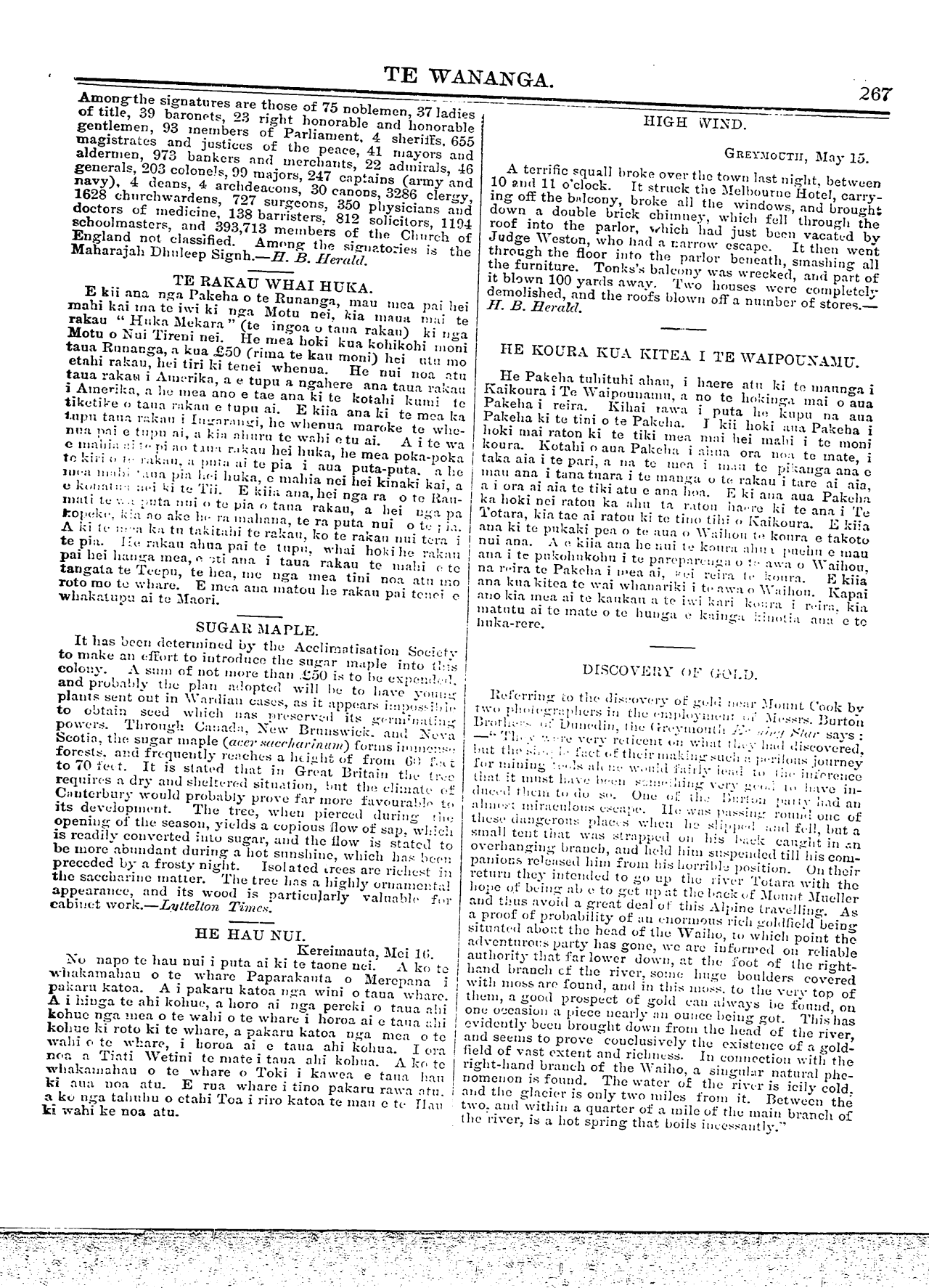
                            TE  WANANGA.
Among-the  signatures are those of 75 noblemen, 37 ladies
of title, 39 baronets, 23 right honorable and honorable
gentlemen,  93 members   of Parliament, 4 sheriffs. 655
magistrates  and  justices of the peace, 41 mayors  and
aldermen,  973 bankers  and merchants, 22  admirals, 46
generals, 203 colonels, 99 majors, 247 captains (army and
navy),  4 deans, 4 archdeacons, 3O canons, 3286 clergy,
1628  churchwardens, 727 surgeons, 350 physicians and
doctors  of medicine,  138 barristers. 812  solicitors, 1194
schoolmasters, and 393,713 members   of the Church  of
England  not  classified. Among  the signatories is the
Maharajah  Dhnleep Signh.—H.  B. Herald.

           TE RAKAU  WHAI  HUKA.
Nui Tireni

SUGAR MAPLE
Canada
Great Britain
Canterbury
Lyttleton

HE HAU NUI
Kereimauta
Merepana
Tiati Wetini


HIGH WIND
GREYMOUTH
Melbourne
Judge Weston

HE KOURA KUA KITEA I TE WAIPOUNAMU

Kaikoura
Waihou

DISCOVERY OF GOLD
Mount Cook
Messrs. Burton
Dunedin
Waiho
|
|
8 268 |
▲back to top |

                             TE  WANANGA.
 TE MATE  KAI  O TE IWI I HAINA.
  E  kiia ana e whitu tekau miriona (70,000,000) tangata
e mate ana i te kai kore i Haina. Koia nei «ga korero o
te reta a tetahi Pakeha i tuhituhi ai ki te iwi o Ingarangi,
kia mohio ai nga iwi o te Kuini i te mate nui o nga iwi
Maori o  Haina.  E ki  ana te korero a taua Pakeha, a te
Perepoa, he nui rawa te mate o te iwi o te whenua nei o
Haina,  katahi ano te mate nui ka pa ki te iwi nei, o nga
tau  e rua rau kua pahure nei. No te 1875 i timata ai te
 raki o te tupu o te kai o te whenna nei. He kore un, a he
 roa no te wa i kore ai te ua, koia nga whenua nui i Hiri,
 i Hatuka i raki ai, a he tino whenua nui noa atu aua
 whenua, a kihai rawa te kai i tupu i ia tau i ia tau, a koia
 ra te take o te mate o te iwi nei. Ano ka kore he kai ma
 taua iwi nei, ka ohua parauri te kiri o te mata o te tangata
 i te hiakai. A  he mano  tini ki te mate i ia ra i ia ra. A
 ko te tangata e whiwhi ana i to tamariki, ka hokona e ia
 kia whai moni ai hei hoko kui ma etahi ano o aua tama-
 riki. A he mea ano ka hokona etahi o nga wahine, hei ora
 ma etahi, ara, hei hoko kai ma nga mea i te kaainga kuia
 tetahi i hokona ai. Ano ka kore he tangata hei. hoatu kai
 ka tingia e te mate kai, ka whakamomori te tangata ratou
 ko tana wahine me nga tamariki, kia kore ai e roa te ngau
 a te hiakai. He tini no te tangata mate, a kahore kau he
 tangata hei nehu  i nga tupapaku, a takoto nui ai te
 tupapaku i nga. ara o te kaainga, me nga ara ki tu tua-
 whenua.    A i etahi wahi  o  taua whenua, i te wahi
 e  tupu  ana  te tarutaru, i te wahi  e puta  ana te
 kakakaka  o  te rakau,  ka  kainga era e te hunga
 mate, kia ora ai i te mate kai. A he mea ano  na  te tino
 mate kai, i kai ai taua iwi i nga raupo o te tahuhu o a
 ratou whare.  A na te peha o te rakau tupu taua iwi nei
 i ora kau ake ai he mea hoki i kai taua iwi i te tapeha o
 nga rakau o te ngahere. A ko te tupu riwai e kainga aua
 ano hoki e ratou. A e kai ana ano hoki ratou i te uku, e
 hara i te uku penei me ta te Maori uku e kai ai i mua,
 •engari he uku tu a kohatu te uku i kai ai te iwi nei. A
 he nui ano ia te kohikohi moni a nga iwi o te Kuini o
 Ingarangi hei hoko kai ma taua iwi, a e tukua ana he kai
  e aua iwi o te Kuini ma taua iwi, otiia, he tino mano pio-
 pio no taua iwi i kore ai e rato i te kai, a e mate nui ana
  hoki taua iwi, i te mea hoki he miriona tini ratou. A he
 nui noa atu ano hoki te aroha o nga Minita o te Haahi o
 Ingarangi, me te Haahi Pikopo, me nga Haahi katoa ki te
 taku kai ma taua iwi. A he nui ano hoki te aroha etahi
 ano o taua iwi whai moni kia ratou ano ki tana iwi, ki te
 hoko  kai ma te hunga mate kai. E mea ana  matou, rua
 aua korero nei e oho ai te whakaaro a nga iwi o te ao nei,
  a ka tuku kai ui aua iwi nui mo te iwi mate kai i Haina.
  Ee iwi pai mai taua iwi mate  kai nei ki nga iwi a te
  Kuini o Ingarangi, he mea hoki kua kite ratou i te aroha
  a te Pakeha kia ratou i te wa e kainga kinotia nei ratou e
  te mate kai. A i puta te kupu  miharo a taua iwi mate
  kai, ki te pai, me te aroha a nga Minita o nga Haahi
  karakia, i te mea i kaha tonu te mahi a nga Mihinare
  katoa ki te aami kai ma te hunga kai kore. A i te wa i
  hoki hoki ai taua iwi  mate  kai nei, ki aua Minita o te
  Haahi, a homai tonu ai he kai ma ratou e aua Mihinare,
  ka ki taua iwi mate kai.  " Koia nei ngo Pakeha e kiia
  nei e te rongo korero, he iwi kino ratou, a he iwi nukarau.
  Mehemea  he iwi  kino nga Minita  o Te Atua, penei, e
  kore e homai he kai ma  tatou, kaati, me mutu ta tatou
  whakaae atu ki te kupu kino mo aua Mihinare, i te mea
  hoki ko ratou pu  ano nga  tino maatua  mo  te ora kia
  tatou." Koia  matou  i mea ai kia aroha nga iwi o te ao
  nei ki taua iwi, he tino he hoki no te mate o aua iwi, e
  kore te mea kotahi o ratou e kite i te kai, a ma nga iwi o
  te ao nei e tuku he kai kia puta ai he morehu ma taua
  iwi.
    Mei  15, 1878. E kiia ana e te rongo korero mai o te
  Meera  o enei ra, kahore ano i iti iho te mate kai o te iwi
  o Haina, he mano  tini e mate ana i te ra kotahi, kua piro
  te mata o te whenua i te tupapaku, a kahore he tangata
  ora hei nehu.
  THE  FAMINE  IN NORTH  CHINA.

            GREAT SUFFERINGS.
       SEVENTY  MILLIONS  STARVING.
  The following letter from the pen of Mr. F. H. Balfour,
which appeared in the London  Spectator, will give our
readers some idea of  the sufferings of the millions of
people in North China from famine.  He writes :—
  " This famine, which is perhaps the widest-spread and
most fearful scourge that has befallen humanity for the
last 200 years, began first in the autumn of 1875. Its im-
mediate cause was the long absence of raia, but the phe-
nomenon  to which it was and still is primarily due is the
gradual  desiccation of the  vast plains of Chihli  and
Shantung,  a process which,  commencing  in  the table
lands of Central Asia, has now reached the densely-popu-
lated northern  provinces of China.  .  .  . Fancy  a
tract of country larger than thirteen Switzerlands a prey
to want that it is well nigh impossible to relieve ! The
people's faces are black with hunger ; they are dying
by  thousands upon thousands. Women    and girls and
boys are openly offered for sale to any chance wayfarer.
When   I left the country a respectable married  woman
could be easily bought for six dollars, and a little girl for
two.  In cases, however, were it was found impossible to
dispose of their children, parents have been known to kill
them  sooner than witness their prolonged sufferings, in
 many  instances throwing themselves  afterwards down
 wells, or committing  suicide  by arsenic.  Corpses  lay
rotting by the highway, and there was none to bury them.
 As for food, the  population subsisted for a long time oa
 roots and grass : then they found some nourishment ia
 willow buds, and filially ate the thatches of their cottages.
 The bark of trees served them for several months, and
 last July I received specimens of the stuff the unhappy
 creatures had been by that time reduced to.  The most
 harmless kind  was  potato-stalks, tough, stringy fibres,
 which only the strongest teeth could reduce to pulp, and
 which entirely defied all my attempts at deglutition. The
 other description of ;' food"—I hardly expect credence,
 but I have seen  it myself—was   red slate-stone. It ap-
 pears that this substance when rolled about in the mouth
 and  chewed   will eventually split into small  splinters,
 which can be swallowed  after practice. To such fright-
 ful extremities have the famine-stricken people in China
 been put. ....      The  chief, indeed I may  say the
 only, assistance which has  hitherto been  proffered has
 come from foreigners in the opeti parts, the missionaries,
 both Protestant and  Catholic, acting as their almoners.
 Many  wealthy Chinese have also given liberally, but the
 misery  increases, and more  help  is urgently required.
 Surely the recital of so appalling a calamity will be suffi-
 cient to enlist the sympathy for the suffering Chinese ?
 If not let me urge their claims upon  political grounds.
 There is no doubt that the present distress and the noble
 generosity of foreigners in the East have combined to
 produce a very wana and grateful feeling towards us on
 the part of all the natives. The  sight oi! so much self-
 sacrificing labor and Christlike self-forgetfulness as have
 been  displayed by  the missionaries throughout  these
 troubles has filled the Chinamen with astonishment.  It
 has opened their eyes entirely, ' What,' they are reported
 to have said on one occasion, when thousands of them
 came  flocking round the missionaries who had brought
 them  such  timely succour, ' are these the foreigners we
 have heard so much abour,—the malignant, unscrupulous,
 deceitful foreigners?  Well, we will never  speak  ill of
 them  again, nor believe what the Mandarins  tell us of
 them.   The Mandarins  leave us to die of starvation, while
 the foreigners they have taught us to hate are spending
 their very lives in saving ours.' This is but a  faint re-
 presentation of the new-born good-will of the Chinese
|
|
9 269 |
▲back to top |

                      TE WANANGA.
people to us, and it is well that their friendship and grati-
tude should be cemented by further deeds of mercy."
  The  last mail steamer brings nows  that there is no
decrease of the famine iu China, and that human flesh is
being sold for food.                                   !


NGA  KORORO   A TE KOMITI  MO  NGA
             MEA   MAORI.
 (HE MEA   TUKU   KI TE PAREMATA    O TE TAU   1877  A HE  MEA
                      KII  KIA PERETITIA.)


                           Hone   Kiwa ma.


                                   JOHN BRYCE.
    Akuhata 28, 1877.                         Tumuaki.


 JOHN BRYCE.
      Akuhatu 28, 1877.                          Tumuaki.


                                 JOHN BRYCE,
   Akuhata 28. 1877.                      Tumuaki.

 Ko le Kupu a te Komiti mo  runga i te Pukapuka-inoi a
                 Wi Katene te Mapu ma.


                                  JOHN  BRYCE.
                                            Tumuaki.
    Akuhata 28,1877,
   Ko te Kupu a te Komiti mo  runga i te Pukapuka-inoi a
                       Rapata Tukere.

     E whakahe ana te kai-inoi ki te Ture Whenua Maori i
   homai i tenei nohoanga o te Runanga ; a, e inoi ana ai
   kia katia e whakaaetia.
     Kua whakahana  ahau kia ki penei atu ki te Whare :—\_
     Kua oti te whiriwhiri to putake o tenei pukapuka-inoi
   o te Whare, a kua  unuhia  taua Ture, koia e kore ai te
   Komiti e whakaaro kia whai kupu ratou mo nga tikanga
   o nga mea e whakahuatia ana i roto i taua pukapuka-inoi.
   Engari e mahara ana te Komiti notemea era ano o hanga
   ho Ture  mo nga Whenua Maori  me ata whiriwhiri marire
   e te Whare, e  te Kawanatanga  hoki nga  whakaaro e
   whakahuatia ana i roto i tenei me etahi atu pukapuka-inoi
   e rito ana ki tenei.
                                 JOHN BRYCE,
     Akuhata  2S, 1877.                         Tumuaki.

   Ko te kupu a te Komiti mo runga i te Pukapuka-inoi a
                    Paora  Tuhaere ma.

      E ki ana nga kai-inoi ka nui to ratou pouri mo te Ture
    Whenua  Maori 1877, notemea he maha nga tikanga kino
  i kei roto; a, e inoi aua ratou kia kaua e whakaaetia hei
    Ture
  i   Kua whakahaua ahau kia ki penei atu ki te Whare :—
     Kua  oti te whiriwhiri te putake o tenei pukapuka-inoi
   i e te Wharo, .1 kua unuhia tana Ture, koia e kore ai te
   ! Komiti e whakaaro kia whai kupu ratou mo nga tikanga
   o nga mea e whakahuatia ana i roto i taua pukapuka-inoi.
    Engari e mahara ana te Komiti notemea era ano e hanga
    he Ture mo  nga Whenua  Maori me  ata whiriwhiri marire
    e  te Whare, e   te Kawanatanga  hoki nga whakaaro e
    whakahuatia ana i roto i tenei me etahi atu pukapuka-inoi
     e rite ana ki tenei.
                                    JOHN  BRYCE,
   i  Akuhata 28. 1877.                        Tumuaki.
|
|
10 270 |
▲back to top |

                        TE WANANGA.
Ko  te Kupu a te Komiti mo runga i te Pukapuka-inoi a
                    Hori  Kawakura ma.
  E  ki ana nga  kai-inoi ka taimaha ki runga ki nga
Maori nga tikanga o te Ture Whenua Maeri i homai nei i
tenei tau ; a, e inoi ana ratou kia kaua e whakamana.
  Kua  whakahaua ahau kia ki penei atu ki te Whare :—
  Kua  oti te whiriwhiri te putake o tenei pukapuka-inoi
B te Whare,  a kua  unuhia taua Ture, koia e kore ai te
Komiti e whakaaro, kia whai kupu ratou mo nga tikanga
o nga mea e whakahuatia ana i roto i taua pukapuka-inoi.
Engari e mahara ana te Komiti notemea era ano e hanga
he Ture mo  nga Whenua  Maori me  ata whiriwhiri marire
e te Whare,  e te Kawanatanga  hoki nga  whakaaro e •
whakahuatia  aua i roto i tenei mo etahi atu pukapuka-inoi I
e rite ana ki tenei.
                                  JOHN BRYCE,     i
                                             Tumuaki.
  Akuhata 28, 1877.                                  I


 Ko te Kupu a te Komiti mo runga i te Pukapuka-inoi a
                 Toha Rahurahu ma.
  E  whakahe ana nga kai-inoi ki nga tikanga o te Ture
Kooti  Whenua   Maori  i homai  nei i roto i tenei tau a e
Inoi ana ratou kia whakamana te Kaiwhakawa Tuturu me
whiriwhiri hokinga Maori tekau ma rua hei whakahaere i
nga mahi e tika ana kia mahia mo nga Whenua Maori i
roto i to ratou Takiwa.
  Kua  whakahana ahau kia ki penei atu ki te Whare :—
   Kua oti te whiriwhiri te putake o tenei pukapuka-inoi I
o te Whare, a  kua unuhia  taua Ture, koia e kore ai te
Komiti e whakaaro kia whai kupu ratou mo nga tikanga o
nga mea  e whakahuatia ana i roto i tana pukapuka-inoi, i
Engari e mahara ana te Komiti notemea era ano e hanga I
he Ture mo nga Whenua  Maori mo  ata whiriwhiri marire
e te Whare,  e te Kawanatanga   hoki nga whakaaro e
 whakahuatia ana i roto i tenei me etahi atu pukapuka-inoi i
e rite ana ki tenei.
                                     JOHN N BRYCE.
   Akuhata 28, 1877.                     Tumuaki.


Ko  te Kupu a te Komiti  mo runga  i te Pukapuka-inoi a
                  Ihaka Tekateka ma.
   E tono ana nga kai-inoi kia whakahokia  ki a ratou
tetahi whenua, ko Rai te ingoa, no o ratou tupuna, ko
taua  whenua  kei waenganui  o te Hoiere o Whakatu, te
take e ki ana ratou kahore tana whenua i uru ki te hoko-
nga  a Ngatitoa o te Hoiere o Kaituna ki te Kawanatanga.
   Kua whakahaua  ahau kia ki penei atu ki te Whare :—
   He nui te raruraru o te pukapuka-inoi o nga  korero
hoki i whakapuakina i te aroaro o te Komiti koia i kore ai
te Komiti e whakaaro e whai tikanga ana nga tono o te
pukapuka-inoi, ekore hoki ratou e kahu ki te tohutohu atu
 ki te Whare  kia whiriwhiria paitia.
                                  JOHN BRYCE,
  Akuhata  28, 1877.                      Tumuaki.

Ko  te Kupu a te Komiti mo runga i te Pukapuka-inoi a
                  Hare  Akuhata  ma.

   E ki ana nga kai-inoi ko etahi tangata kahore nei o
ratou  take ki te whenua  kua  whakaaetia  e te Kooti
Whenna   Maori i noho ki Ohaeawai Tokerau a e tono ana
ratou kia whakaeangia  to ratou mate.
  Kua  whakahaua  ahau kia ki penei atu ki te Whare :—
   Ko te ahua o te tono a te kai-inoi he tono kia whiri-
whiria  ano tetahi whakataunga   a  te Kooti Whakawa.
Whenua   Maori.   Kahore te Komiti e marama  ki te whiri-
whiri mamma  i aua whakataunga   engari e mea ana kia
tirohia te Kupa Tireana a te Komiti me nga Mea Maori i
hoatu ki te Whare i te 23 o Akuhata, 1S7G.
                                  JOHN BRYCE,
  Akuhata 3O, 1877.                     Tumuaki.
     RETA I TUKUA  MAl.


            KI TE ETITA o TE WANANGA.

  E hoa tena koe, kanui toku aroha atu kia koe. mon o tuku
mai nei i nga korero o nga takiwa o runga naka. Kua kite
matou  nga  iwi o raro nei i nga korero kino, i nga korero
pai, he hoina nga mihi  atu kia koe.   E  hoa ko  te take
i  tuhia atu ai tena  reta  kia koe, he  whakahe   naku
ki nga  tangata e tuku  atu ana  i a ratou korero horihori
kia utaina ki TE WANANGA.    K  hoa ko nga korero penei,
korero horihori kaua rawa  e tukua ki roto i Te  WANA-
NGA,  ki te kore  he ingoa mo  te tangata tuku korero atu
kia tuhia, kaua rawa e tukua ki Te WANANGA, erangi taku
ka tuhi atu nei, mau e uta atu ki taua WANANGA. Ko tetahi
raruraru kei tenei takiwa, kei Whangarei e mahi   ana. Te
take ko wahine kua moea e tetahi taane ke o tana iwi. kotahi
nei. kua riro nga hoiho, me nga kau. he mea muru tahae nei
te ritenga o aua mea, kua tae te kai whakawa, ratou ko nga
tangata i kiia hei kai whiriwhiri i te ritenga o te utu, ara nga
tangata o te Aputareihana, heoi kihai i taea e ratou to korero
i te raruraru o nga mahi a te Maori te kai whakawa Pakeha i
tae ki taua mahi, ko Te Ropere no Ngapuhi, te tahi ko Wiremu
Katene, Henare Te Moananui, Riwi Taikawa.   Ko  nga kai-
whiriwhiri tenei i taua hara, kihai i oti taua hara. E noho
nei i te raruraru.
  No te tahi o nga ra o te marama nei i turia ai taua hui
mau  e uta ki Te WANANGA enei korero, hei titiro ma o taua
hor Maori, Pakeha, na to hoa.
                NA WIREMU KAWHENA. TAUWHITU.
  Whangarei  Mei 6, 1878.


            KI TE ETITA o TE WANANGA.
  E hoa tukua atu ta matou korero ki roto ki TE WANANGA,
mana  e hari atu ki te tangata nana i wawata nga Ture e 53, i
tuhia mai nei e Te WANANGA, i te 4 o nga ra o Mei, 1878. E
hoa e te tangata nana nei i tuhi mai nga Ture e rima tekau
matoru.   A kahore nei hoki koe i whaaki i to ingoa ki raro
iho o o Ture. Tena ra koe. He  kupu  tino marama rawa
tenei na matou kia koe, ki te kai hanga o enei Ture, hei Ture
mo  tatou mo Aotearoa. E hoa e tika katoa ana i a matou
enei Ture e »3, kaore tetahi reta-kotahi i he. engari ra, me
tuku atu e koe ki te Paremata, ma te Paremata e whakahe, e
whakatika ranei. Heoi, e hoa tenei ta matou kupu mutunga
ki a koe. Ki te mea e  horohoro ana to tuku Pitihana mo
enei Ture ki te Paremata, tonoa mai kia tuhi atu matou  i o
matou  ingoa, mau e pine ki raro o enei Ture e 53, kia tere to
tono mai i o matou ingoa, kia tuhia atu  e matou,  otira me
tono katoa nga ingoa o nga iwi katoa o Aotearoa, hei whaka-
kaha i enei Ture i te Paremata, heoi ua matou tena whaka-
tika i enei Ture.
   He kupu  tenei hei tapiri atu mo enei ture e rima tekau ma
toru, ka tuhia iho ki raro nei tuatahi. Ko te whenua i wha-
kawakia i raua e te Kooti Whakawa Whenua Maori. I puta
nei te Karauna Karaati ki tetahi iwi hapu ke ranei, a hinga
ana te iwi te hapu tuturu nona tuturu nei te whenua i riro i
te mahi ngaro a etahi ano o te iwi hapu tuturu ano no ratou
nei ano taua whenua tuhituhia ngarotia ana he pukapuka
oati etahi ano o ratou a i oatitia angututia kautia a riro ana
taua whenua i runga i ie oati ngaro a etahi ano o ratou o te
hunga no ratou ano taua whenua me  mana  tenei ture ki te
tono whakawa ki a ara ano he. Kooti mo nga whenua i wha-
kataua, hetia e te Kooti Whakawa Whenua   Maori i mua, ko
tenei ture me raana ki nga whenua i whakaurua take koretia
nei e te Kooti etahi tangata hapu ranei ki roto ki te whenua o
etahi hapu ke, kia puta atu aua tangata, hapu ranei i roto i
taua Karauna o mua ki waho.
  Tua-rua. me kape rawa atu ki waho le Tiati Tenata ki waho
o tenei Ture, kauaka, e tukua ki te Paremata, engari renata
Kamaria  hei tuku ki te Paremata. Heoi a matou kupu.
Na  Ihakara Rangiahua,      Hirini Mohuia.
Na Aperahama   Tipae.       Paurini Te Rangi-whakarurua,
Hrimiora  Tehungaoterangi Hapeta  Pitimou.
Paora Tarau,             Utiku  Tenawhakataki,
Haira te Kotuku,              Haimana  Teiki,
Tamehana  Teko,              Hirati Teiki,
                             Pateriki Patuwhakairi,
|
|
11 271 |
▲back to top |

                            TE  WANANGA.
           KI TE ETITA o TE WANANGA.
Nepia
Te Riihi
TIMI WAATA RIMINI
TE MEIHANA KOATA
MITA TE RANGITUAKOHIA
Maketu

KI TE ETITA O TE WANANGA

Horomona Tukati
Heretaunga

NOPERA KUIKAINGA

KI TE KAI TUHI O TE WANANGA

Awhekaihe
Rapaki
Rewereni Te Kooti te Rato
Paora Taki
Peneta
Mu
Papara
Te Oti Paipeta
Tukaha
Te Wiremu te Uki
Matanapiki
Timaima Witaua

Ngaitahu
Tutekawa
Pitini Petetake
Taiaroa

H. MAHUIKA

Kaiapoi

PANUITANGA
Te Mapara
Whangai o Roto-kare
TE Karamu
Ngapukanohi
Upokohina
Hikawera
Paepaetahi
Te Waiohiki
Te Karaka
Te One Ahuahu
Tutaekuri
Te Whakatakapau

TAREHA TE MOANANUI

NOTICE
Te Whakatapau
Taputuru
Te Huru
Pakihi
Roto-a- Tara
Korokipo
Te Pa Whakairo
Te Mapara
Paheremanihi
Te Whanga-o-Tangikai


    Panuitanga ki nga iwi Maori katoa.
 HE mea atu tenei naku na TE A. W. PAROMAPIRA. kia
   mahia  e ahau e Te Roia i Kihipene nga mahi ma te
  Maori.  Maku  e ata mahi pai, te mahi aua tukua mai ki au.
    75
|
|
12 272 |
▲back to top |

                             TE   WANANGA.
        PANUITANGA.

            HOKO   AKIHANA.
      A TE   HATAREI,    TE  25  O  MEI,  1878.

             I TE HOIHO   PAHAA,
                     I Hehetinga  Tiriti.

             KA HOKO  AKIHANA A
   H.   MONO     T  IHI,
INGA     HOIHO,  me etahi atu mea i tana Whare Akihana i
     Nepia, i Hehitinga Tiriti, a te 25 o Mei i te Hatarei.
  A ko te hunga e whai mea ana  mo taua hoko, me tuku
wawe  mai te korero o aua mea i mua atu o te hoko Akihana.
  E hokona ana  te Hoiho ma te tangata, a ko a te tangata
Hoiho e hokona, ana mana, ki te iwi.
  A he iti te utu mo te Hoiho, me te Paki ana tu i ta matou
whare  tu ni.
                                                   81


                PANUITANGA.
            KI TE ETITA o TE WANANGA.
  E hoa, tena koe. Tukua atu e  koe taku panui mo  taku
hoiho kua ngaro, ko te marama i ngaro  ai, ko Aperira, ko te
kaainga tunga, kei te Aute, kei te Hauke tetahi. Kanui taku
pouri mo taua  hoiho, ko taua hoiho he kuao na PETI, he
momo  rangatira na MAUI, ko te ahua o taua hoiho, he pango.
he ma nga  wae o  muri, he rahopoka.  Ka  toru tau me te
hawhe, ko te parani kei te peke katau, koia tenei te parani
CH.   Ki te kitea e te tangata, me  homai  kia au. maku e
e hoatu  e £2.
                                           PARAMENA         NGAWIKI.
  Te Aute, Mei 4, 1S7S.                                77

———————HEI   HOKO.
 TENEI  te Kareti kei au hei hoko atu ki te iwi. He Kareti i
   i hangaa ki Tawahi.Me hoko ranei e au ki to tangata.
 me Hoiho hei utu ki au.
                                   NA  A. PITA,
76                                               Taratera.

He  Panuitanga ki nga Iwi o Aotearoa
  me nga Pakeha  hoki o to tatou motu.

 KUA     mutu  le whakawa,  me  te rapurapu n te Komiti
       whiriwhiri mo  nga  take o nga  tangata e mau nei o
 ratou ingoa, i te Karauna Karaati o te Pakiaka. Mangatere-
 tere. He  nui rawa te roa o ta matou mahi, ata kimi marire
 i nga tino take o aua tangata, i timata i te 14 o Aperira,
 mutu  i te 11 o Mei. Heoi, e whanga tonu ana matou, e mau
 nei o matou ingoa i raro nei, ki te ra e noho ai te Kooti mo
 Mangateretere, ko taua ra ka noho taua Runanga ki te aroaro
 o taua Kooti whakapuaki ai i a matou  tikanga i kite ai mo
 aua tangata, nae to ratou iwi katoa.
              MANIHERA   RANGITAKAIWAHO
                     II. W. MAHUPUKU
                                      WI     PERE        ARAPATA
                  HOANI  TE RANGIOTU
                   HORI  TE  HUKI.
   Pakowhai, Nepia, Mei 13, 1878.        \_\_\_          SO

          He Panuitanga  ki nga Maori.
       TE  POUNAMU   KIA MAHI  HEI MERE.

 KIA     ronga mai koutou e nga, iwi katoa o te Tai Rawhiti,
        me te Tai Tuauru.  Nga iwi katoa  o te tua-whenua
 tenei kei Nepia nei te tangata tino mohio ki te haehae Poue
  namu,  hei Mere, hei Heitiki, hei Kurukuru. hei  Mako mat-
 iwi. Tukua mai a koutou Pounamu ki te Tari o Te WANANGA

 i Nepia                               NA   HEMI ROAI,
       PANUI    WHAKATUPATO.

HE     mea atu tenei ki te iwi, ki te mea ka kitea te tangata
      e haere ana me te pu, ki te pupuhi manu, ahakoa manu
Peihana. Parera, Pukeko, me nga manu katoa. r. Pakowhai i
Te  Karamu,  i Te  Waipatu, i Waha-parata. i Korongata, ka
whakawakia  ki te tikanga o te Ture. Ko nga kupu whakaae
n matou i whakaae ai kia pupuhi manu to Pakeha i era tau,
kua whakakahoretia e matou i enei tau.
                      KARAITIANA    TAKAMOANA,
                        HENARE    TOMOANA.
                      PENI TE UAMAIRANGI,
                          URUPENI    PUHARA.
   1 Aperira, 1878.                                      71


MAKI     TONORE
  KAI-WHAKA-MAORI  RAUA KO PARAHI,
 KEI TE AVENUE WHANGANUI.
 KUA     tu maua hei Kai-riihi, hei Kai-hoko ranei i te whenua
        Maori, a hei Kai-whakaputa   whenua  i  te Kooti
 Whakawa.   Otira, mo nga mahi Maori katoa, mo nga mea o
 mua. mo nga mahi o naianei.
                             MAKI TONORE.
   Hune  2, 1877.                                       15


                PANUITANGA.
 HE     mea  atu tenei na TE WARA  MA.  ki nga iwi Maori, e
       mahi  wawahi ano ratou i te pounamu mo te Maori, hei
 mere hei Kurukuru, me nga mea katoa e mahia ai te pouna-
 mu  hoi mea  raa te Maori.
   A  ko te utu, he hikipene mo te inihi kotahi.
                                     TE  WARA    MA.
                                            Watimeka.
    Hehitinga Tiriti, Nepia.                                  41


  PANUITANGA^nJITjVNGA.
 HE PANUITANGA KI  TE IWI MAORI.
 E   mahara  ana pea te Iwi Maori, ma te Runanga o
     TE WANANGA   rawa ano e whakaae ka puta ai
 TE WANANGA  nupepa ki te tangata tono kia tukua
 atu he nupepa  ki a ia. Na, he mea atu tenei ki te
 iwi, ma koutou e tono ka tino tukua atu TE WANANGA
 nupepa  kia koutou, kei te hiahia hoki raua, ko te
 moni a te tangata te tikanga e puta ni he nupepa ki
 a ia. Ko  te utu mo te tau, kotahi pauna e rua hereni
 me  te hikipene.                                  39

                          UTU.
     E iata ana  Te WANANGA       Nupepa  i nga wiki
  katoa. Ko  te utu  mo  te tari, kotahi pauna.   Otiia, ki te
  tukua ma te Meera, kotahi pauna e raa hereni me te hiki
 pene  mo te tau. Mo  te WANANGA        kotahi, ana  tikina
  atu i nga Toa takotoranga o taua Nupepa, lie hikipene mo
  e Nupepa  kotahi.


  NEPIA, Haku Pei Niu Tireni.—Ho mea ta e HENARE HIRA, a he mea panu
      e HENARE   TOMOANA,    e te tangata nana tenei niupepa, te whare ta
      o Te Wananga, i Nepia.
                 HATAREI,  MEI 25, 1878.

  NAPIER,  Hawke's  Bay, New  Zealand.—Printed by HENARE HIRA, and
       published by HENARE      TOMOANA,      the proprietor of this news-
       paper. at the office of Te Wananga, Napier.
                SATURDAY, MAY 25,1878.